Developmental differences refer to variations in how the brain develops from early childhood, affecting areas such as social interaction, communication and behaviour. Learning differences, on the other hand, relate more specifically to how a person processes information, learns skills or performs academically.
Autism intersects both categories because it begins with developmental differences but can also influence learning styles and classroom functioning. “Autism is a neurodevelopmental disorder, lifelong, and the main features have to do with distinct problems in social communication and interaction, with repetitive, restrictive behaviours.
At the same time, educational needs differ widely because diagnostic criteria have broadened over time. The basic definition of autism has remained the same but the interpretation of that definition is a different matter, because we have made it more inclusive.
In a nutshell autistic learners may have very different strengths and challenges, so accommodations and classroom support cannot be uniform.
Autism has traditionally been described as a spectrum to include people with different levels of traits. However, this idea is increasingly questioned because the category has expanded so widely that it may no longer represent a single unified condition. The spectrum has gone on being more and more accommodating. Experts in the space of research and development psychology believe, it may come to collapse.
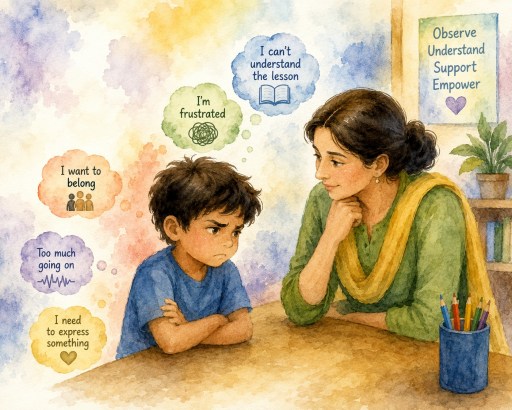
One reason support needs vary greatly is that different groups experience very different challenges. Some children are diagnosed early and may have intellectual or communication impairments, while others are diagnosed later and may primarily experience anxiety or hypersensitivity.
Because of this diversity, autism may include several distinct subgroups rather than one continuous scale. This is also reflected in emerging research suggesting biological differences, where the symptoms to do with repetitive behaviour have a different genetic origin from the ones relating to social communication difficulties.
Therefore, educational support varies because autistic learners’ needs are fundamentally different.
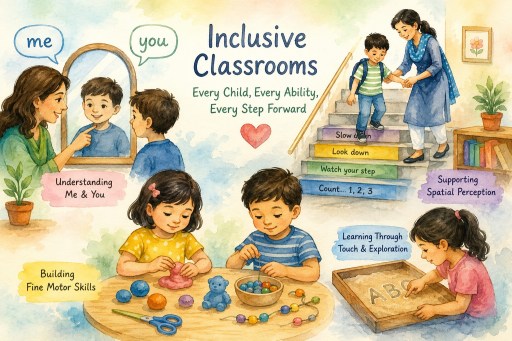
Instead of forcing all students to learn in the same way, educators should view each child as having a distinct learning profile. This means adapting teaching methods such as using visual aids, hands-on activities, flexible pacing, and multisensory instruction- to match different cognitive strengths. Researches show that many neurodivergent learners process sensory information and motor coordination differently, which affects attention, reading, and classroom participation.
Play and experiential learning are also essential for development. Through play, children develop social skills, emotional understanding, and body awareness (proprioception), which helps them regulate movement and interaction with others. Physical and experiential activities can improve motor coordination and sensory integration while also making learning enjoyable. When classrooms incorporate such approaches, learning becomes more accessible and engaging for students with diverse needs. Thus, a neuroinclusive classroom focuses on accommodating diverse learning styles and creating environments where different learners can function efficiently

Extracurricular activities play an important role in the development of neurodiverse children beca use they provide learning experiences beyond the traditional classroom. Activities such as trekking, sports, or participation in events like marathons help children gradually pace their learning while also building essential life skills. Through these experiences, children learn cooperation, confidence, and independence in real-world environments.
Such activities also help them adapt to new situations they may not have experienced before. For instance, travelling with peers to participate in a marathon competition while being accompanied by a guardian allows them to practice social interaction, teamwork, and responsibility in a supportive setting. Exposure to these situations can reduce anxiety toward unfamiliar environments and build comfort with change.
Importantly, extracurricular activities are not only about skill development but also about enjoyment and well-being. They help children experience achievement, explore their interests, and learn to enjoy life while developing resilience and adaptability.
This Blog is written by Akshita Yadav
Akshita Yadav is an 18-year-old undergraduate student from Nagpur, currently pursuing a Bachelor of Business Administration (BBA) at the Indian Institute of Management Bodhgaya (IIMBG). She has a keen interest in public policy and strategy, with a particular focus on neurodiversity and allied social policy domains. Akshita aspires to work in policy research and contribute to the nation’s think tanks through policy notes, strategic analysis, and inclusive governance frameworks.
What are developmental differences?
Developmental differences refer to variations in how a child’s brain grows and develops, especially in early childhood. These differences can affect:
They often emerge early and influence how a child experiences the world over time.
What are learning differences?
Learning differences relate to how an individual processes, understands, and applies information. They mainly affect:
Reading, writing, and math skills
Attention and memory
Problem-solving abilities
Academic performance
These differences are often noticed in classroom settings.
What is the key difference between developmental and learning differences?
The main difference lies in scope and timing:
Why does autism span both developmental and learning differences?
Autism is considered a neurodevelopmental condition, meaning it begins with differences in brain development. These affect:
Social communication
Interaction
Behaviour patterns
At the same time, autism also influences:
Learning styles
Sensory processing
Classroom engagement
This is why autistic individuals may require both developmental and educational support.
Why is autism no longer easily understood as a single spectrum?
Although autism has traditionally been described as a “spectrum,” this idea is evolving because:
As a result, autism may not be a single continuum but could include multiple distinct subgroups.
Why do support needs vary so much among autistic individuals?
Support needs differ because:
Therefore, support must be personalised rather than one-size-fits-all.
How can teachers support learning differences in neurodiverse classrooms?
Effective strategies include:
These approaches help students engage in ways that match their strengths.
Why is play important for neurodiverse children?
Play supports:
It also makes learning more natural, enjoyable, and meaningful.
How do extracurricular activities help neurodiverse children?
Activities like sports, trekking, or events help children:
Build confidence and independence
Improve social interaction and teamwork
Adapt to new environments and situations
Reduce anxiety through gradual exposure
They also provide a sense of achievement and joy.
What is a neuroinclusive classroom?
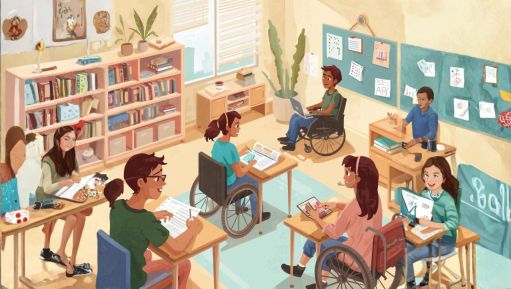
A neuroinclusive classroom is one that:
Why can’t classroom support be uniform for autistic learners?
Because autistic learners have:
Different strengths (e.g., memory, creativity, focus)
Different challenges (e.g., communication, sensory processing)
Support must be customised to each learner’s profile for it to be effective.
Where can I buy books?
You can buy books at Bookosmia website’s Shop section and Amazon.
Where can I buy the book – Dhwani?
Dhwani is an inclusive, mindfulness-based initiative designed to support the emotional well-being of teachers and students while fostering truly inclusive classrooms. Rooted in research from education, psychology, and neuroscience, Dhwani recognizes a simple truth: regulated teachers create safe, inclusive learning spaces.
At its core, Dhwani focuses on self-regulation, awareness, and emotional literacy. The curriculum equips educators with practical tools—such as grounding exercises, breathing techniques, and reflective practices—that can be used in real classroom moments, not just in theory. These tools help teachers respond with curiosity rather than control, and empathy rather than assumption.
Dhwani believes inclusion is not a checklist or a one-time intervention, but an ongoing journey. By supporting teachers’ mental health, Dhwani helps reduce burnout, unpack unconscious bias, and build resilience—making inclusion sustainable rather than exhausting.
Through simple, age-appropriate practices, Dhwani also empowers students to understand their emotions, feel safe, and stay engaged, creating classrooms where every child is seen, valued, and supported.
In essence, Dhwani begins with the teacher’s well-being—because inclusion starts from within.
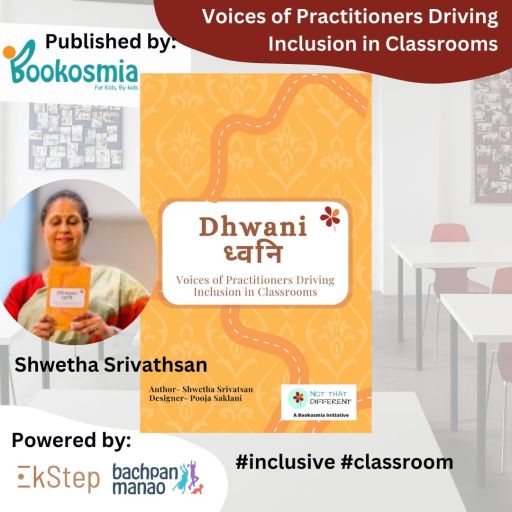
Dhwani I Voices of Practitioners Driving Inclusion in Classrooms
https://bookosmia.com/teachers-mental-health-inclusive-classrooms/


Gift Books On Inclusion — A package of 5 books on inclusion, empathy, and working together.
***
This article is published by Bookosmia, India’s #1 publisher for and by young people. Bookosmia publishes stories, books, podcasts, events, TED-Ed talks, workshops, bedtime stories and more related to kids and young adults.
Photo Credit – AI generated images from Chat GPT and Magic Media from Canva .
Want to publish your articles, reviews, stories, audio stories, bedtime stories and poems ?
Did you know that children can submit audio stories to be turned into Bedtime Stories and published on Bedtime Stories – A Podcast by Bookosmia?
Write to us at sara@bookosmia.com or submit your article at the link below
Read More
Understanding Sensory Differences in Neurodiverse Individuals