Sensory differences refer to the unique ways in which neurodiverse individuals experience, process, and respond to sensory information from the environment. These differences are especially common in conditions like Autism Spectrum Disorder (ASD) and Attention-Deficit/Hyperactivity Disorder (ADHD).They usually appear in three main forms:
● Hyper-reactivity (over-responsiveness): Everyday sounds, lights, textures, or smells may feel overwhelming or painful.
● Hypo-reactivity (under-responsiveness): A person may not notice sensations that others easily detect, such as name-calling or minor injuries. Sensory Seeking: A drive to intensify sensory input to reach a “threshold” of awareness. This includes spinning, humming, or needing deep pressure (like heavy blankets).
● Sensory Avoiding: A proactive behavioral response to being overwhelmed. Unlike simple sensitivity, avoiding involves actively withdrawing from environments—such as leaving a room because of a scent or refusing to wear certain fabrics—to prevent sensory overload.
These patterns can occur across all sensory systems like vision, hearing, touch, taste, smell, balance, and body awareness. Sensory differences were officially recognized in the DSM-5 diagnostic criteria for autism, showing how central they are to understanding neurodiversity. Importantly, these differences are not simply “quirks” but meaningful variations in how the brain interprets the world.
Sensory differences are linked to how the brain filters and organizes incoming information. Normally, the brain uses a process called sensory gating to filter out unimportant stimuli. When this filtering system is less efficient, too much information may enter conscious awareness, leading to overload or distraction.
A key structure involved is the thalamus, which acts like a gatekeeper by controlling which sensory signals reach higher brain areas. If this gate is “leaky,” everyday environments may feel chaotic or intense.
In autism, some researchers suggest that the brain may assign unusually high importance to sensory input. This can make sounds brighter, lights harsher, and textures stronger. Differences in the balance between brain excitation and inhibition (often called E/I balance) may also amplify sensations.
In ADHD, difficulties in filtering irrelevant information can increase distractibility. Overall, sensory differences arise not from “broken senses,” but from differences in how the brain prioritizes and regulates incoming signals.
These differences dictate how a person navigates the world, affecting everything from physical comfort to emotional energy:
● Sensitivity Thresholds:
○ Hyper-sensitivity: A person may live in a state of constant “high alert.” A flickering light or a distant siren isn’t just a distraction; it can be physically painful, making it impossible to focus on a conversation or task.
○ Hypo-sensitivity: A person may have a high threshold for pain or temperature. They might not realize they have a burn or might under-dress for freezing weather because their brain isn’t effectively registering the “danger” signals from their skin.
● Environment: A “sensory avoider” might skip social gatherings, busy grocery stores, or festivals to prevent a meltdown. While this is a necessary self-protection tool, it can unfortunately lead to social isolation or difficulty performing “standard” errands.
● Social Bonding: Sensory needs are often misunderstood by others. A “sensory seeker” who needs to pace or hum to feel grounded might be viewed as “disruptive” or “not paying attention.” Conversely, someone who is hypo-reactive might miss subtle social cues, like a change in a friend’s tone of voice or facial expression.
● Fatigue & Burnout: Processing a “loud” or “unpredictable” world requires immense cognitive energy. While a neurotypical person might filter out background noise automatically, a neurodivergent person often has to do this work manually. By the end of a school or work day, this leads to sensory burnout (or “autistic burnout”), where the individual feels completely depleted and may need hours of silence to recover.
A neurodiversity-affirming approach views sensory differences as natural variations rather than deficits that must be “fixed.” Instead of forcing individuals to adjust to overwhelming environments, this perspective encourages adapting environments to support diverse sensory needs.
For example, schools are increasingly creating sensory-friendly spaces. DPS Bangalore North has started a sensory room, which provides a calm, structured environment where students can regulate themselves when feeling overwhelmed. Such spaces may include soft lighting, tactile tools, bean bags, and noise-reducing features. These adjustments help reduce distress and improve participation.
Workplaces and public spaces can also offer accommodations like quiet zones, flexible seating, and noise-cancelling options.
This approach moves beyond the traditional medical model and promotes dignity, inclusion, and well-being. By focusing on support rather than correction, it reduces stigma and helps neurodivergent individuals thrive in environments that respect their unique sensory profiles.
This Blog is written by Akshita Yadav
Akshita Yadav is an 18-year-old undergraduate student from Nagpur, currently pursuing a Bachelor of Business Administration (BBA) at the Indian Institute of Management Bodhgaya (IIMBG). She has a keen interest in public policy and strategy, with a particular focus on neurodiversity and allied social policy domains. Akshita aspires to work in policy research and contribute to the nation’s think tanks through policy notes, strategic analysis, and inclusive governance frameworks.

What are sensory differences in neurodiverse individuals?
Sensory differences refer to the unique ways neurodiverse individuals experience and respond to sensory input such as sounds, lights, textures, and smells. Some people may feel these sensations more intensely, less strongly, or may actively seek certain sensory experiences.
What are the three main types of sensory responses?
Sensory responses generally appear in three forms:
Hyper-reactivity: Over-sensitivity to sensory input (e.g., loud sounds or bright lights feeling overwhelming).
Hypo-reactivity: Reduced sensitivity to sensory input (e.g., not noticing pain or someone calling their name).
Sensory seeking: Actively seeking strong sensory experiences like spinning, touching objects repeatedly, or enjoying loud sounds.
Which sensory systems can be affected?
Sensory differences can affect multiple sensory systems, including vision, hearing, touch, taste, smell, balance (vestibular system), and body awareness (proprioception).
What causes sensory differences in the brain?
Sensory differences occur due to variations in how the brain filters and processes information. Brain structures like the thalamus, which helps regulate sensory signals, may process stimuli differently, leading to sensory overload or reduced awareness.
Are sensory differences officially recognized in autism?
Yes. Sensory differences are included in the DSM-5 diagnostic criteria for Autism Spectrum Disorder, highlighting their importance in understanding autism.
How do sensory differences affect daily life?
They can influence everyday activities such as learning in classrooms, participating in social events, choosing clothing, eating certain foods, and sleeping comfortably.
Can sensory differences affect social relationships?
Yes. Sensory sensitivities, such as discomfort with loud environments, touch, or eye contact, may affect how individuals interact socially and form relationships.
How can schools support students with sensory differences?
Schools can create sensory-friendly environments by providing quiet spaces, sensory rooms, soft lighting, tactile tools, and noise-reducing options to help students regulate their sensory experiences.
What is a neurodiversity-affirming approach?
A neurodiversity-affirming approach recognizes sensory differences as natural variations in how people experience the world. Instead of trying to “fix” individuals, it focuses on adapting environments to support their needs.
Why is understanding sensory differences important?
Understanding sensory differences helps create inclusive environments in schools, workplaces, and communities, allowing neurodivergent individuals to feel comfortable, supported, and able to participate fully.
Where can I buy books?
You can buy books at Bookosmia website’s Shop section and Amazon.
Here are some related books (on teamwork, friendship) that you can buy:
Where can I buy the book – Dhwani?
Dhwani is an inclusive, mindfulness-based initiative designed to support the emotional well-being of teachers and students while fostering truly inclusive classrooms. Rooted in research from education, psychology, and neuroscience, Dhwani recognizes a simple truth: regulated teachers create safe, inclusive learning spaces.
At its core, Dhwani focuses on self-regulation, awareness, and emotional literacy. The curriculum equips educators with practical tools—such as grounding exercises, breathing techniques, and reflective practices—that can be used in real classroom moments, not just in theory. These tools help teachers respond with curiosity rather than control, and empathy rather than assumption.
Dhwani believes inclusion is not a checklist or a one-time intervention, but an ongoing journey. By supporting teachers’ mental health, Dhwani helps reduce burnout, unpack unconscious bias, and build resilience—making inclusion sustainable rather than exhausting.
Through simple, age-appropriate practices, Dhwani also empowers students to understand their emotions, feel safe, and stay engaged, creating classrooms where every child is seen, valued, and supported.
In essence, Dhwani begins with the teacher’s well-being—because inclusion starts from within.
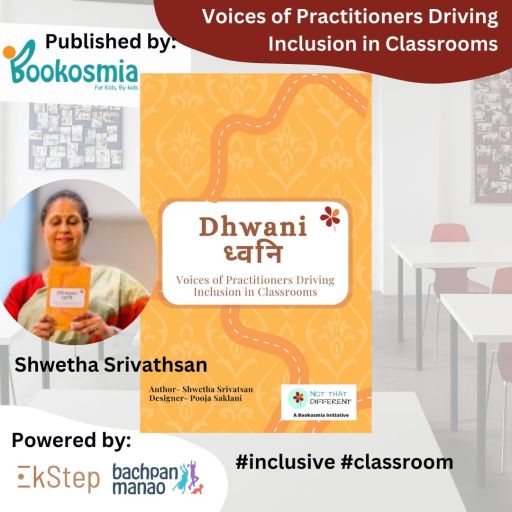
Dhwani I Voices of Practitioners Driving Inclusion in Classrooms
https://bookosmia.com/teachers-mental-health-inclusive-classrooms/


Gift Books On Inclusion — A package of 5 books on inclusion, empathy, and working together.
***
This article is published by Bookosmia, India’s #1 publisher for and by young people. Bookosmia publishes stories, books, podcasts, events, TED-Ed talks, workshops, bedtime stories and more related to kids and young adults.
Photo Credit – AI generated images from Chat GPT and Magic Media from Canva .
Want to publish your articles, reviews, stories, audio stories, bedtime stories and poems ?
Did you know that children can submit audio stories to be turned into Bedtime Stories and published on Bedtime Stories – A Podcast by Bookosmia?
Write to us at sara@bookosmia.com or submit your article at the link below
Read More