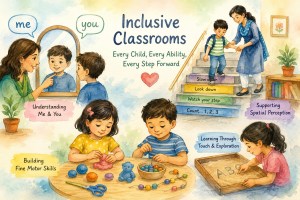





Montessori education goes beyond traditional learning by nurturing sensory integration, cognitive growth, and independence through thoughtfully designed, hands-on experiences. By engaging multiple senses and simplifying complex concepts, it helps children build strong neural connections, develop focus, and adapt confidently to their environment.
Dhwani – An Educator’s Guide to Inclusive Teaching reimagines teacher training by placing emotional well-being, mindfulness, and flexibility at its core. Moving beyond clinical labels, it empowers educators to create inclusive, neurodiversity-affirming classrooms through differentiated instruction, sensory-aware practices, and the thoughtful use of technology. By integrating empathy with practical strategies, Dhwani enables teachers to support every learner meaningfully, ensuring classrooms where all children feel seen, valued, and capable of thriving.

Developmental differences and learning differences are often confused, but they are not the same. This blog explains the key differences, how autism spans both, and how inclusive classrooms can support neurodiverse students effectively. Developmental differences affect early brain development, while learning differences influence how children process and apply information. Supporting neurodiverse learners requires flexible, inclusive teaching strategies that adapt to each child’s unique strengths and needs.
Montessori education goes beyond traditional learning by nurturing sensory integration, cognitive growth, and independence through thoughtfully designed, hands-on experiences. By engaging multiple senses and simplifying complex concepts, it helps children build strong neural connections, develop focus, and adapt confidently to their environment.
Dhwani – An Educator’s Guide to Inclusive Teaching reimagines teacher training by placing emotional well-being, mindfulness, and flexibility at its core. Moving beyond clinical labels, it empowers educators to create inclusive, neurodiversity-affirming classrooms through differentiated instruction, sensory-aware practices, and the thoughtful use of technology. By integrating empathy with practical strategies, Dhwani enables teachers to support every learner meaningfully, ensuring classrooms where all children feel seen, valued, and capable of thriving.
Developmental differences and learning differences are often confused, but they are not the same. This blog explains the key differences, how autism spans both, and how inclusive classrooms can support neurodiverse students effectively. Developmental differences affect early brain development, while learning differences influence how children process and apply information. Supporting neurodiverse learners requires flexible, inclusive teaching strategies that adapt to each child’s unique strengths and needs.