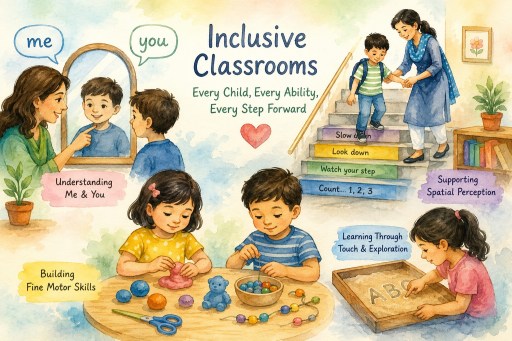
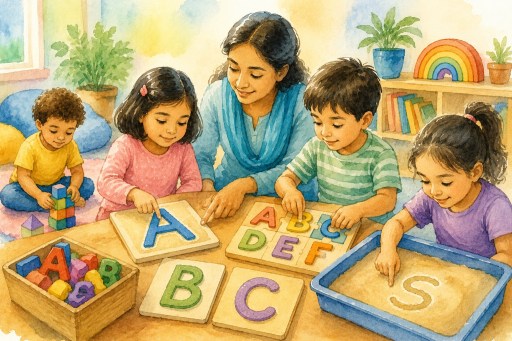
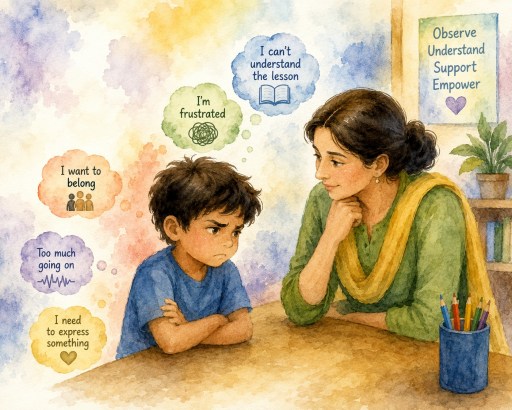
Answer: There should be a call to redefine training by shifting focus from clinical diagnoses to a mindfulness-based, pedagogical framework. Dhwani posits that “regulated teachers create safe, inclusive learning spaces,” positioning the educator’s emotional well-being as the cornerstone of inclusion. Unlike traditional training that treats inclusion as a separate module, Dhwani integrates neurodiversity-affirming practices into daily instruction, emphasizing self-regulation and grounding techniques to prevent burnout. This approach encourages teachers to unpack unconscious biases and move from a model of “control” to “curiosity”. By using relatable language to describe student needs such as “requires frequent redirection” rather than medical labels- the manual empowers teachers to provide functional support. Furthermore, it aligns with India’s National Education Policy 2020 by placing the teacher at the center of systemic reform. Ultimately, Dhwani ensures that inclusion is a sustainable journey rooted in empathy and research, helping educators build environments where every child feels seen, valued, effectively supported, and every student’s voice truly matters in a system dedicated to leaving no one behind. Training teachers in differentiated instruction means equipping them to adapt teaching so all learners, including those supported by Dhwani, can meaningfully access content. Teachers learn to break tasks into small, manageable steps with clear prompts and cues, making learning less overwhelming. They use visual aids like pictures, symbols, and flashcards to make language concrete, especially for children with communication difficulties. Emphasis is also placed on phonological awareness skills such as rhyming, blending, and segmenting sounds to strengthen foundational literacy.
Differentiation also includes simple physical adaptations, like using pencil grippers for better motor control. Importantly, it follows three core principles: multiple means of representation, expression, and engagement. Concepts are taught through real objects, visuals, and digital tools; students demonstrate learning through writing, speaking, or interactive tasks; and activities like planting seeds sustain engagement. Thus, teacher training focuses on flexibility in instruction, ensuring inclusive classrooms where diverse learning needs are effectively addressed.
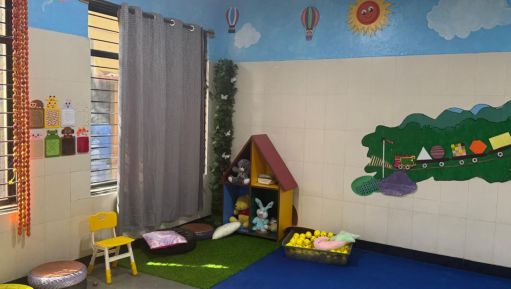
Answer: Dhwani recommends a methodology centered on Universal Design for Learning (UDL) and “sensory-smart” environments to accommodate diverse student needs. To manage mixed-ability settings, the guide advises teachers to transition from clinical labeling to behavior-specific feedback, which upholds student dignity and prevents expectancy bias. Educators are encouraged to create “sensory-smart” spaces, such as quiet corners or dim-lit nooks, equipped with tactile tools like weighted blankets and sensory mats to assist with
emotional regulation. By identifying individual sensory profiles, teachers can optimize how learning is delivered—using visual checklists or audio scripts to reduce cognitive load. This strengths-based approach ensures that instruction is flexible rather than rigid. Additionally, the manual highlights “mirroring,” where a teacher’s own regulation fosters a calm classroom atmosphere, reducing behavioral challenges among learners. Through these practical environmental adjustments and empathy-based responses, Dhwani transforms traditional classrooms into safe, child-sensitive zones where every learner, regardless of their specific ability level, can participate meaningfully, equitably, and thrive.

Answer: Dhwani positions Generative AI as a “supportive co-teacher” that facilitates differentiated learning by automating the creation of customized alternative materials. AI assists educators by generating mind maps, T-charts, and different assessments to support students struggling with executive functioning. It also helps identify sensory profiles to guide teachers in delivering content optimally via audio scripts or simplified text. Beyond AI, the broader digital ecosystem mentioned in Dhwani-related resources provides essential tools for independence. For instance, Tiimo offers visual timelines for transition management, while Proloquo4Text supports non-verbal students in academic debates. Sensory regulation is aided by Antistress, providing digital tactile fidgets, and Seeing AI acts as a narrator for physical handouts. This holistic strategy ensures technology removes barriers rather than creating them. By combining AI’s generative power with specialized apps, Dhwani empowers learners to navigate their education with increased autonomy, agency, and confidence within modern, digitally-integrated inclusive classrooms, effectively preparing them for a future in our modern, kind, collaborative, and compassionate world where every student belongs.
Answer: Training teachers in differentiated instruction means equipping them to adapt teaching so all learners, including those supported by Dhwani, can meaningfully access content. Teachers learn to break tasks into small, manageable steps with clear prompts and cues, making learning less overwhelming. They use visual aids- pictures, symbols, and flashcards- to make language concrete, especially for children with communication difficulties. Emphasis is also placed on phonological awareness skills such as rhyming, blending, and segmenting sounds to strengthen foundational literacy.
Differentiation also includes simple physical adaptations, like using pencil grippers for better motor control. Importantly, it follows three core principles: multiple means of representation, expression, and engagement. Concepts are taught through real objects, visuals, and digital tools; students demonstrate learning through writing, speaking, or interactive tasks; and activities like planting seeds sustain engagement. Thus, teacher training focuses on flexibility in instruction, ensuring inclusive classrooms where diverse learning needs are effectively addressed.
This article is written by Akshita Yadav. She is an 18-year-old undergraduate student from Nagpur, currently pursuing a Bachelor of Business Administration (BBA) at the Indian Institute of Management Bodhgaya (IIMBG). She has a keen interest in public policy and strategy, with a particular focus on neurodiversity and allied social policy domains. Akshita aspires to work in policy research and contribute to the nation’s think tanks through policy notes, strategic analysis, and inclusive governance frameworks.
How can Dhwani – An Educator’s Guide to Inclusive Teaching redefine teacher training in India?
Dhwani reimagines teacher training by shifting the focus from clinical diagnoses to a mindfulness-based, pedagogical approach. It emphasizes that emotionally regulated teachers create safe and inclusive classrooms. Instead of treating inclusion as an add-on, Dhwani integrates neurodiversity-affirming practices into everyday teaching. By encouraging self-awareness, bias reflection, and flexible strategies, it empowers educators to move from control to curiosity. Aligned with the National Education Policy 2020, it positions teachers at the heart of inclusive reform, ensuring every child feels seen, supported, and valued.
What strategies does Dhwani recommend for managing mixed-ability classrooms?
Dhwani promotes the use of Universal Design for Learning (UDL) and sensory-smart environments. Teachers are guided to use behavior-specific language instead of labels, create calming classroom spaces, and incorporate tools like visual checklists and tactile aids. The approach focuses on understanding each child’s sensory needs and adapting teaching methods accordingly. By modeling calm behavior and fostering emotional regulation, teachers can create inclusive, respectful, and engaging classrooms for all learners.
How does Dhwani integrate technology, AI, and prompt mastery in classrooms?
Dhwani views Generative AI as a supportive co-teacher that helps create differentiated learning materials such as mind maps, assessments, and simplified content. It highlights tools that support independence—like visual planners, communication apps, and sensory regulation tools. AI helps reduce teacher workload while enabling personalized learning experiences. This combination of AI and assistive technology ensures students can learn with greater autonomy, confidence, and accessibility.
How does differentiated instruction help create inclusive classrooms?
Differentiated instruction enables teachers to adapt content, methods, and assessments to suit diverse learners. Dhwani trains educators to break tasks into manageable steps, use visual aids, and build foundational skills like phonological awareness. It also includes simple adaptations such as assistive tools for motor skills. Based on the principles of multiple means of representation, expression, and engagement, this approach ensures every student can access, participate in, and benefit from learning in meaningful ways.
Where can I buy the book – Dhwani?
Dhwani is an inclusive, mindfulness-based initiative designed to support the emotional well-being of teachers and students while fostering truly inclusive classrooms. Rooted in research from education, psychology, and neuroscience, Dhwani recognizes a simple truth: regulated teachers create safe, inclusive learning spaces.
At its core, Dhwani focuses on self-regulation, awareness, and emotional literacy. The curriculum equips educators with practical tools—such as grounding exercises, breathing techniques, and reflective practices—that can be used in real classroom moments, not just in theory. These tools help teachers respond with curiosity rather than control, and empathy rather than assumption.
Dhwani believes inclusion is not a checklist or a one-time intervention, but an ongoing journey. By supporting teachers’ mental health, Dhwani helps reduce burnout, unpack unconscious bias, and build resilience—making inclusion sustainable rather than exhausting.
Through simple, age-appropriate practices, Dhwani also empowers students to understand their emotions, feel safe, and stay engaged, creating classrooms where every child is seen, valued, and supported.
In essence, Dhwani begins with the teacher’s well-being—because inclusion starts from within.
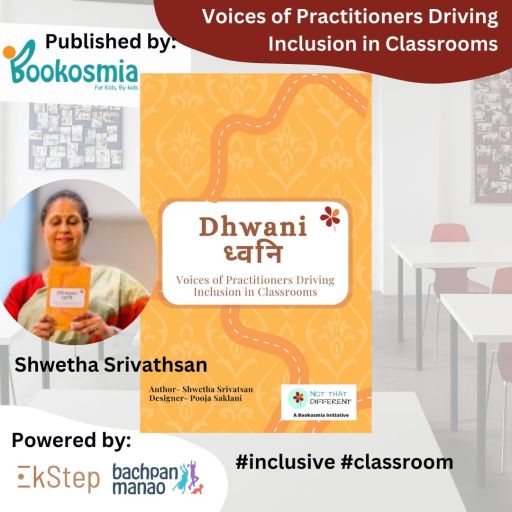
Dhwani I Voices of Practitioners Driving Inclusion in Classrooms