Behavior as a Language: Rethinking c, Aggression, and the ‘Can’tvs. Won’t’ Dilemma
Behavior as a Language: Rethinking Bullying, Aggression, and the ‘Can’t vs. Won’t’ Dilemma
In an inclusive school environment, the Dhwani manual invites educators to view the classroom not just as a place of academic instruction, but as a space where every child feels seen and heard. One of the most complex challenges a teacher faces is managing disruptive or aggressive behaviors that can disrupt the learning of the entire class. This blog explores how practitioners can shift their perspective from punishment to understanding, using strategies curated by experts like Champa Saha and Puja Sood to decode behavior as a form of communication.
Why does Dhwani suggest that we should view disruptive behavior as a form of communication rather than a lack of discipline?
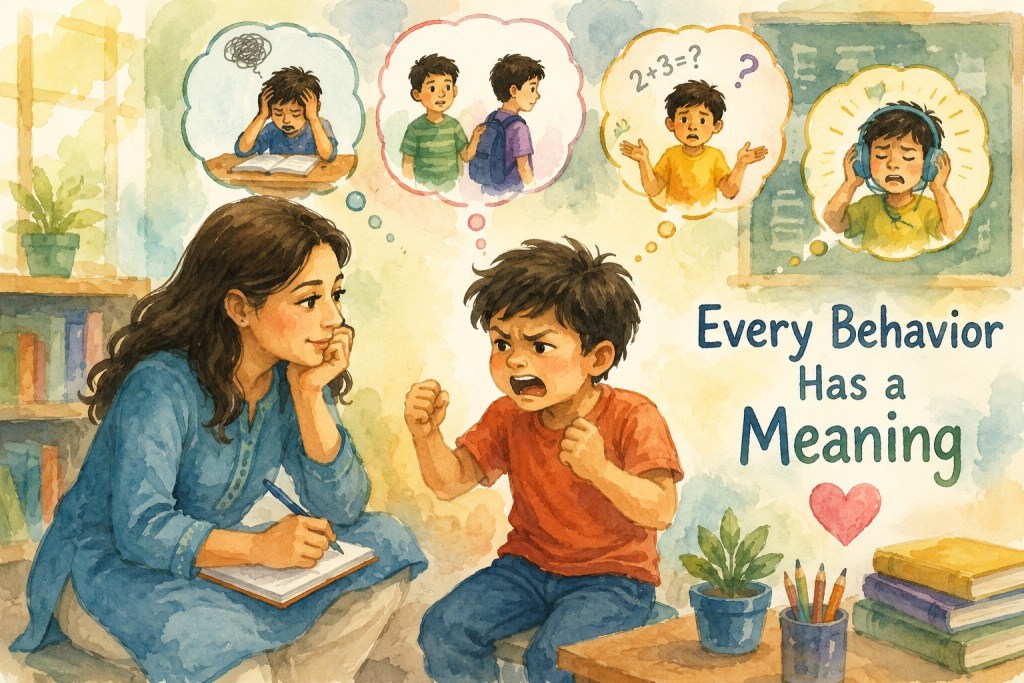
The Dhwani manual teaches that behavior is an intentional response to internal or external triggers. When a student like Vivek, an energetic eight-year-old, misdirects his energy through aggression, he is often trying to convey a message he cannot express in words. This aggression frequently stems from frustration, such as an inability to complete classwork, feeling rejected by peer groups, or struggling to understand what is being taught. Dhwani posits that behavior can even be a “tool for self-regulation,” helping the child manage overwhelming sensory or emotional input. By attempting to modify a behavior without understanding the reason behind it, an educator may inadvertently cause “irreparable damage to a child’s psyche”. Therefore, the first step in an inclusive classroom is to observe the child deeply to uncover what they are trying to communicate through their actions.
How can an educator distinguish between a student who “won’t” follow a rule and one who “can’t” due to their neurodivergent profile?
Distinguishing between “can’t” and “won’t” is critical to becoming a successful educator, according to practitioners in the Dhwani manual. A child who “won’t” follow an instruction is often misperceived as being defiant, when in reality, their neurodivergent wiring means they “can’t” process the complexity of the task. For instance, a student with a “spiky learning profile” might excel in math but experience an emotional meltdown when asked to write because their fine motor skills or executive functions are lagging. Dhwani emphasizes that a teacher is richly rewarded when they learn to observe the learner without jumping to conclusions based on diagnostic labels. By recognizing that children are not a “homogenous mass” but individuals with varied abilities, teachers can stop viewing achievement levels as trophies and start seeing them as steps toward opening a child’s world.
What are the immediate de-escalation strategies recommended by Dhwani when a student becomes aggressive or has a short temper?
When aggression or a short temper disrupts the class, the Dhwani manual advises teachers to remain calm and practice immediate de–escalation through distraction. It is essential not to have a conversation or attempt to “reason” with a child while they are in the midst of an active outburst. Instead, the manual suggests helping the child move away from the trigger, perhaps by requesting a trusted adult to walk with them until they settle down. Dhwani also recommends teaching the student specific emotional regulation strategies, such as deep breathing, counting to ten, or moving to a designated “quiet area” or “sensory corner“. These pauses provide a non-punitive space where the child can regain composure. Once the student is calm, the teacher can then encourage them in a softer voice to communicate the specific trigger that led to the outburst.
How can tools like “Social Stories” and “Role Play” help prevent bullying and teach the concept of personal space?
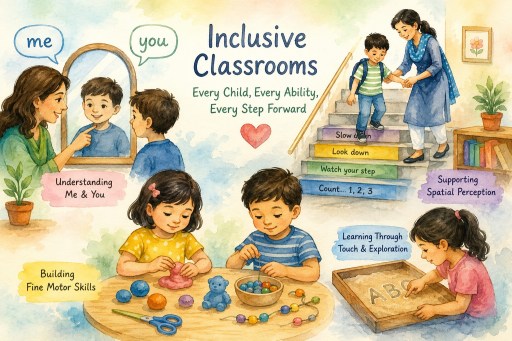
For students who struggle to navigate social interactions, Dhwani recommends the use of “Social Stories” and “Role Play” as vital instructional tools. Social stories are highly effective for children who are sensitive to feedback or who struggle with the concept of making mistakes, as they provide a clear script for how to handle difficult situations. In cases of bullying, Dhwani suggests using role-play to explicitly teach all children the concept of personal space and respect for others. This method helps neurodiverse learners understand the social expectations of the classroom in a concrete, visual way. Furthermore, by using these tools consistently, teachers help all students understand that bullying and aggression are not acceptable while providing the neurodivergent learner with the specific social skills they need to integrate safely with their peers.
How does Dhwani recommend teachers handle the label of “Class Bully” while protecting the student’s dignity?
Protecting a child’s dignity is the foundation of all successful facilitation in an inclusive classroom, as noted in the Dhwani manual. Teachers are encouraged to avoid using diagnostic labels or jargon—such as “the bully” or “hyperactive”—to describe a child to colleagues or parents. Instead, Dhwani advises focusing on the specific behavior and the corrections needed. Educators should establish clear ground rules and use positive reinforcement strategies to applaud “small wins”. For example, praise a student for staying in their seat to finish a portion of their work, which helps build their confidence and reduces their need for external validation. By working together with parents as a team and involving school counselors, teachers can ensure that consistent strategies are practiced across all environments, helping the student transition from a state of frustration to one of belonging.
FAQs Behavior as a Language: Rethinking c, Aggression, and the ‘Can’tvs. Won’t’ Dilemma
What does the Dhwani manual say about children’s behavior? The Dhwani manual explains that every behavior is an intentional response to an internal or external trigger. It encourages educators to understand the reason behind a child’s actions rather than simply reacting to the behavior.
Why might a child display aggressive behavior in the classroom? Aggression may stem from frustration, difficulty understanding lessons, challenges completing classwork, peer rejection, sensory overload, or an inability to communicate emotions effectively.
How can behavior act as a form of communication? Children often express unmet needs, emotions, or discomfort through their behavior when they cannot put their feelings into words. Observing these behaviors helps educators identify the underlying cause.
What is meant by behavior being a tool for self-regulation? Behavior can help children cope with overwhelming sensory experiences or strong emotions. Certain actions may be their way of calming themselves or managing stress.
Why is it important to identify the trigger behind a child’s behavior? Understanding the trigger allows teachers to provide appropriate support instead of punishment, leading to better emotional well-being and improved learning outcomes.
How should educators respond to challenging behaviors? Educators should observe carefully, identify patterns and triggers, respond with empathy, and create supportive strategies that address the child’s actual needs.
What role does observation play in an inclusive classroom? Observation helps teachers understand what a child is communicating through their actions, enabling them to provide personalized support and build a positive learning environment.
How does understanding behavior support inclusive education? It promotes empathy, reduces unnecessary discipline, strengthens teacher-student relationships, and ensures every child feels safe, understood, and valued.
Where can I buy books?
You can buy books at Bookosmia website’s Shop section and Amazon.
Where can I buy the book – Dhwani?
Dhwani is an inclusive, mindfulness-based initiative designed to support the emotional well-being of teachers and students while fostering truly inclusive classrooms. Rooted in research from education, psychology, and neuroscience, Dhwani recognizes a simple truth: regulated teachers create safe, inclusive learning spaces.
At its core, Dhwani focuses on self-regulation, awareness, and emotional literacy. The curriculum equips educators with practical tools—such as grounding exercises, breathing techniques, and reflective practices—that can be used in real classroom moments, not just in theory. These tools help teachers respond with curiosity rather than control, and empathy rather than assumption.
Dhwani believes inclusion is not a checklist or a one-time intervention, but an ongoing journey. By supporting teachers’ mental health, Dhwani helps reduce burnout, unpack unconscious bias, and build resilience—making inclusion sustainable rather than exhausting.
Through simple, age-appropriate practices, Dhwani also empowers students to understand their emotions, feel safe, and stay engaged, creating classrooms where every child is seen, valued, and supported.
In essence, Dhwani begins with the teacher’s well-being—because inclusion starts from within.
How Magic Found Us — A children’s book (6+) from Bookosmia; while not strictly about teamwork, it’s a magical story with themes of friendship and cooperation.
This article is published by Bookosmia, India’s #1 publisher for and by young people. Bookosmia publishes stories, books, podcasts, events, TED-Ed talks, workshops, bedtime stories and more related to kids and young adults.
Photo Credit – AI generated images from Chat GPT and Magic Media from Canva .
Want to publish your articles, reviews, stories, audio stories, bedtime stories and poems ?
Did you know that children can submit audio stories to be turned into Bedtime Stories and published on Bedtime Stories – A Podcast by Bookosmia?
Write to us at sara@bookosmia.com or submit your article at the link below