Can healing ever be ‘complete’, or is it always an ongoing negotiation with pain, memory and identity?
By Ifrah Shaikh
Healing, or otherwise recovery, is a vague word. It could mean a vast assortment of things, each being more peculiar than the next. Healing requires being wounded, mangled, or simply hurt. It is, in medical terms, ‘the body’s complex, multi-stage process of repairing damage’. Here’s how healing works: you get hurt, seek medical attention, undergo treatment and eventually get over the whole episode. But the body never forgets; it leaves you a scar, as a constant reminder of what you’ve gone through. So it must be safe to say that if the scar weren’t there, we would forget about the incident entirely, right? No. You see, every single injury, every scab, every surgery leaves an impression on us, barring us from forgetting about our experiences. That is how the human brain learns, which might just be the anatomical answer.
However, healing is not complete when we’re left with a scar. In fact, even the existence of a scar requires a new sort of healing for itself alone. After all, we’re vain creatures, aren’t we?
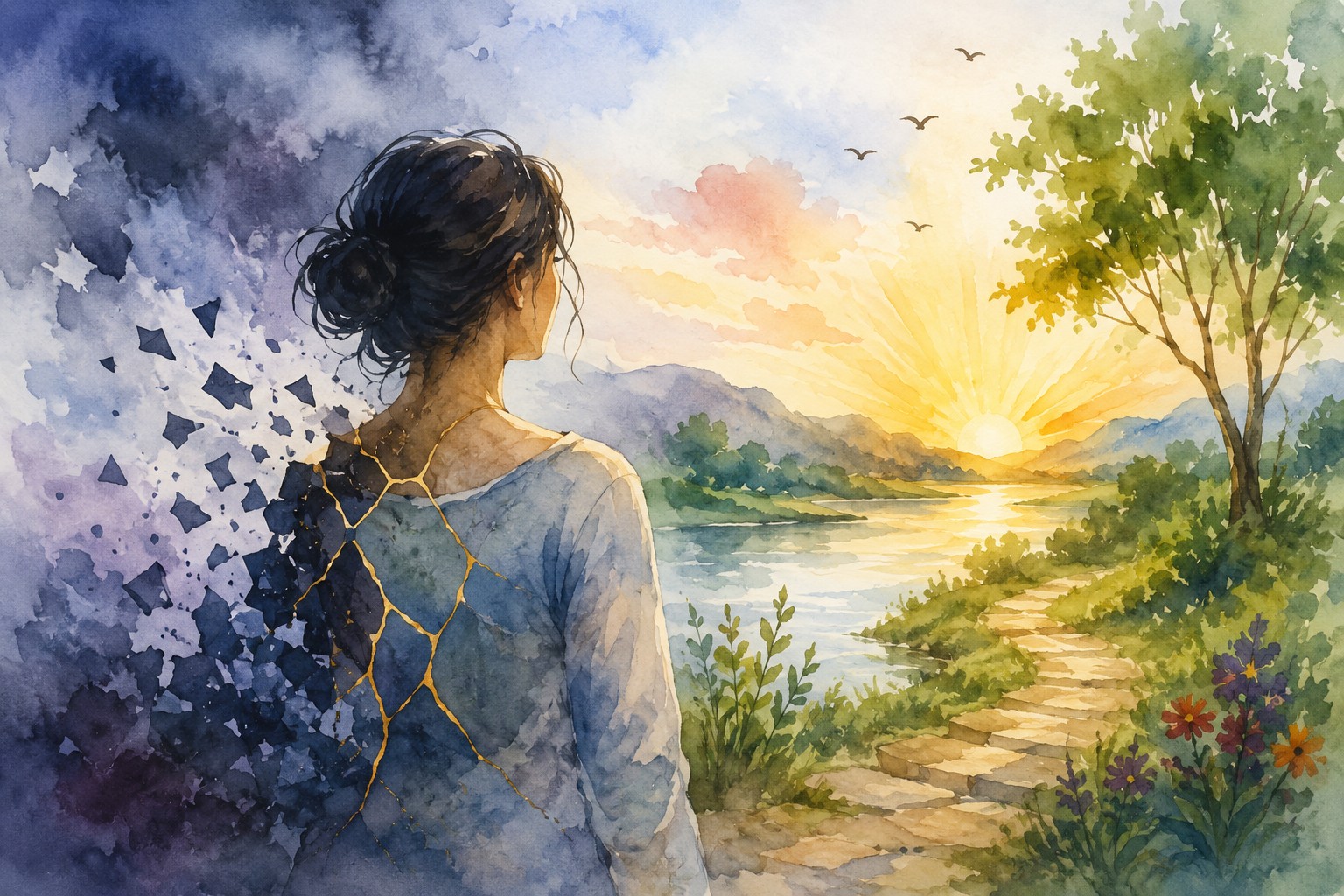
Affliction, agony and misery. This is what comes to mind when we hear the word trauma. Trauma is both physical and mental injury alike. The incident, or injury itself goes by in the blink of an eye but it is the repercussions that need coping with, and that takes time. Healing takes different forms for different people. For some it could be a mere coffee in silence; for those in between, solace in the arms of a loved one; but for a few, an utterly bleak, gut-wrenching, soul-shattering ordeal. It is personal for everyone. Healing is not immediate. It is not whole. It is a recurring turmoil of the mind and the soul, each struggling to keep one’s head up from the ruinous waters of torment. People, unable to dissociate themselves from the recurring pain despite years thereafter their individual tragedies, find that healing is not just a process; it is a persistent pilgrimage of gathering the shards of the soul and stitching them together, piece by piece.
Trauma is not for the faint of heart, yet it reaches all walks of life. Often people who undergo trauma look to return to their earlier lives, find themselves astray when they realise they can’t. Healing doesn’t mean going back to what you once were, it means accepting what you were and recovering to find a new version of yourself in the scars you’ve collected. Healing means always contemplating whether or not you’re getting better, succumbing to the dread of the past, starting from square one. It’s not pretty, or perfect or entirely accomplishable.
Healing also means not knowing who you are. Feeling perplexed as to where you’re headed and where you came from. It means dealing with yourself begrudgingly on those days when you can’t recognise yourself, the people around you, and what they mean to you. Sometimes, we think about our woe so often, it becomes pretty much all we think about. We begin to define ourselves solely by that one event. Recovering from the depths of suffering needs heights of courage. Healing is a word that brings encouraging thoughts to the mind, sometimes memories of a past when you thought it to be impossible.
There comes a time when you would have everything taken from you in exchange for ending your suffering. This reduces one to a shell of a person, for if one isn’t suffering, are they even entitled to be called a person? Suffering is what accompanies us throughout this glorious disaster we call life, from the first cry of sentience to the bleak whimper when life is sucked out from the corpse. From suffering at the hands of people we call family; to suffering at the hands of strangers willing to slaughter thousands, all for the supposed ‘greater good’. In terms of suffering, healing is the passage one takes to navigate through the mundane post suffering. But if anguish is always a chronic process, doesn’t that make healing a continuous framework accompanying it? Given this, how can healing ever be complete, if suffering is destined to reoccur?
Pondering over this question leads us to our answer. Healing cannot ever be complete. New wounds open up old ones; fresh coals rekindle old flames. Healing may not ever be whole; but it is a spectacular phenomenon which changes our personalities forever, for our recovery and makes us learn from our individual tragedies, metamorphosing to become a better person and human entirely.
“Healing takes courage, and we all have courage, even if we have to dig a little to find it.” – Tori Amos

Healing is rarely a final destination. While physical wounds may heal and emotional pain may lessen over time, memories, experiences, and personal growth continue to shape us. Healing often becomes an ongoing process of adapting, accepting, and moving forward.
The brain stores emotional experiences as part of how we learn and protect ourselves. Although the intensity of pain may fade, memories often remain, influencing how we understand ourselves and the world around us.
Not necessarily. Scars—both physical and emotional—are signs that healing has occurred. Rather than proving something is unfinished, they often represent resilience and the ability to survive difficult experiences.
Yes. Healing is rarely linear. Many people experience periods of progress followed by setbacks, especially when new experiences trigger old emotions. This doesn’t mean healing has failed—it is simply part of the journey.
Trauma can alter the way people view themselves, their relationships, and their future. Healing often involves accepting these changes and building a renewed sense of identity instead of trying to return to who they were before.
Absolutely. Healing is not about erasing memories; it is about reducing their power to control your life. Many people learn to live meaningful lives while carrying the lessons of their past.
Healing looks different for everyone. Some find comfort in loved ones, therapy, creative expression, journaling, mindfulness, spirituality, or simply allowing themselves time and space to process their emotions.
Healing asks us to face painful memories, accept change, and continue living despite uncertainty. Choosing hope, seeking support, and continuing to grow through hardship all require significant courage.
Yes. New losses or stressful experiences can bring back emotions connected to earlier trauma. This is a common part of healing and does not erase the progress already made.
The essay suggests that healing is not about becoming the person you once were. Instead, it is about embracing change, finding strength in your scars, and continuing to grow despite life’s inevitable suffering.
Where can you buy books?
You can buy books at Bookosmia.com and Amazon.
Mohini Made Friends I Children’s Book About Friendship and Dance
Follow Mohini, a little girl who communicates through dance and hand gestures. She is shunned as no one seems to understand her, but she finally finds the beautiful magic of friendship. The book is an attempt to bring children, and elders alike, to the captivating story of mohiniyattam through creative non-fiction. This book, Published by Bookosmai, celebrates the rich cultural heritage of Mohiniyattam and its journey from obscurity to recognition, with beige, black, and yellow illustrations representing the dance’s costume. All through a little girl and her simple world. Get your copy now and join Mohini on her enchanting journey! Authored by: Shruthi KP Illustrated by: Rohit Bhasi A4 size.

This article is published by Bookosmia, India’s #1 publisher for and by young people. Bookosmia publishes stories, books, podcasts, events, TED-Ed talks, workshops, bedtime stories and more related to kids and young adults.
Photo Credit – AI generated images from Chat GPT and Magic Media from Canva .
Want to publish your articles, reviews, stories, audio stories, bedtime stories and poems ?
Did you know that children can submit audio stories to be turned into Bedtime Stories and published on Bedtime Stories – A Podcast by Bookosmia?
Write to us at sara@bookosmia.com or submit your article at the link below
Get Published