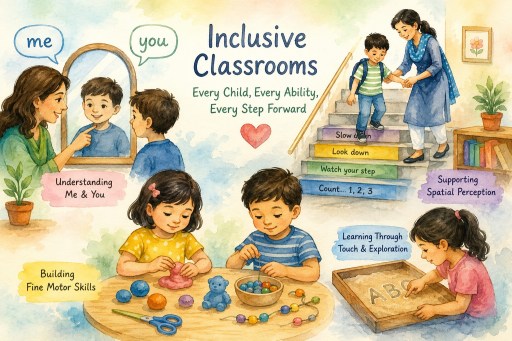
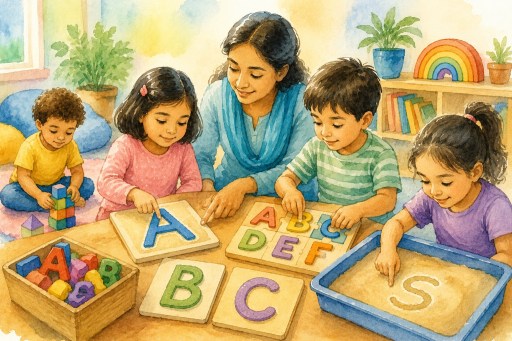
The ‘Dhwani’ philosophy posits that effective inclusion begins with ‘Step Zero’: preparing and prioritizing the educator first. To maintain long-term balance amidst systemic pressures, practitioners must accept that feeling uncertain or frustrated is a valid response to neurodiverse complexities, not a sign of failure. Strategic boundary-setting requires the courage to say “no” to draining extra tasks that deplete one’s energy, recognizing that self-care is essential to serving students. You simply cannot pour from an empty cup. To stay regulated, utilize “micro-breaks” like sensory resets. Practice the 5-4-3-2-1 technique—noticing five things seen, four heard, three felt, two smelled, and one tasted—to return to the present. Incorporate tactile resets, such as holding a smooth stone or fabric, to ground yourself. Additionally, stand and “shake it out” by shaking your limbs for thirty seconds to release physical tension. By establishing these internal limits, teachers ensure they remain regulated, providing the necessary emotional scaffolding for their students. Ultimately, a regulated teacher is the prerequisite for helping a child navigate their own thoughts effectively within the classroom environment. This preservation is vital for everyone involved.
Redefining success requires acknowledging that inclusion is an ongoing journey, represented in the ‘Dhwani’ manual as a “curvy path” full of highs, lows, tough bends, and many joyful turns. To ensure professional sustainability, practitioners must shift their primary focus from systemic perfection toward documenting incremental shifts in connection and student behavior. The ‘Dhwani’ context identifies specific “small wins” that serve as vital milestones: a child making rare eye contact, a student completing a task to their best ability, or a positive interaction with a parent following difficult discussions. To make these achievements tangible, educators should leverage self-affirmation tools like “sticky notes.” By writing down one success daily and placing it somewhere visible, teachers recognize their own significant efforts and actively reduce anxiety. This practice reinforces the strategic reality that even in tiny ways, the educator is changing things for the better. Celebrating these moments provides the psychological fuel to navigate the long-term journey. It ensures the practitioner’s cup remains full while honoring every child’s right to warm, colorful memories and a sense of belonging in the classroom to achieve more.
The Dhwani manual asserts that “you cannot pour from an empty cup,” making intentional pauses like the 5-4-3-2-1 technique a necessity for educator wellness. This sensory engagement brings teachers back to the present, directly supporting mental health by preventing the emotional exhaustion frequent in special education. Beyond regulation, regular breaks improve productivity; pausing between activities avoids mental fatigue, allowing teachers to return with renewed energy and sharper focus. Such moments also promote physical health by reducing muscle tension and physical discomfort. Finally, these techniques boost creativity, offering the mental clarity required to approach complex student needs with fresh perspectives. Crucially, Dhwani notes that a teacher must first regulate themselves before they can effectively help regulate a child emotionally. Prioritizing these wellness strategies ensures that inclusion remains a joyful, sustainable journey rather than an exhausting destination.
This article is written by Akshita Yadav. She is an 18-year-old undergraduate student from Nagpur, currently pursuing a Bachelor of Business Administration (BBA) at the Indian Institute of Management Bodhgaya (IIMBG). She has a keen interest in public policy and strategy, with a particular focus on neurodiversity and allied social policy domains. Akshita aspires to work in policy research and contribute to the nation’s think tanks through policy notes, strategic analysis, and inclusive governance frameworks.

The Dhwani philosophy emphasizes that effective inclusion begins with “Step Zero”—preparing and prioritizing the educator. A calm, regulated teacher is better equipped to support students with diverse learning needs, create a positive classroom environment, and respond with patience and empathy.
Teachers can maintain balance by saying “no” to unnecessary or energy-draining tasks, prioritizing essential responsibilities, scheduling regular breaks, and recognizing that self-care is an important part of being an effective educator.
Micro-breaks are short, intentional pauses that help teachers reset mentally and physically. Activities such as deep breathing, stretching, sensory grounding, or shaking out tension can reduce stress, improve focus, and prevent burnout.
The 5-4-3-2-1 grounding technique is a mindfulness exercise that helps individuals return to the present moment by identifying:
This technique is especially helpful during stressful teaching moments.
Success should be measured by small, meaningful progress rather than perfection. Celebrating milestones such as improved communication, increased participation, successful task completion, or positive parent interactions supports long-term motivation and resilience.
Recognizing small achievements helps educators build confidence, reduce stress, and stay motivated. Recording one success each day reinforces the positive impact they are making, even through gradual progress.
Grounding techniques improve emotional regulation, reduce anxiety, enhance concentration, relieve physical tension, encourage creativity, and help teachers respond more effectively to students’ emotional and behavioral needs.
Children often rely on adults for emotional cues. When teachers remain calm and emotionally regulated, they provide a sense of safety and stability, helping students better manage their own emotions and behaviors.
Educators can prevent burnout by setting realistic expectations, prioritizing essential tasks, taking regular sensory or movement breaks, celebrating incremental progress, and remembering that inclusion is a continuous journey rather than a fixed destination.
The Dhwani philosophy reminds educators that inclusion begins with caring for the caregiver. By protecting their own well-being, celebrating small victories, and embracing the journey of continuous growth, teachers create classrooms where every child feels valued, supported, and included.
Where can I buy books?
You can buy books at Bookosmia website’s Shop section and Amazon.
Where can I buy the book – Dhwani?
Dhwani is an inclusive, mindfulness-based initiative designed to support the emotional well-being of teachers and students while fostering truly inclusive classrooms. Rooted in research from education, psychology, and neuroscience, Dhwani recognizes a simple truth: regulated teachers create safe, inclusive learning spaces.
At its core, Dhwani focuses on self-regulation, awareness, and emotional literacy. The curriculum equips educators with practical tools—such as grounding exercises, breathing techniques, and reflective practices—that can be used in real classroom moments, not just in theory. These tools help teachers respond with curiosity rather than control, and empathy rather than assumption.
Dhwani believes inclusion is not a checklist or a one-time intervention, but an ongoing journey. By supporting teachers’ mental health, Dhwani helps reduce burnout, unpack unconscious bias, and build resilience—making inclusion sustainable rather than exhausting.
Through simple, age-appropriate practices, Dhwani also empowers students to understand their emotions, feel safe, and stay engaged, creating classrooms where every child is seen, valued, and supported.
In essence, Dhwani begins with the teacher’s well-being—because inclusion starts from within.
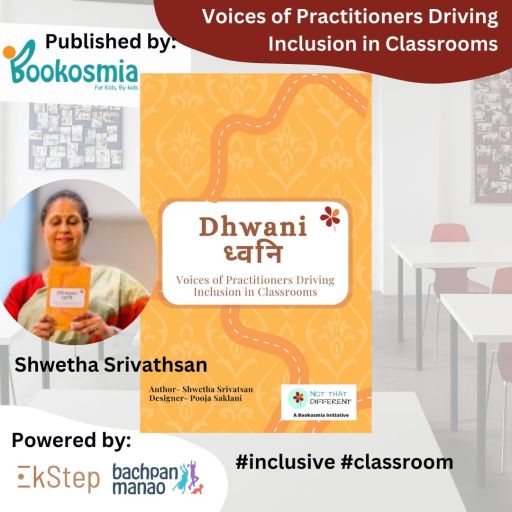
Dhwani I Voices of Practitioners Driving Inclusion in Classrooms
This article is published by Bookosmia, India’s #1 publisher for and by young people. Bookosmia publishes stories, books, podcasts, events, TED-Ed talks, workshops, bedtime stories and more related to kids and young adults.
Photo Credit – AI generated images from Chat GPT and Magic Media from Canva .
Want to publish your articles, reviews, stories, audio stories, bedtime stories and poems ?
Did you know that children can submit audio stories to be turned into Bedtime Stories and published on Bedtime Stories – A Podcast by Bookosmia?
Write to us at sara@bookosmia.com or submit your article at the link below
Read More