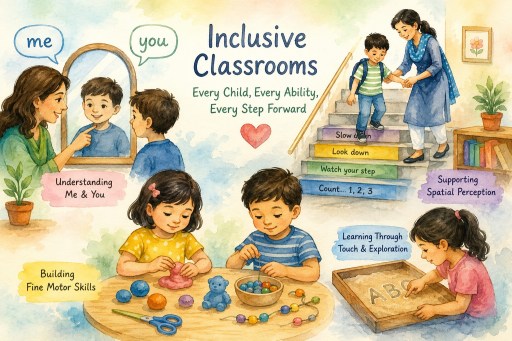
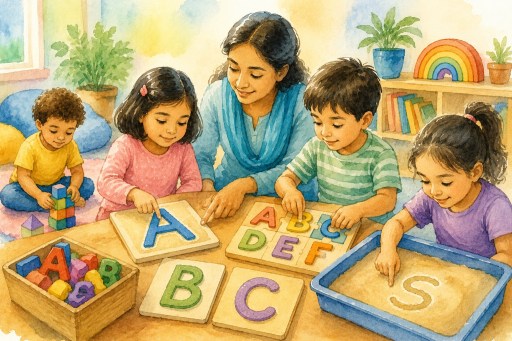
Bachpan Manao, which translates to “Celebrate Childhood,” is a central theme and mission powering the Dhwani manual. It represents an invitation to educators to move beyond traditional teaching and instead celebrate the opportunity to create a thriving childhood for every child, regardless of their neurodiversity or ability. The manual is supported by the EkStep Foundation, where Deepika Mogilishetty leads the Bachpan Manao, Badhte Jao mission. This initiative focuses on the early childhood years, leveraging networks and narratives to ensure that growth and development are prioritized through wonder, play, connection, and curiosity. By embracing this philosophy, Dhwani encourages teachers to view themselves as champions of childhood joy, making small adjustments and practicing deep observation to ensure every student feels seen and heard. It shifts the focus of inclusion from a legal mandate to a joyful celebration of diversity, where neurodiversity is viewed as a strength rather than a challenge. Ultimately, the mission aims to transform classrooms into spaces where learning is an experience of growth for every child, and teachers are celebrated for their role in facilitating this happy, inclusive environment.
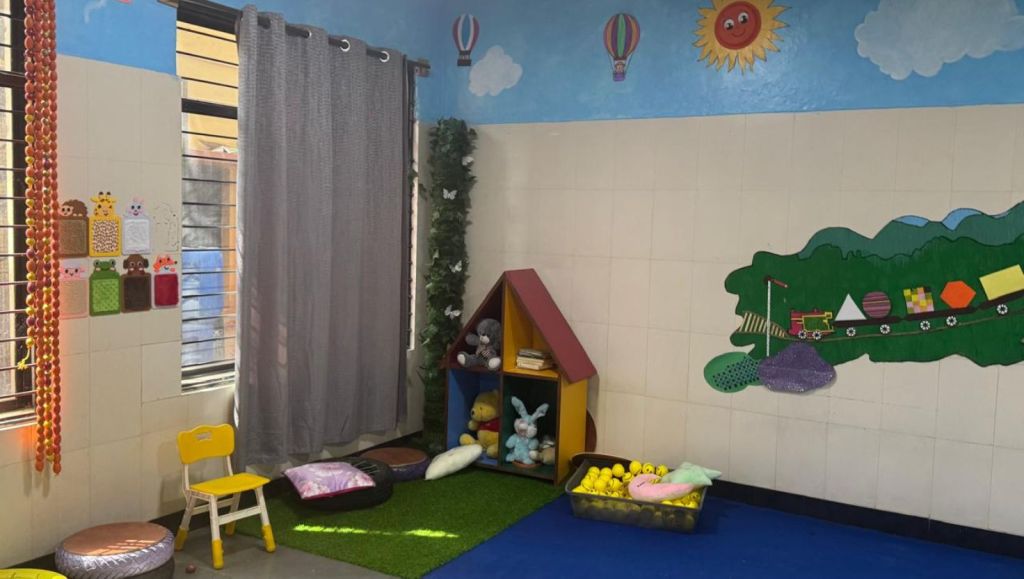
The Dhwani manual suggests using visual cues to clearly define and delineate different areas within the classroom, such as floor markings or curtains. This strategy is particularly effective for children with sensory processing challenges who may feel overwhelmed by open, unstructured environments. By using floor markings to mark off workstations, quiet areas, or sensory corners, teachers provide students with a sense of predictability and boundaries.
Practitioner Dr. Sumathi Ravindranath highlights in Dhwani that defining a personal space—such as a mat placed against a wall or a specific table and chair arrangement—is a profound act that minimizes peripheral distractions and fosters a sense of safety and security. These physical boundaries allow neurodiverse students to focus better, which in turn reduces anxiety and helps mitigate “social clumsiness” that can occur when a child is unsure of where they belong in the room. Additionally, setting up the classroom with neutral wall colors and minimal decorations alongside these clear markings helps reduce visual clutter, ensuring that the physical infrastructure supports speech understanding and communication accessibility for all learners.
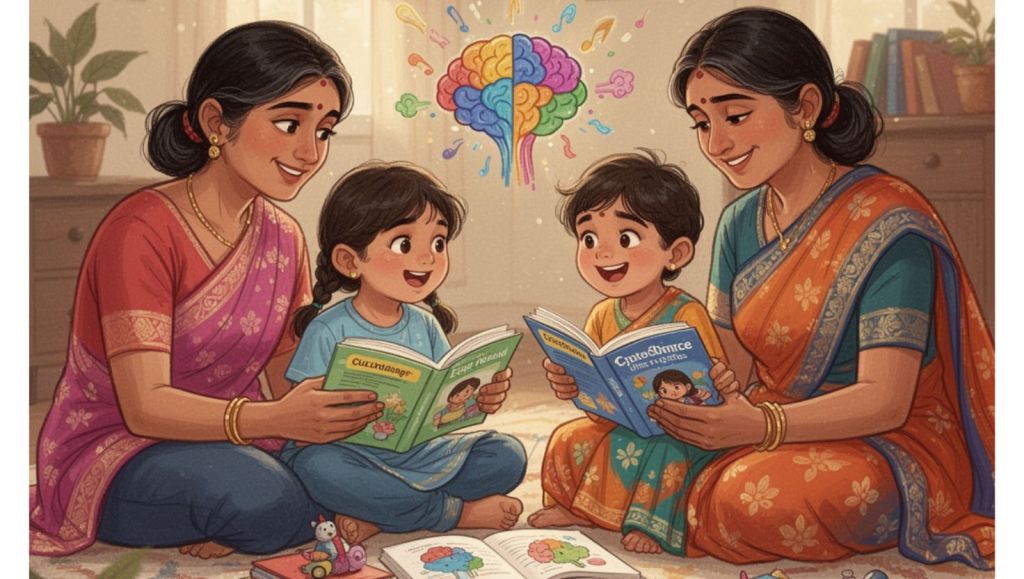
According to Dhwani, Break Cards are visual tools provided to students to help them signal when they need a pause due to sensory challenges, fatigue, or feeling overwhelmed. These cards empower students to communicate their needs non-verbally, allowing them to step away to a quiet area or sensory corner before their distress escalates into an emotional meltdown. The manual emphasizes that sensory breaks—lasting around five minutes—provide a non-punitive space for a child to engage in calming activities like reading a book or playing in a designated area. By incorporating these scheduled or student-initiated breaks, teachers help the child regain composure and regulate their emotions without the interaction being perceived as a punishment or a consequence of failure. Furthermore, Dhwani notes that meltdowns often occur when a child’s “error alarm” or sensory system is hypersensitized. Using tools like Break Cards allows the student to practice self-regulation, which is the ability to control one’s behavior and thoughts before acting. This proactive approach ensures that both the teacher and student remain regulated, which is essential for maintaining a safe and calm classroom environment.
For a child who struggles with poor attention spans or sensory hypersensitivities, the Dhwani manual recommends specific seating strategies to maximize focus. Educators should avoid seating these children near windows, doors, or other high-traffic areas, as these locations increase exposure to external auditory and visual distractions. Instead, the manual suggests assigning the student to a quieter part of the classroom, ideally away from the main flow of movement. Practitioner musings within Dhwani emphasize that for neurodiverse learners, especially those with ADHD profiles, defining a personal space against a wall can serve as a “haven of comfort,” minimizing the curveballs thrown by a busy environment. This arrangement helps reduce the sensory input that triggers fidgeting or the urge to strike up inappropriate conversations. Teachers are also encouraged to provide flexible seating options and use visual cues like mats to help the child understand their physical boundaries. By placing the child in a low-distraction zone, the teacher can then use clear, one-on-one instructions and prompts to ensure the student feels safe, engaged, and capable of completing their tasks.

What is the “Bachpan Manao” mission in the Dhwani manual?
Bachpan Manao, meaning Celebrate Childhood, is the guiding philosophy behind the Dhwani manual. It encourages educators to create joyful, inclusive classrooms where every child—regardless of ability or neurodiversity—is valued, supported, and given opportunities to learn through play, curiosity, connection, and wonder. Rather than treating inclusion as a requirement, the mission celebrates diversity as a strength and empowers teachers to nurture every child’s potential.
The Dhwani manual recommends using visual cues such as floor markings, mats, curtains, or colored tape to clearly define quiet zones, workstations, and sensory corners. These physical boundaries help children, especially those with sensory processing differences, understand classroom expectations, reduce distractions, improve focus, and feel secure in their learning environment.
Break Cards are visual communication tools that allow students to indicate when they need a short sensory or emotional break. Instead of becoming overwhelmed or experiencing a meltdown, children can use a Break Card to access a designated quiet space, helping them regulate emotions, reduce stress, and return to learning calmly. This promotes independence and self-regulation in an inclusive classroom.
According to the Dhwani manual, children who are sensitive to noise or movement should be seated away from doors, windows, and busy walkways. A quieter corner of the classroom, with clearly defined personal space using mats or visual boundaries, helps minimize distractions, improve concentration, and create a sense of safety for neurodiverse learners.
A quiet area provides students with a calm, low-stimulation space where they can regulate emotions, recover from sensory overload, or simply take a short break. These spaces support emotional well-being, reduce anxiety, and help children return to classroom activities feeling more focused and confident.
The Dhwani manual views neurodiversity as a natural and valuable part of human diversity. Instead of focusing on deficits, it encourages educators to recognize each child’s unique strengths, adapt teaching methods, and build classrooms where every learner feels respected, included, and capable of success.
Teachers can make classrooms more inclusive by:
Teachers can prevent emotional meltdowns by recognizing early signs of distress, offering Break Cards, providing sensory breaks, maintaining predictable routines, reducing overwhelming stimuli, and responding calmly and empathetically. Proactive support helps children develop emotional regulation and confidence.
The Dhwani manual encourages teachers to practice deep observation to understand each child’s learning style, sensory preferences, communication needs, and strengths. Careful observation enables educators to make thoughtful adjustments that improve participation and ensure every child feels seen, heard, and supported.
The Dhwani manual aims to help educators build joyful, accessible, and inclusive classrooms where every child can thrive. By combining practical strategies with the philosophy of Bachpan Manao, it empowers teachers to create environments that celebrate diversity, foster belonging, and make learning meaningful for all children.
Where can I buy books?
You can buy books at Bookosmia website’s Shop section and Amazon.
Where can I buy the book – Dhwani?
Dhwani is an inclusive, mindfulness-based initiative designed to support the emotional well-being of teachers and students while fostering truly inclusive classrooms. Rooted in research from education, psychology, and neuroscience, Dhwani recognizes a simple truth: regulated teachers create safe, inclusive learning spaces.
At its core, Dhwani focuses on self-regulation, awareness, and emotional literacy. The curriculum equips educators with practical tools—such as grounding exercises, breathing techniques, and reflective practices—that can be used in real classroom moments, not just in theory. These tools help teachers respond with curiosity rather than control, and empathy rather than assumption.
Dhwani believes inclusion is not a checklist or a one-time intervention, but an ongoing journey. By supporting teachers’ mental health, Dhwani helps reduce burnout, unpack unconscious bias, and build resilience—making inclusion sustainable rather than exhausting.
Through simple, age-appropriate practices, Dhwani also empowers students to understand their emotions, feel safe, and stay engaged, creating classrooms where every child is seen, valued, and supported.
In essence, Dhwani begins with the teacher’s well-being—because inclusion starts from within.
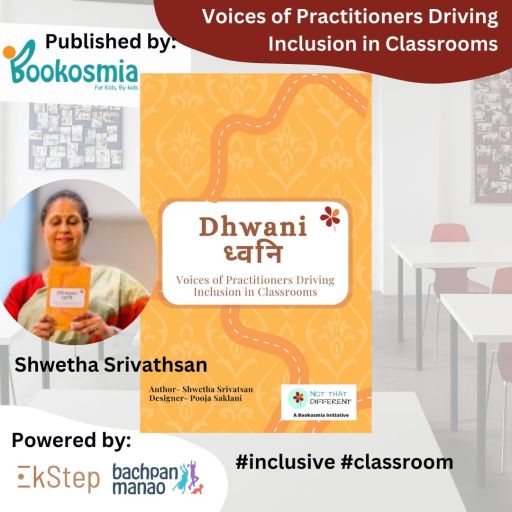
Dhwani I Voices of Practitioners Driving Inclusion in Classrooms
This article is published by Bookosmia, India’s #1 publisher for and by young people. Bookosmia publishes stories, books, podcasts, events, TED-Ed talks, workshops, bedtime stories and more related to kids and young adults.
Photo Credit – AI generated images from Chat GPT and Magic Media from Canva .
Want to publish your articles, reviews, stories, audio stories, bedtime stories and poems ?
Did you know that children can submit audio stories to be turned into Bedtime Stories and published on Bedtime Stories – A Podcast by Bookosmia?
Write to us at sara@bookosmia.com or submit your article at the link below
Read More