The Sensory Room at DPS North Bangalore is designed as a safe, inclusive, and adaptive learning space that supports children with diverse sensory needs, learning paces, and emotional regulation challenges. Its primary purpose is not stimulation for stimulation’s sake, but sensory regulation—helping children feel calm, focused, and ready to learn.
Aligned with Dhwani’s inclusive education framework, the room recognizes that children process sensory information differently. For some, learning becomes difficult due to overwhelming
auditory input, visual clutter, or tactile discomfort. The sensory room offers a controlled environment where children can self-regulate, decompress, or engage in structured sensory play that enhances concentration and emotional safety. Rather than pulling children away from learning, the room acts as a bridge helping them return to classrooms feeling grounded and confident.
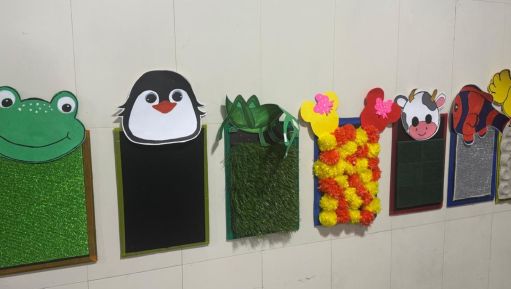
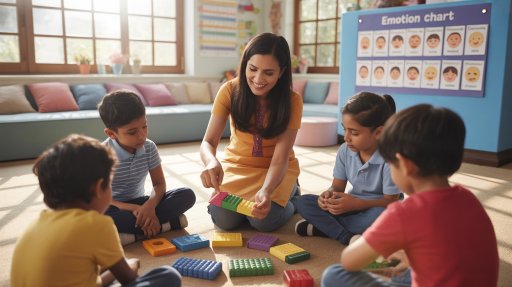
A key feature of the DPS sensory room is its distinct tactile play stations, inspired Dhwani’s recommendations for multi-sensory engagement. Activities such as “draw the animal” using different textured materials allow children to explore learning through touch rather than only sight or sound.

Incorporating stations with water, sand, cotton, jute, and textured surfaces supports proprioceptive and tactile sensory processing. These materials allow children to explore temperature, resistance, softness, and movement—elements crucial for children who struggle with sensory integration. Such activities are particularly effective for children who find traditional pen-and-paper tasks restrictive or overwhelming.

What makes DPS’s approach noteworthy is that all materials are created using recycled school waste and stationery, including cotton remnants and jute. This not only promotes sustainability but also sends a subtle yet powerful message: learning does not require expensive tools—only thoughtful design. By encouraging hands-on exploration at an individual pace, the room respects each child’s rhythm, reducing pressure and comparison while fostering curiosity and autonomy.

Emotional regulation is central to effective learning, and DPS North Bangalore addresses this through intentional mindfulness and expression-based activities. The “Just Breathe” activity
serves as a structured mindfulness exercise where children are guided to focus on breathing, pause from overstimulation, and reconnect with their bodies.
Complementing this is the emotional expression wall, featuring prompts such as “Today I feel happy / sad / hopeful / calm.” This visual tool empowers children to identify and communicate
emotions without needing advanced verbal skills. For many children—especially those with speech delays or emotional processing challenges—this creates a sense of validation and psychological safety.
According to Dhwani, such tools also help reduce auditory overload by minimizing verbal instruction and replacing it with clear visual communication, thereby supporting speech understanding and emotional literacy. Together, these elements ensure that the sensory room is not merely a physical space, but an emotionally responsive environment.
One of the subtler yet most impactful aspects of the DPS sensory room is its intentional visual design. The room uses neutral wall colours and limits decorative clutter. This prevents visual overstimulation, which can distract or distress children who are sensitive to busy environments.
However, neutrality does not mean ambiguity. The room uses visual cues—such as floor markings, partitions, or curtains—to clearly define activity zones. These cues help children understand transitions, expectations, and boundaries without constant verbal reminders. Clear spatial definition supports independence and predictability, both essential for children who rely on structure.
By balancing minimalism with clarity, the sensory room creates an environment that feels calm yet purposeful—allowing children to engage deeply without feeling overwhelmed.
This Blog is written by Akshita Yadav
Akshita Yadav is an 18-year-old undergraduate student from Nagpur, currently pursuing a Bachelor of Business Administration (BBA) at the Indian Institute of Management Bodhgaya (IIMBG). She has a keen interest in public policy and strategy, with a particular focus on neurodiversity and allied social policy domains. Akshita aspires to work in policy research and contribute to the nation’s think tanks through policy notes, strategic analysis, and inclusive governance frameworks.
What is a sensory-friendly classroom?
A sensory-friendly classroom is a thoughtfully designed learning space that reduces sensory overload and supports children who process sound, light, touch, and movement differently. It uses calm visuals, tactile tools, and structured zones to help students stay regulated, focused, and emotionally secure.
How is a sensory room different from a regular classroom?
A regular classroom prioritizes instruction; a sensory room prioritizes regulation. It is a controlled environment where children can decompress, self-regulate, and return to class ready to learn. It acts as a bridge to learning, not a replacement for it.
Who benefits from a sensory room or sensory-friendly setup?
Children with sensory processing challenges, autism, ADHD, anxiety, speech delays, and emotional regulation difficulties benefit greatly. However, sensory-friendly design supports all learners by creating calmer, more predictable environments.
What types of activities help with sensory regulation?
Tactile and play-based stations using materials like sand, water, cotton, jute, textured mats, and recycled craft items help children explore touch, resistance, temperature, and movement. These experiences support sensory integration and reduce stress.
Why are neutral colours and minimal décor important?
Bright, busy walls can overwhelm sensitive learners. Neutral colours and clutter-free walls reduce visual noise, helping children concentrate better and feel calmer.
How do defined zones in the room help students?
Floor markings, partitions, or curtains create clear activity areas. These visual cues reduce the need for constant verbal instruction and help children understand boundaries, transitions, and expectations independently.
How does a sensory space support emotional safety?
Tools like an emotions board (“Today I feel…”) and mindfulness prompts such as “Just Breathe” help children identify, express, and regulate emotions without needing advanced verbal skills, fostering psychological safety.
Does creating a sensory room require expensive equipment?
No. As seen in DPS North Bangalore’s approach, many effective tools can be made from recycled school materials and simple textures. Thoughtful design matters more than costly equipment.
How does a sensory room improve classroom learning outcomes?
When children are calm and regulated, their attention span, participation, confidence, and readiness to learn significantly improve. The sensory room helps students return to class grounded and focused.
Can regular classrooms adopt sensory-friendly practices without a dedicated room?
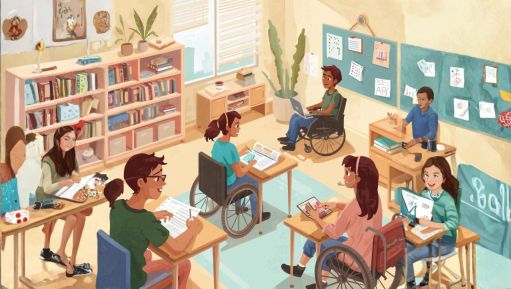
Yes. Simple changes like soft lighting, neutral walls, a quiet corner, tactile tools, and visual emotion charts can make any classroom more inclusive and sensory supportive.
Where can I buy the book – Dhwani?
Dhwani is an inclusive, mindfulness-based initiative designed to support the emotional well-being of teachers and students while fostering truly inclusive classrooms. Rooted in research from education, psychology, and neuroscience, Dhwani recognizes a simple truth: regulated teachers create safe, inclusive learning spaces.
At its core, Dhwani focuses on self-regulation, awareness, and emotional literacy. The curriculum equips educators with practical tools—such as grounding exercises, breathing techniques, and reflective practices—that can be used in real classroom moments, not just in theory. These tools help teachers respond with curiosity rather than control, and empathy rather than assumption.
Dhwani believes inclusion is not a checklist or a one-time intervention, but an ongoing journey. By supporting teachers’ mental health, Dhwani helps reduce burnout, unpack unconscious bias, and build resilience—making inclusion sustainable rather than exhausting.
Through simple, age-appropriate practices, Dhwani also empowers students to understand their emotions, feel safe, and stay engaged, creating classrooms where every child is seen, valued, and supported.
In essence, Dhwani begins with the teacher’s well-being—because inclusion starts from within.
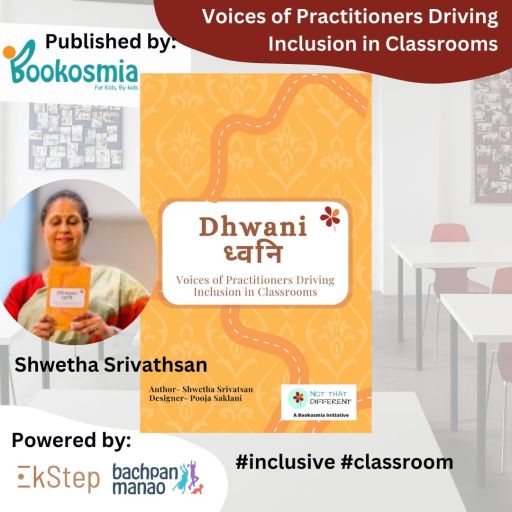
Dhwani I Voices of Practitioners Driving Inclusion in Classrooms
https://bookosmia.com/teachers-mental-health-inclusive-classrooms/
***
This article is published by Bookosmia, India’s #1 publisher for and by young people. Bookosmia publishes stories, books, podcasts, events, TED-Ed talks, workshops, bedtime stories and more related to kids and young adults.
Photo Credit – Copyright Free, Royalty Free images from pexels and canva
Want to publish your articles, reviews, stories, audio stories, bedtime stories and poems ?
Did you know that children can submit audio stories to be turned into Bedtime Stories and published on Bedtime Stories – A Podcast by Bookosmia?
Write to us at sara@bookosmia.com or submit your article at the link below
Read More