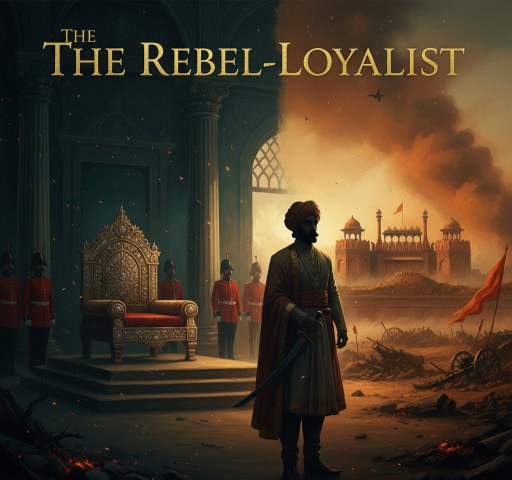
I find immense pleasure and joy in writing this fictional narrative. I would like to inform the readers that this short story is merely a fictional narrative. This short story is set in the background of the revolt of 1857 proclaimed by many as the first war of independence. Readers should take a note that it is not meant to hurt the sentiments of any individual rather a non-historical first person narrative short story based on my imagination. Therefore the reader will be responsible for any action he/she has taken by reading this short story.
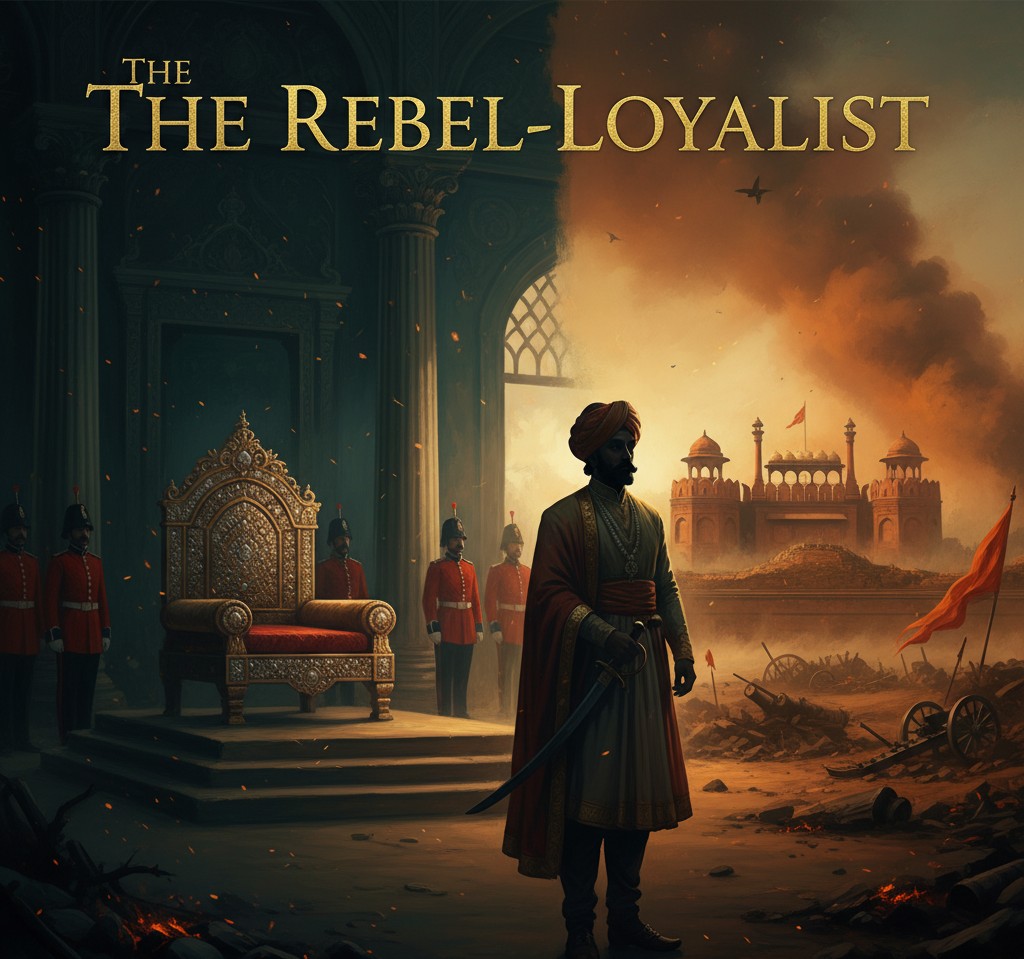
It was the day of hanging of Mangal Pandey, 7th April 1857 and I, Jag Bandhu Dutta zamindar of Midnapore sitting on my Diamond throne which was gifted to my great grandfather by Late Nawab Sirajuddaulah before the defeat at Plassey (Palashi) was staring absent mindedly at the courtroom of Midnapore and thinking profoundly about Mangal Pandey who had ignited the spark which was required to set ablaze the whole Hindustan.
My state Midnapore had been forced the subsidiary alliance by the British and I could not think of joining the rebels even if I wanted to do so. My army had been disbanded by the British and now my palace just to call a lavish home prison flooded with British sepoys and officers was scarcely the palace of an independent Zamindar. I was only allowed to keep a few bodyguards, which were however a no match for the artillery stationed at my palace.
The sepoys of the British saw me with eyes of enmity and the resident, Sir. David Johnson he was a man of luxury who did not focus on anything but my royal treasury and because of him my half of the treasury is empty and I can easily predict that if he is stationed at my court for the coming 5 years, he will make me a ‘jamadar’ (sweeper and road cleaner) from a Zamindar. The British officials often torturing and beating the citizens of my Zamindari especially the peasants who were forced to flee from their lands, lands which they have cultivated since ages.
My zamindari’s all raw materials taken to England by the Railways introduced by the British and I and all my citizens forced to buy their pathetic English machine made goods which were no match for our rich textiles. I, even after seeing so much of cruelty and coercion by the British East India Company could do nothing to save my people and my Zamindari. I thought that though I had everything gold, silver, protection by British army and a fairly strong palace still I had got nothing, no power, no prestige and no authority. This was the misery of every ‘Babu’ of Bengal.
Thirty days had passed until one day I got some news from the so proclaimed ‘Jahan Panah’ of India, Bahadur Shah Zafar. He had sent a letter to me discreetly and I received it as a scroll from one of my bodyguards without the knowledge of the Britishers. I opened the scroll and thought that it was a secret message for participating in the revolt of 1857.
Dear Zamindar Babu of Midnapore, Hon’ble Shreemaan Jag Bandhu Dutta,
This is a letter from the Mughal Emperor, Bahadur Shah Zafar. You must know that on 10th May 1857 there was a revolt in Meerut and they have stormed the city. They have reached Delhi and have captured Delhi too and we are ready for a mass campaign against the oppressive British rule. Many leaders of Hindustan like Nana Saheb Peshwa and a zamindar like you Kunwar Singh have agreed to support us. Much plannings are going on. We request you to support us in this campaign and in our vision towards Independent Hindustan.
Yours sincerely, Bahadur Shah Zafar
As I finished reading a British sepoy entered my room, fortunately he did not know anything of it and I quickly hid the scroll. “What happened?” I said, he answered that the resident Sir David Johnson was calling me. I went to the courtroom and saw him waiting for me impatiently. I asked him “What is the matter, Sir David?”.
He answered with an expression of grief though inside his mind he was cheering mirthfully, “Babu Jag Bandhu you should be aware that since you are unmarried and you have no BIOLOGICAL heir your Zamindari will be a part of English East India Company after your death.”
I was in a surprise “What? Why is so? Why can’t I adopt an heir?”.
He replied, “The Governor- General has strictly forbidden that, he has said any state having no biological heir will be annexed by the British EIC and no appeals regarding the same will be accepted whatsoever.”
I asked no further questions and went back to my room thinking over the same topic on and on again. Once I had a impulse to accept to Jahan Panah’s proposal and fight against the British who were exploiting my Midnapore but the thought that in Bengal all ‘babus’ were supporters of the British made me take the decision of being a Rebel -Loyalist.
Being a rebel-loyalist means being loyal to the British but still being a rebel internally. How could this be done? I was thinking over it while having dinner that day. Finally I got an idea of being an internal spy of Jahan Panah.
I sent the reply to Jahan Panah through my most entrusted bodyguard Sanjeev and I burned the Jahan Panah’s letter so that it could not be found by the British sepoys. The reply was a very discreet message which was designed such that even if anyone else got that letter he could not understand that I was the writer nor that Jahan Panah was the receiver. It was intentionally written using poor grammar so that the reader does not understand much of my plan.
Dear, I writing because u sed that u gonna need some help I am ready to help u. However keep mind that I am actor behind the scenes.
Thank you, Your well-wisher.
I had sent the letter and was hoping that Jahan Panah would receive it within a month or so. However I was now worried that even though I had promised to support the rebels how could I do so? With these thoughts I slept that day rather stressfully.
Next day I woke up and started planning how to act ‘behind the scenes.’ To my relief I remembered that in Midnapore there was a man whose face was identical to me and I got a incredible idea. I went to his home and told me my plans to him and also informed him that he will secretly enter the palace through a ‘surang’ which only I knew and then I will leave Midnapore to reach Delhi being a Rebel-Loyalist and he will serve as the Babu of Midnapore till I return from my journey, the journey which I wanted to embark long back, the journey to freedom (“Azaadi”).
The plan went on as I had expected and I was able to cover escape from the tunnel and the man named Sagar replaced me. I took my horse which I hid in the exit of the tunnel and covering myself with black clothes from nose to toe as if like a dacoit I started cantering my horse to reach Delhi taking a magnetic compass, a sword (“Talwar”) , my pistol and plenty of gold and silver coins from my treasury along with me.
As I was about to leave Midnapore to finally enter Durgapur I saw some British guarding the border. I had no intention of returning and therefore took out my sword rather than pistol and riding my horse at fairly fast pace wounded couple of them who tried to stop me, they however could not know my identity. That day I travelled through almost 50 miles and had already reached Chotanagpur (Sahibgunj) and I rested along the shore of the river Ganga footsore, tired and exhausted.
When I woke up I caught cold and was very ill bought some breakfast from a nearby village’s breakfast shop. I however thought of dropping the plan of reaching Delhi and rather join the revolt at Jagdishpur because it was only 200 miles away. I planned to some 20-25 miles that miles with my horse but to my horror as I tried approaching Bhagalpur there were almost a regiment guarding the border and it was useless to fight because there were guns with them.
Since I thought that they would not know me that I am the Babu of Midnapore I should show my face and request for going further making some excuses such as that my family lives in Bihar. The plan worked but I had to throw away the pistol because it was not allowed. So I reached Bhagalpur and was looking for anywhere to stay and found a haystack where I comfortably slept that day eating a bread which I had bought from a vendor but then a thought came to my mind that I never had to sleep so miserably being a Zamindar of a estate but perhaps for the nation, for the country and for my people it is necessary.
In this way I succeeded to reach Arrah after more 2 days and most of my money was spent, I had no weapon to counter the enemies nor I had any strength left in my body. I heard news from some people that after some days there will be a siege in Arrah which Kunwar Singh is planning. I thought I must support him in that. I however had no place to stay nor enough money to rent a house. Therefore I decided to attack any British residence which was weak and after discreet talks with people I came to know that there was a small regiment in Arrah, 24th Native Infantry regiment which had only 40-50 men and were in short of weapons and therefore I decided to attack it myself.
I had learnt sword fighting throughout my life and was well versed in it therefore with great courage I launched an open attack on the regiment. At first I was gaining the upper edge having wounded 20 men but then the rest sepoys started firing at me and I was trying to avoid the bullets. To my fortune I got the cannon to my control and since I knew it to operate I fired it and the entire residence got blown up all all the sepoys including the British officer stationed there died.
I was surprised by it, I had never killed any Britisher till now and now it had been done. I was too afraid thinking the news would spread and David would come to know that I am the culprit. The consequence however happened entirely different, Next day after fleeing from the site and capturing the weapons that were left I got kidnapped and when I came to know I was in Jagdishpur presented in front of Kunwar Singh kneeling before him.
He asked “Who are you? I have heard you have blown up the 24th Native Infantry at Arrah. Why? Are you our supporter or merely an agent of British trying to fool us.”
I said in a fearful manner “Maharaj I am a rebel of 1857 and have come here in order to support you and your allies”.
He said “Why would you do so? Who are you? Why should we believe you? What if you are a spy?” .
I replied “I am a spy Maharaj but not working for Britishers but for Indians, I am a Rebel-Loyalist.”
Maharaj Kunwar Singh stunned and questioned “REBEL LOYALIST ? What do you mean?”
I quickly had my lunch and packed some snacks from Chandni Chowk in Delhi and started returning for Midnapore to regain my position as a loyalist. Everything was fine until I reached Agra the next day one of my loyal bodyguards Sheikh who was secretly following me told me that British had understood that Sagar was the fake Zamindar and had an identical face much before when I was in Jagdishpur.
The British already suspected him due to his inept demeanor which contrasted with my royal demeanor. He told that Sagar had been given life imprisonment sentence and also that British have fully claimed Midnapore Zamindari and all his bodyguards have been killed , Sheikh however managed to flee.
He told “Everything is gone , Sahib , what can we do now?”
I was terrified by this news. I knew it was of no use hiding from the British but I must prove by any way that I did not blew up the regiment (I did not kill any British) I only fled from Midnapore to support the rebels which I failed to do so , so that I can get some mercy. I asked Sheikh to hire some lawyers and till then I hid in Taj Ganj in Agra near the magnificent Taj Mahal.
That day I slept in a small abandoned cottage in Taj Ganj thinking amidst the rains that I had failed as a loyalist too. Rain dripped steadily through a small gap in thatched cottage which reminded me every second of the consequences if I was not able to prove myself acquitted.
After some days I surrendered to the Agra Police and Sheikh hired me a prominent lawyer till I was in lockup. Finally I was to be presented to the Allahabad High Court on 19th December 1857. I saw David Johnson who was on the plaintiff’s side.
The case was actually: “British East India Company v. Jag Bandhu Dutta”
The Judge asked me many questions as David told the Judge to ask including why I had fled ? Who was Sagar? I answered everything correctly however I gave a false answer to the question “Did you bombard the Arrah 24th Regiment?” which he asked that “No sir I did not bombard any regiment I never went to Arrah I took another route to reach Jagdishpur.” Hoping for mercy.
I was replied “Okay we can believe you since there are no survivors of the case and we have no evidence for it. But you still attempted to support Zafar which is treachery and you will be punished”.
I was horrified at it and remained silent. The judge ‘s next words however gave me relief “Queen Victoria has however said that if any Zamindar has not killed any British officer and had only tried to support the rebels he can be forgiven however we cannot return you your zamindari nor we can allow you to stay in your land”.
These words gave me relief. The Judge ordered “I punish him with a lifetime home confinement in South India with a monthly pension of only 16 annas and with a servant following his treacherous act against the government.”
I was both relieved and unhappy. I was feeling sad to leave my homeland Midnapore and survive at such a tiny pension of 1 rupee every month.
After being exiled to a bungalow in Idukki, cardamom fields with one servant and two guards guarding the entrance and a pension of 16 annas I spent rest of my life there.
Until one day in 1860 a dream came to me of Bahadur Shah Zafar as if he was too thinking of me from Jail he was saying “Bandhu…I read your letter I am sad you could not help us nor you could help Kunwar Singh but I am truly glad of your courage and patriotism. Bandhu.. you did not fail you succeeded both as a loyal general to me and a rebel for the British. I am waiting for you Bandhu.”
And that day I woke up and after drinking my cardamom tea I suddenly started getting a pain in my heart and suddenly my cup fell and before my servant or the guards could come I shouted loudly “Mathrubhoomiye snehikkuka” ( I love my Matr Bhoomi ) and fell to the ground thinking of Zafar’s words “You succeeded both as a loyalist and a rebel” which truly contrasting with my belief.
The day was 7th April 1860.
Vande Mataram!

What is The Rebel-Loyalist: A Tale of 1857 about?
The Rebel-Loyalist: A Tale of 1857 is a fictional short story set during the Revolt of 1857. It follows Jag Bandhu Dutta, a zamindar of Midnapore, who struggles between loyalty to the British and his inner desire to support the Indian rebellion for freedom.
Who is the main character of the story?
The main character is Jag Bandhu Dutta, a zamindar of Midnapore who secretly supports the rebels while outwardly appearing loyal to the British.
What does the term “Rebel-Loyalist” mean in the story?
A “Rebel-Loyalist” refers to someone who appears loyal to the British authorities but internally supports the Indian rebellion and works secretly for the cause of freedom.
Which historical events inspired the story?
The story is inspired by the Indian Revolt of 1857, often called the First War of Independence, and mentions historical figures like Mangal Pandey, Bahadur Shah Zafar, and Kunwar Singh.
Why does Jag Bandhu Dutta leave Midnapore?
Jag Bandhu leaves Midnapore secretly to support the rebellion after receiving a message from Bahadur Shah Zafar. He replaces himself with a look-alike in the palace and begins a dangerous journey toward the rebel leaders.
What happens to Jag Bandhu Dutta’s zamindari?
The British discover the deception and annex the Midnapore zamindari. His substitute, Sagar, is imprisoned, and Jag Bandhu loses his land and power.
How does the British court punish Jag Bandhu Dutta?
Instead of execution, the court sentences him to lifetime confinement in South India with a very small pension and forbids him from returning to his homeland.
What realization does Jag Bandhu have at the end of the story?
Near the end of his life, Jag Bandhu dreams of Bahadur Shah Zafar, who tells him that he did not fail—he succeeded both as a loyalist and a rebel through his courage and patriotism.
What is the significance of the final words “Vande Mataram”?
“Vande Mataram” symbolizes love for the motherland and represents Jag Bandhu’s deep patriotism and devotion to India.
Is the story historically accurate?
No. The author clarifies in the preface that the story is a fictional narrative inspired by the historical background of the Revolt of 1857, created through imagination and not meant to be a historical account.
Where can I buy books?
You can Buy Books at Bookosmia Website and Amazon.
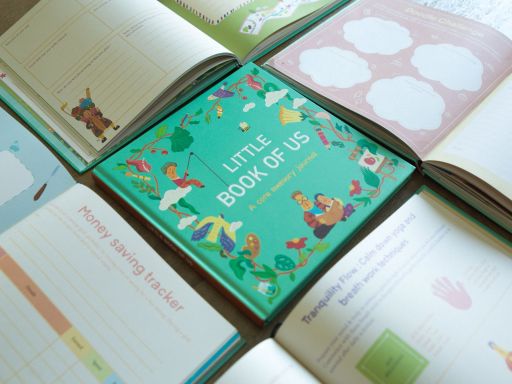
Looking for meaningful ways to spend quality time with your child in today’s busy world? Little Book of Us, published by Bookosmia, is a thoughtfully created parent-child bonding journal designed to help families slow down, connect, and create lasting memories together. Created by Trisha, this beautifully designed journal goes beyond a typical activity book by offering guided experiences that encourage conversation, reflection, and shared moments between parents and children. Filled with vibrant illustrated pages, engaging activities, fun family prompts, and meaningful conversation starters, this guided journal for kids and parents helps strengthen emotional connection while making bonding time enjoyable and natural. From laughter-filled questions to thoughtful reflections and creative activities, each page invites families to build routines of connection and understanding. Perfect for parents looking for family activity books, memory journals for kids, or tools that encourage communication and emotional bonding, Little Book of Us supports children in expressing thoughts while helping parents stay present in everyday moments. Whether used during bedtime, weekends, holidays, or quiet evenings together, this journal becomes a keepsake of shared experiences and growing relationships. An ideal gift for parents and children, family keepsake journal, or thoughtful addition to home learning and mindful parenting routines, Little Book of Us celebrates the simple joy of growing together—one conversation, one memory, and one page at a time.
***
This article is published by Bookosmia, India’s #1 publisher for and by young people. Bookosmia publishes stories, books, podcasts, events, TED-Ed talks, workshops, bedtime stories and more related to kids and young adults.
Photo Credit – AI generated images from Chat GPT and Magic Media from Canva .
Want to publish your articles, reviews, stories, audio stories, bedtime stories and poems ?
Did you know that children can submit audio stories to be turned into Bedtime Stories and published on Bedtime Stories – A Podcast by Bookosmia?
Write to us at sara@bookosmia.com or submit your article at the link below