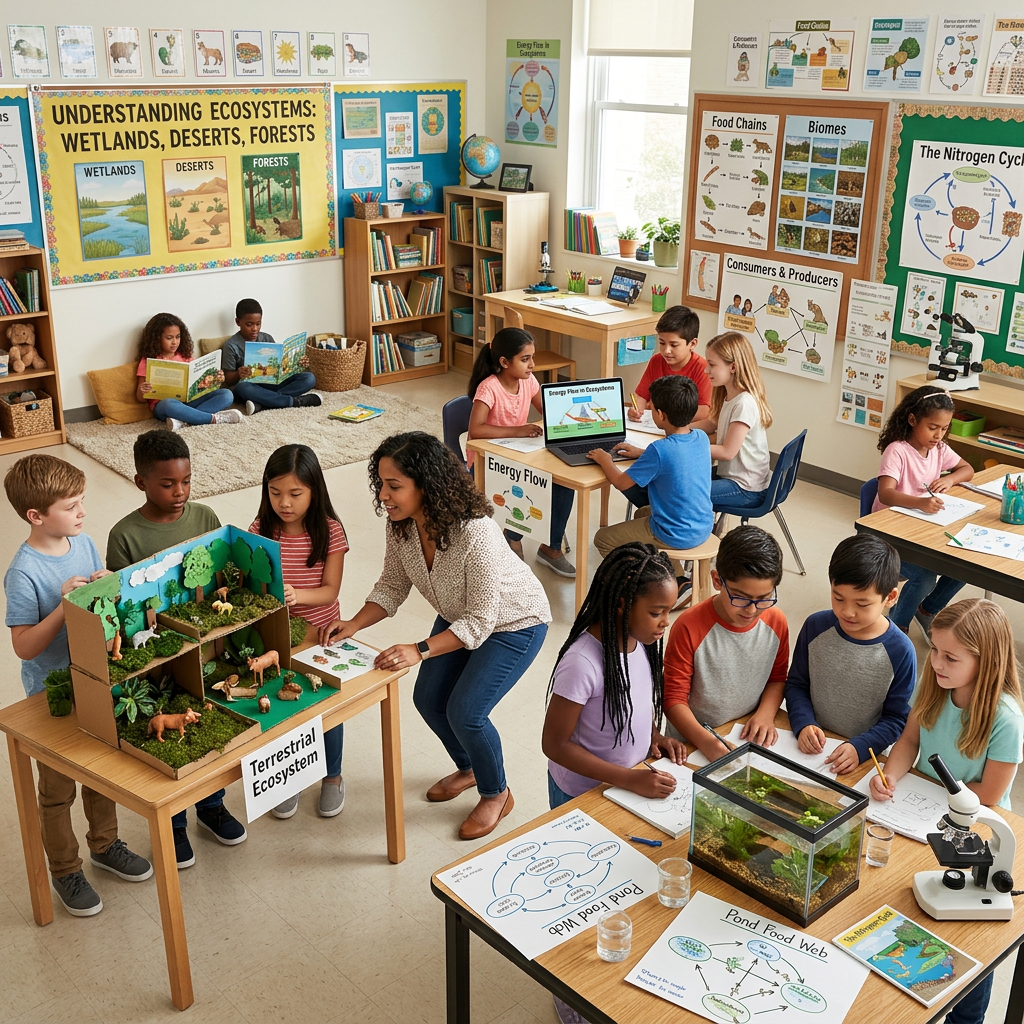
If you were to ask a common student what the purpose of their education is for, they are bound to say, “To secure a good future”.
As the world transforms into a whirlpool of new insights, scientific triumphs, and development, a major segment of our society is deteriorating silently. Education has altered from a source of wisdom to a ticket for a good future, causing students to take unrewarding paths to achieving this goal.
Classrooms, the core locations of the exchange of knowledge, unfortunately have several shortcomings, altering the purpose and attitude towards education.
Books have become the medium of education for every subject. Pedagogy, and hands-on learning has become a negligible component of didacticism and understanding of concepts. This system of transmitting knowledge results in lack of comprehension and excess reliance on materialistic sources instead of self-understanding. Tall stacks of “material” are thrust upon students, containing questions and their respective answers. Education is supposed to bestow the skills of being able to understand a topic thoroughly and present their understanding by answering questions regarding it in students. Memorization shouldn’t have to be mandatory to master a skill.
The teaching of languages has also seen several drastic plunges. When it comes to composing a form of writing, students are asked to refer to prompts and answers, further curtailing their ability to develop their own styles of writing, while replicating others’.
Many educators nowadays are emphasizing the prominence of a particular topic or concept based on their “weightage” in the exams, inculcating the idea in students that they are studying for exams, fostering factitious goals. Education is delivered to students in such a way that they consider it to be an input for an exam and not for their pursuit of knowledge.
In fundamental schooling, projects or other presentations of knowledge fail to achieve their goal of building a student’s understanding of a concept and demonstration of skill.
Educational Institutes have played a major role in redefining education and the methods implemented to pass it to students. The objective of ten strenuous years of elementary education has become to score well in the grade ten examinations, and so on.
Many foundations incorporate curriculums tailored according to the examinations they work towards. The sole purpose of examinations was to assess a student’s level of skill, while gradually, it has been the motive of the pursuit of education. Initially, examinations were perceived and used to analyze the educational inputs of students, while today, they have become the sole objective for acquiring education. The competitive examinations popular among today’s students result in over competition that does not benefit the student in any way.
As prominent subjects like mathematics, science, social studies, and technology have been deemed as mandatory, students are forced to study them, reducing their enthusiasm for obtaining knowledge. Many schools and colleges fail to offer courses in more creative spheres, where many students would’ve otherwise excelled. As students are compelled to study subjects they are not passionate about, while also being distanced from the areas they long for, they develop a natural discontent among schooling and education in general.
The educational system prevalent today limits a person’s potential. For instance, a scholar in vernacular languages is obstructed from studying them in higher platforms due to their lack of skill in geography, and more.
Students who are capable of securing high grades are given more appreciation than those whose talent goes unnoticed. Thus, the common systems of assessment fail to accurately identify skill. Institutes assess students in all subjects as a whole, so the notable skill that one might possess is overshadowed by the lack of another attribute.
Education should influence a student to identify the right career path that suits their interests at the right age, to enable them to prepare for their career at the right time.
Primary levels of education should provide students with skills essential in all spheres of life. These include fundamental calculations, literary skills, understanding of civics and more. During this time, they should be exposed and taught about various careers, and specialties.
Secondary levels of education should deduce the areas in which a student shows exceptional interest, and where they are likely to thrive. From that point onwards, they should be trained in that field to hold a career.
Sharpening Skillsets
This direction of schooling was prevalent in India’s history, where Gurukuls were the schools for children. Here, they would be trained in the fields where they showed talent and passion.
This system of education would also ensure that students are not compelled to study subjects that will prove to be unavailing in the future of scholars. They wouldn’t have to invest any prolonged time studying what doesn’t matter to them. This system will also ensure that in the future, careers will be held by people who are devoted to them, leading to a society where every person is skilled and works for a particular department of life.
Education should not be seen as the obligation of a student, nor a unanimous path to stability. It should be used to develop civic sense, invested in the betterment of the world, and for the pursuit of wisdom.
The essay argues that education should not merely aim at securing a good future or clearing examinations. Instead, it should focus on the pursuit of wisdom, development of life skills, civic sense, and helping students discover their true interests and potential.
Modern education has shifted from being a source of wisdom and understanding to becoming a means of securing grades, certificates, and job prospects. This shift has led to excessive memorization, exam-oriented learning, and a decline in creativity and critical thinking.
Some major flaws include over-reliance on textbooks and study materials, lack of hands-on learning, emphasis on exam weightage, suppression of independent thinking, and ineffective assessment methods that fail to identify individual talents.
Examinations, originally meant to assess learning, have become the sole objective of education. This has resulted in unhealthy competition, pressure on students, and learning aimed only at scoring marks rather than understanding concepts.
The system evaluates students on a uniform scale across all subjects, often ignoring individual strengths. Students passionate about creative or vocational fields are forced to study subjects unrelated to their interests, which restricts their growth and enthusiasm.
Educational institutes often design curricula around exam patterns and results, prioritizing grades over holistic learning. This approach reinforces rote learning and discourages exploration of diverse career paths.
While acknowledging the importance of core skills, the essay criticizes forcing all students to pursue the same mandatory subjects regardless of interest, as it diminishes motivation and overlooks diverse talents.
The ideal system focuses on identifying students’ interests early, building essential life skills at the primary level, and offering specialized training during secondary education. This enables students to pursue careers aligned with their passion and abilities.
The Gurukul system is presented as an example of interest-based education, where students were trained according to their talents. The essay suggests that adapting this philosophy could benefit modern education systems.
The essay emphasizes that education should be a tool for personal growth, social responsibility, and wisdom rather than a compulsory process aimed solely at examinations and job security.
What’s Your Take I Unfiltered Opinions Of Young India for Age 8+
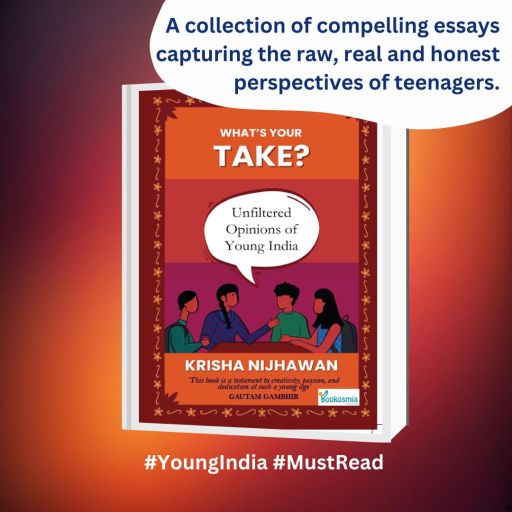
What’s Your Take – Unfiltered Opinions Of Young India by Krisha Nijhawan is a thought-provoking collection of essays that dives into the real questions teenagers face today from identity and education to nationalism and social media. Written by a 12th-grade student and aspiring lawyer, this debut brings raw, honest teen perspectives to the forefront. Perfect for readers interested in youth voices, student writing, and Gen Z insights into the world we live in.
The majestic beauty of the Himalayas draws Reet’s family back year after year- a travelogue filled with awe, adventure, and the pure joy of being one with nature.Step into the breathtaking Valley of Flowers with debut author Reet Jethalia in Cloud 9 on the Himalayas. More than just a travelogue, this book captures the raw beauty of the Himalayas while exploring the deeper truths of life, growth, and self-discovery. Written with honesty and emotional depth, it blends adventure, reflection, and literature-inspired storytelling, making it a must-read for teens, young adults, and travel enthusiasts.Whether you’re a mountain lover, an introspective reader, or simply someone looking for inspiration, this book promises to leave you with a fresh perspective on nature and life.

***
This essay is published by Bookosmia, India’s #1 publisher for and by young people. Bookosmia publishes stories, books, podcasts, events, TED-Ed talks, workshops, bedtime stories and more related to kids and young adults.
Photo Credit – AI generated images from Chat GPT and Magic Media from Canva .
Want to publish your articles, reviews, stories, audio stories, bedtime stories and poems ?
Did you know that children can submit audio stories to be turned into Bedtime Stories and published on Bedtime Stories – A Podcast by Bookosmia?
Write to us at sara@bookosmia.com or submit your article at the link below
Read More