A neurodiverse classroom includes students with varied cognitive, sensory, communication, and learning profiles such as ADHD, autism, dyslexia and dysgraphia. Traditional curricula often rely heavily on uniform teaching methods, written assessments, and fixed classroom structures, which may disadvantage many learners. A newly framed curriculum for neurodiverse classrooms must therefore adopt flexible and inclusive approaches based on Universal Design for Learning (UDL). This means presenting information in multiple ways, allowing different methods of participation, and offering varied forms of assessment. Such curriculum reform ensures that learning barriers are reduced and that students are evaluated on understanding rather than only on conventional academic performance.

An inclusive curriculum must move beyond “one-size-fits-all” instruction and incorporate flexible teaching and assessment methods. Instead of depending solely on written exams or essays, students should be allowed to demonstrate knowledge through oral presentations, visual projects, digital tools, speech- o-text software, graphic organizers, or practical models. Tasks should be scaffolded according to cognitive load, with lessons broken into manageable stages that support working memory and processing speed differences. Classroom environments should also be adapted through sensory-friendly modifications such as quiet spaces, flexible seating, movement breaks, and access to assistive tools like fidgets or noise-canceling headphones. Additionally, curriculum delivery should combine evidence-based literacy instruction with individualized supports so that students with dyslexia, dysgraphia, or intellectual disabilities can engage meaningfully with learning content.
Successful implementation requires collaborative planning among general educators, special educators, speech-language therapists, occupational therapists, and families. Curriculum accommodations should not function as isolated add-ons but should be embedded into everyday classroom practice through structured support systems such as Individualized Education Programs (IEPs) or inclusive learning plans. Assessment systems must also evolve
beyond standardized testing toward formative approaches including portfolios, observation rubrics, project-based learning, and digital learning logs that better capture diverse forms of progress. Continuous teacher training is essential because educators need practical skills in differentiated instruction, sensory regulation, assistive technologies, and inclusive classroom management. Research on UDL-based curriculum frameworks shows that when schools combine administrative support, teacher preparation, and flexible learning environments, neurodivergent students demonstrate improved engagement, participation, and academic outcomes.
A newly framed neuro-inclusive curriculum must extend beyond academic accommodations and actively recognize the diverse strengths, interests, and talents of students. While flexible assessments, sensory-friendly environments, and individualized instruction are essential, schools must also create opportunities for students to develop skills outside traditional classroom settings. Many neurodivergent learners demonstrate strong creativity, problem-solving abilities, artistic talent, leadership, or technical skills that may not emerge\ through standardized academic evaluation alone. As quoted in Dhwani, “Many students discover their passions outside the classroom. Teachers play a key role in recognizing hidden talents and providing opportunities for students to develop their unique skills.” This highlights the importance of extracurricular activities, collaborative projects, arts, sports, and student-led
initiatives within the curriculum framework. Teachers should therefore function not only as instructors but also as facilitators of self-expression and social growth. By organizing inclusive extracurricular programs and peer-based activities, schools can help students strengthen communication, collaboration, confidence, and emotional regulation skills, ensuring that neurodivergent learners are not merely accommodated academically but are empowered
holistically within the educational ecosystem.
Adapting instruction and assessment for ND learners benefits all students as it fosters:
Adopting flexible approaches ensures that information is presented in multiple ways, which reduces barriers for all students and allows them to be
evaluated on their true understanding rather than just conventional performance.
Breaking lessons into manageable, scaffolded stages supports the working memory and processing speed of every student in the class, making complex tasks feel more achievable.
When assessments move beyond written exams to include visual projects, digital tools, and oral presentations, it allows all students to demonstrate their unique talents and passions that might otherwise remain hidden.
Sensory-friendly modifications, such as quiet spaces, flexible seating, and movement breaks, help the entire class manage their energy levels and maintain focus.
Shifting toward formative assessments like portfolios and project-based learning captures the progress of every student more accurately and fosters collaboration, confidence, and emotional regulation skills across the whole peer group.

Here is a comprehensive, scannable FAQ section based directly on the provided text, using the principles of Universal Design for Learning (UDL) and structured for easy reading.
his article is written by Akshita Yadav. She is an 18-year-old undergraduate student from Nagpur, currently pursuing a Bachelor of Business Administration (BBA) at the Indian Institute of Management Bodhgaya (IIMBG). She has a keen interest in public policy and strategy, with a particular focus on neurodiversity and allied social policy domains. Akshita aspires to work in policy research and contribute to the nation’s think tanks through policy notes, strategic analysis, and inclusive governance frameworks
Why do traditional curricula fail to meet the needs of diverse learners?
Traditional curricula heavily rely on uniform teaching methods, fixed classroom structures, and written assessments. This rigid approach often disadvantages neurodiverse students with varied cognitive, sensory, communication, and learning profiles (such as ADHD, autism, dyslexia, and dysgraphia) by creating unnecessary learning barriers.
What is Universal Design for Learning (UDL), and why is it important here?
Universal Design for Learning (UDL) is a flexible and inclusive framework for curriculum design. It reduces learning barriers by:
Presenting information in multiple ways.
Allowing different methods of student participation.
Offering varied forms of assessment to evaluate true understanding rather than just conventional academic performance.
How can teachers modify assessments beyond traditional written exams?
Instead of depending solely on essays or written tests, an inclusive curriculum allows students to demonstrate their knowledge through:
Oral presentations and visual projects.
Digital tools and speech-to-text software.
Graphic organizers or practical physical models.
What does it mean to “scaffold” a task for cognitive load?
Scaffolding means breaking complex lessons down into smaller, manageable stages. This approach supports students who have differences in working memory and processing speeds, preventing them from becoming overwhelmed.
What sensory-friendly classroom modifications should be implemented?
To help students manage energy levels and maintain focus, classrooms can incorporate:
Quiet spaces and flexible seating.
Scheduled movement breaks.
Access to assistive tools like fidgets or noise-canceling headphones.
Who needs to collaborate to successfully implement a neuro-inclusive curriculum?
Successful implementation is a team effort. It requires collaborative planning among general educators, special educators, speech-language therapists, occupational therapists, and families, with accommodations embedded into everyday practice through Individualized Education Programs (IEPs) or inclusive learning plans.
How should student progress be evaluated if standardized testing is reduced?
Schools should shift toward formative approaches that better capture diverse forms of progress over time. These include:
Portfolios and digital learning logs.
Observation rubrics.
Project-based learning.
How does a neuro-inclusive curriculum support student strengths outside of academics?
It actively recognizes that many neurodivergent learners possess immense creativity, problem-solving abilities, artistic talents, or technical skills. By integrating extracurricular activities, arts, sports, and student-led initiatives, the curriculum helps students discover hidden passions and build self-expression.
What is the “curb-cutting effect” in a neuro-inclusive classroom?
The “curb-cutting effect” refers to the phenomenon where changes made to accommodate specific disabled or neurodivergent learners end up benefiting everyone.
| Modification for ND Learners | “Curb-Cut” Benefit for the Whole Class |
| Scaffolded Lessons | Makes complex tasks feel achievable for all students. |
| Sensory Break Zones | Helps the entire class manage energy and stay focused. |
| Diverse Assessment Methods | Allows every student to showcase unique talents and passions. |
| Formative Portfolios | Captures accurate progress and builds confidence across the peer group. |
Why is continuous teacher training vital for this framework?
Educators cannot implement these changes without proper support. Continuous training ensures teachers gain practical, hands-on skills in differentiated instruction, sensory regulation techniques, assistive technologies, and inclusive classroom management.
Where can I buy books?
You can buy books at Bookosmia website’s Shop section and Amazon.
Where can I buy the book – Dhwani?
Dhwani is an inclusive, mindfulness-based initiative designed to support the emotional well-being of teachers and students while fostering truly inclusive classrooms. Rooted in research from education, psychology, and neuroscience, Dhwani recognizes a simple truth: regulated teachers create safe, inclusive learning spaces.
At its core, Dhwani focuses on self-regulation, awareness, and emotional literacy. The curriculum equips educators with practical tools—such as grounding exercises, breathing techniques, and reflective practices—that can be used in real classroom moments, not just in theory. These tools help teachers respond with curiosity rather than control, and empathy rather than assumption.
Dhwani believes inclusion is not a checklist or a one-time intervention, but an ongoing journey. By supporting teachers’ mental health, Dhwani helps reduce burnout, unpack unconscious bias, and build resilience—making inclusion sustainable rather than exhausting.
Through simple, age-appropriate practices, Dhwani also empowers students to understand their emotions, feel safe, and stay engaged, creating classrooms where every child is seen, valued, and supported.
In essence, Dhwani begins with the teacher’s well-being—because inclusion starts from within.
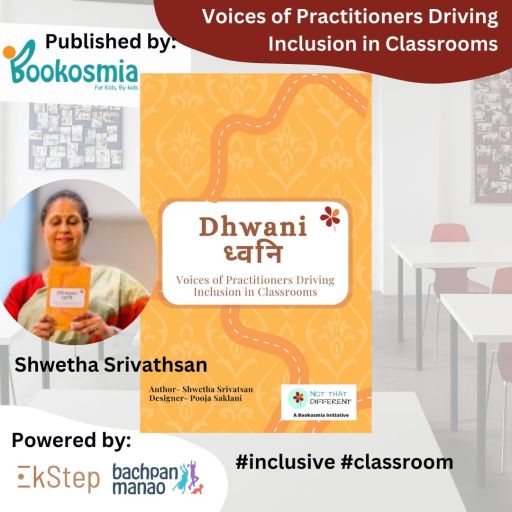
Dhwani I Voices of Practitioners Driving Inclusion in Classrooms
https://bookosmia.com/teachers-mental-health-inclusive-classrooms/

Gift Books On Inclusion — A package of 5 books on inclusion, empathy, and working together.
***
This article is published by Bookosmia, India’s #1 publisher for and by young people. Bookosmia publishes stories, books, podcasts, events, TED-Ed talks, workshops, bedtime stories and more related to kids and young adults.
Photo Credit – AI generated images from Chat GPT and Magic Media from Canva .
Want to publish your articles, reviews, stories, audio stories, bedtime stories and poems ?
Did you know that children can submit audio stories to be turned into Bedtime Stories and published on Bedtime Stories – A Podcast by Bookosmia?
Write to us at sara@bookosmia.com or submit your article at the link below
Read More
Why is the school playground uniquely positioned to foster true inclusion?
Why One-Size-Fits-All Education fails and How to fix It? Curriculum adaptation isn’t about lowering the bar; it’s about widening the access gate. By leaning into Universal Design for Learning (UDL), we can swap stressful essays for dynamic visual projects, break complex lessons into digestible chunks, and introduce sensory-friendly tools. Discover why adapting the curriculum isn’t…
Why One-Size-Fits-All Education fails and How to fix It? Curriculum adaptation isn’t about lowering the bar; it’s about widening the access gate. By leaning into Universal Design for Learning (UDL), we can swap stressful essays for dynamic visual projects, break complex lessons into digestible chunks, and introduce sensory-friendly tools. Discover why adapting the curriculum isn’t…