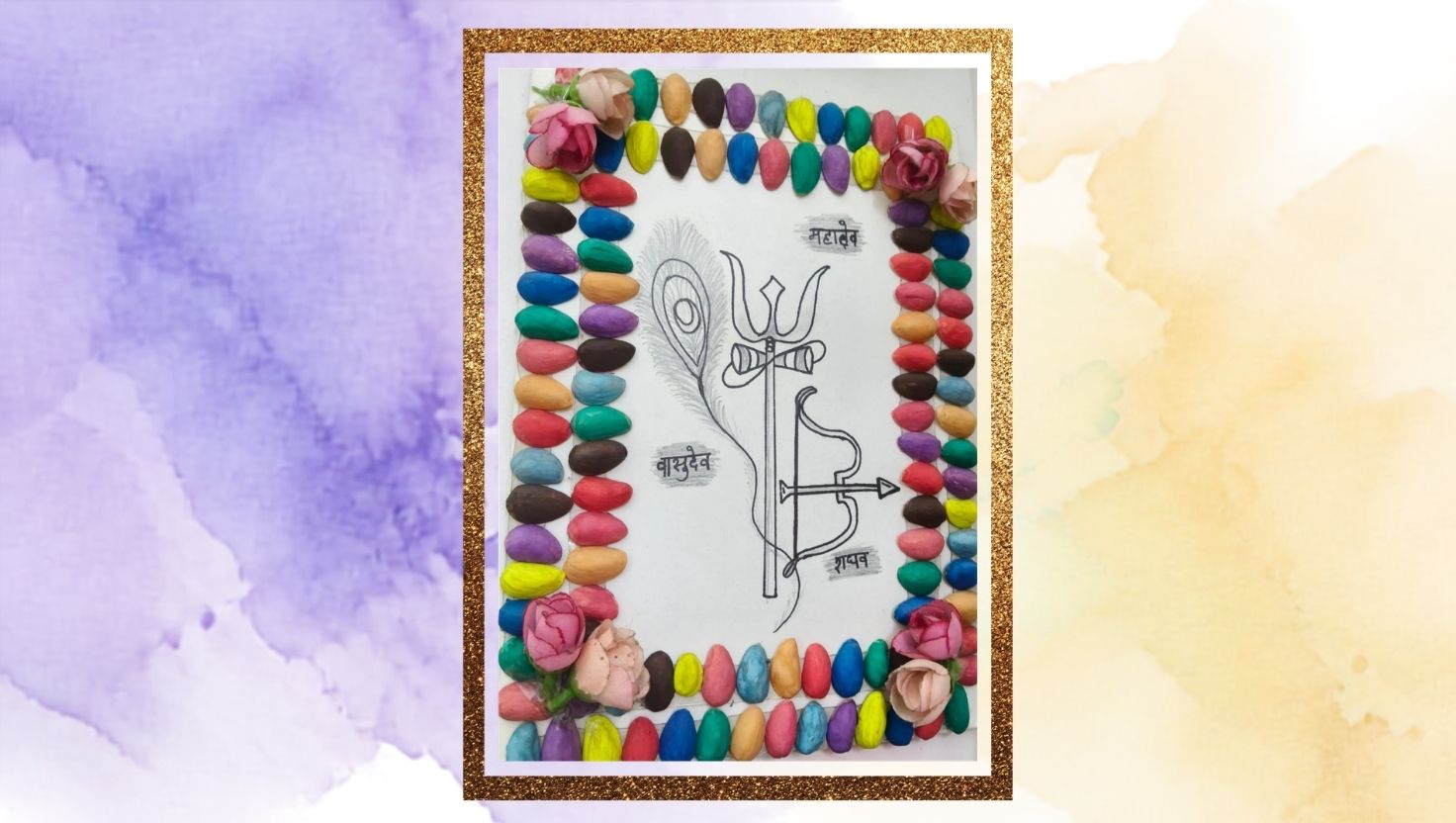
Art has always been a powerful medium for expressing faith and spirituality. The artwork showcased above is a striking example of how simple drawing combined with upcycled materials can result in a deeply meaningful and visually stunning masterpiece.
The central pencil artwork beautifully unites three iconic divine attributes from Hindu tradition into a single line-art composition:
Beyond the central sketch, what makes this piece uniquely captivating is its hand-crafted, sustainable frame structure:
What is the central theme of this artwork?
The artwork represents a unified visual homage to three major deities in Hinduism: Lord Shiva (Mahadev), Lord Krishna (Vasudev), and Lord Rama (Raghav).
What do the three divine elements represent?
What materials were used to create the frame?
The frame is handcrafted using upcycled pistachio (pista) shells painted with vibrant acrylic colors, accented with artificial fabric roses at the corners.
How can I make a similar pistachio shell frame at home?
Clean and dry used pistachio shells, paint them in your desired acrylic shades, let them dry completely, and attach them around a cardboard or canvas border using hot glue or liquid adhesive.
What language is written next to the symbols?
The names are written in the Devanagari script (Hindi/Sanskrit): महादेव (Mahadev), वासुदेव (Vasudev), and राघव (Raghav).
You can buy books at Bookosmia.com and Amazon.
The Ramayana Guide To Practical Leadership | Ancient Case Studies, Modern Management Lessons
The Ramayana Guide to Practical Leadership approaches leadership through the original Valmiki Ramayana, reading it as a precise study of human decision making, responsibility, and conduct under pressure. Rather than treating the epic as a story or a source of moral instruction, the book examines specific situations as leadership case studies. Each chapter focuses on how leaders assess complexity, communicate intent, handle dissent, build trust, and act when outcomes are uncertain. The emphasis remains on behaviour, judgement, and accountability. Drawing on forty carefully selected episodes, structured as case studies, the book brings forward leadership lessons on communication, psychological safety, servant leadership, resilience, ethics, and strategic clarity. Sanskrit shlokas are presented with translation and context, allowing readers to engage with the original text without requiring prior familiarity. Written by a senior industry leader with decades of experience leading large, complex organisations, the book bridges Indian knowledge systems and modern leadership practice. It is designed for professionals, managers, students, and educators who want leadership insight that is grounded, applicable, and enduring. This is a guide for readers who want to think clearly, decide responsibly, and lead with purpose in real-world situations.
This article is published by Bookosmia, India’s #1 publisher for and by young people. Bookosmia publishes stories, books, podcasts, events, TED-Ed talks, workshops, bedtime stories and more related to kids and young adults.
Photo Credit –: Aashka Saxena , 14, New Delhi
Want to publish your articles, reviews, stories, audio stories, bedtime stories and poems ?
Did you know that children can submit audio stories to be turned into Bedtime Stories and published on Bedtime Stories – A Podcast by Bookosmia?
Write to us at sara@bookosmia.com or submit your article at the link below
Get Published
Bookosmia – India’s No. 1 Publisher For Kids, By Kids from 150+ locations worldwide.
Bookosmia is a safe and preferred destination for kids whether it is to read, listen, write or watch their favourite stories.