When I was young I questioned my father on why we called one animal a“pet ” and the other we ate as simple food. He laughed as if the answer was obvious. But the older I grew, the stranger the difference began to feel.
A pet dog sleeps beside a child every night. A pig portrayed equally intelligent is sliced into strips and served for breakfast. One animal is kissed goodbye before school, the other is wrapped in plastic beneath supermarket lights. Humans insist these creatures exist in completely different moral worlds. Yet neither animal understands the categories humans have created for them.
Perhaps the real question is not why humans eat certain animals and protect others. Perhaps the more uncomfortable question is what gives humans the authority to decide which innocent soul deserves affection while which deserves appetite?
The answer cannot be explained by hunger alone. Most people currently do not eat only to survive. Culture, emotion, language and traditions, along with the person’s own thought convenience, shape their choices long before they think these are truly their own. The so-called “line” between pets and food appears to be natural, but is a story repeated so often that it begins to feel like the bitter truth.
Humans tend to believe they are rational and compassionate creatures; they proudly speak about justice, morality and kindness as if these ideas are logical and consistent. However, when it comes to animals, their morality suddenly becomes flexible. An animal adored in one country may be devoured in another. A certain creature worshipped in one culture may be dinner someplace else. This contradiction reveals something deeply unsettling: perhaps humans do not decide which animals deserve compassion through logic alone. Perhaps they decide through familiarity.
Cultures shape morality more powerfully than people think. Children are not born believing cows should be sacred or pigs should become food. They learn these ideas from their families, religions, advertisements, traditions and the society they flourish in. In various parts of India, cows are respected because of religious and cultural beliefs. Meanwhile, in countries like Argentina or the United States, beef is consumed daily without much thought. Whereas in several countries, insects are eaten regularly as they provide nutrition while using fewer environmental resources than livestock farming. Yet in many Western societies, the idea of eating insects creates disgust.
If morality changes according to geography and upbringing, then can humans truly claim their choices are objectively right? A child raised in a vegetarian household may believe killing animals for food is cruel. Others raised on a farm may see livestock as necessary for survival, relying on poultry to ease their hunger. Neither child independently created these beliefs; both absorbed them from the world around them before they were old enough to question them critically.
Even the correlation humans have with dogs reveals how powerfully culture influences morality. In multiple homes, dogs are treated almost like children. They sleep on beds, receive birthday presents, appear in family photographs and when they die, their families mourn sincerely. Yet historically, dogs have been consumed in certain cultures. Many react to this thought with immediate terror. However that reaction itself deserves examination. Why does eating a dog feel morally worse to some people than eating a pig, even though pigs are kept as pets, are very intelligent and are emotionally complex animals?
The answer may not lie in the animals themselves, but in the emotional stories humans attach to them.
Humans commonly protect what they emotionally connect with. A child who grows up with a rabbit as a pet may never imagine eating one. However, that same child may eat chicken nuggets without discomfort because chickens exist only as distant products in their minds. Empathy often depends upon closeness the more personal a relation feels, the more difficult it becomes to accept suffering and loss.
Modern society strengthens this emotional distance between humans and the animals they consume. Many no longer hunt or raise their own food. Meat is shipped to supermarkets and arrives clean, packaged and separated from the reality of the living creature it once was. Consumers view the products instead of their mere bodies. If people had to personally kill every animal they ate many would likely think differently about their various choices.
When I begin to consider the economic side of this system, the distance feels even more deliberate. Meat is made affordable, accessible, and convenient, appearing as just another ordinary choice on a menu. I have grown up accepting it without question, rarely pausing to think about the chain of decisions and lives behind it. The lower the price, the easier it becomes to ignore the hidden cost, not in money, but in living beings, in conditions unseen, in processes deliberately kept out of sight. It makes me wonder whether what I have always called “choice” is actually comfort shaped by a system designed to prevent reflection.
The environmental impact deepens this unease. I have often read about forests being cleared and gases released by livestock farming, but those facts once felt distant, almost abstract. Now, when I connect them to something as personal and routine as my own meals, the scale becomes harder to ignore. It is unsettling to realise that an everyday habit can quietly contribute to something as vast as climate change. Awareness alone begins to feel insufficient, and I am left questioning where responsibility truly begins and whether knowing is meaningful if it does not lead to change.
Language also supports humans in distancing themselves emotionally from animals. People rarely say they are eating ‘cow ’ or ‘pig’. Instead, they call it ‘Beef ’ or ‘Pork’. These words create separation between the living animal and the food on the plate. Imagine how different a menu might sound if it offered “Fried Pig” instead of Pork or “Grilled Baby Cow” instead of veal. Language softens reality until violence becomes easier to consume.
Perhaps humans understand this more than they admit. Slaughterhouses are usually hidden far away from neighbourhoods and schools. Children rarely view the process behind meat production. Society seems determined to keep death invisible. If eating animals were morally simple, why would humans work so hard to avoid confronting what happens before every meal?
At the same time, the issue is more complex than simply declaring meat-eating as wrong. Humans have eaten animals for thousands of years. In many communities, livestock farming supports families and economies. Some environments cannot easily grow enough crops, making animal-based products crucial for survival. Food is also deeply entwined to culture, religion, memory and identity.
Due to this complexity, judging others too quickly becomes dangerous. Ethical questions rarely have perfect answers. Some people become vegetarian or vegan as they believe harming animals is unnecessary. Others continue eating meat but support reducing cruelty in farming systems. Even philosophers and scientists disagree about what humans morally owe to animals.
Still, one argument troubles me more than any other: intelligence.
Scientists have discovered that pigs can solve puzzles and unnecessary patterns. Dolphins communicate in sophisticated ways. Elephants appear to mourn their dead. Crows use tools. Again, humans discover that animals are far more emotionally and intellectually complex than once believed.
Yet humans continue eating many of these same creatures.
This creates another contradiction. If intelligence matters, why do humans protect some intelligent animals while consuming others? And if intelligence determines value, does that mean less intelligent beings deserve less compassion? Humans would never accept such logic when applied to people. Therefore, using intelligence alone to decide whether an animal deserves mercy feels deeply flawed.
I still sometimes eat meat. That confession makes this issue somewhat difficult for me. I feel disturbed by animal suffering, yet I do continue taking part in a system that depends upon it. This forced me to confront an uncomfortable possibility: perhaps morality is not only about what humans believe but about which contradictions humans are willing to tolerate.
Advertisements make these contradictions easier to ignore. Fast-food commercials show smiling families and perfect burgers, but never frightened animals or factory farms. Companies understand that emotional distance encourages consumption. When suffering remains invisible guilt becomes easier to silence.
This issue also binds with power. Humans dominate animals as much as they can. When people decide another living being exists mainly as a resource, compassion can disappear quickly.
Yet despite all these arguments, I do not think the answer is simple. Humans are Omnivores. Tradition and Survival matter along with Economic Realities. However, complexity should not become an excuse for refusing to think critically.
Sometimes I ponder what future generations will think about modern eating habits. Perhaps they will look back at factory farming with shock and questions on how humans claimed to love animals while treating living creatures like edible products.
This does not automatically mean consuming meat is evil or bad, but it suggests morality can evolve. Even people who continue eating animals can still demand less cruelty and more honesty about where food comes from.
Perhaps real morality is not about pretending humans are innocent but about remaining brave enough to question habits that once seemed unquestionable.
“The true moral test of humanity is its relation to those who are at its mercy: animals.” – Milan Kundera 1984.

What is the main question the essay explores?
Why do humans treat some animals as beloved pets and others as food?
Is the division based on animal intelligence?
No. Pigs and dolphins are highly intelligent, yet humans protect some and eat others.
What actually drives our compassion for certain animals?
Familiarity. Humans protect the creatures they emotionally connect with.
How does culture shape our view of animals?
Beliefs are absorbed from upbringing. For example, cows are sacred in parts of India but eaten daily in the U.S.
How does language hide the reality of meat consumption?
Words like “beef” and “pork” create a psychological distance between the living animal and the food on the plate.
How does modern society keep consumers emotionally detached?
Slaughterhouses are hidden, and meat is sold clean and packaged, completely separating it from the living creature.
Does the article claim that eating meat is wrong?
No. It acknowledges that human survival, history, and economic realities make the issue deeply complex.
What is the author’s personal confession?
The author still eats meat, noting that human morality often comes down to which contradictions we choose to tolerate.
What is the ultimate takeaway of the essay?
True morality is about having the courage to question habits we have been conditioned to accept blindly.
You can buy the books at Bookosmia website and Amazon.in
https://www.amazon.in/dp/B0GYB49V1F
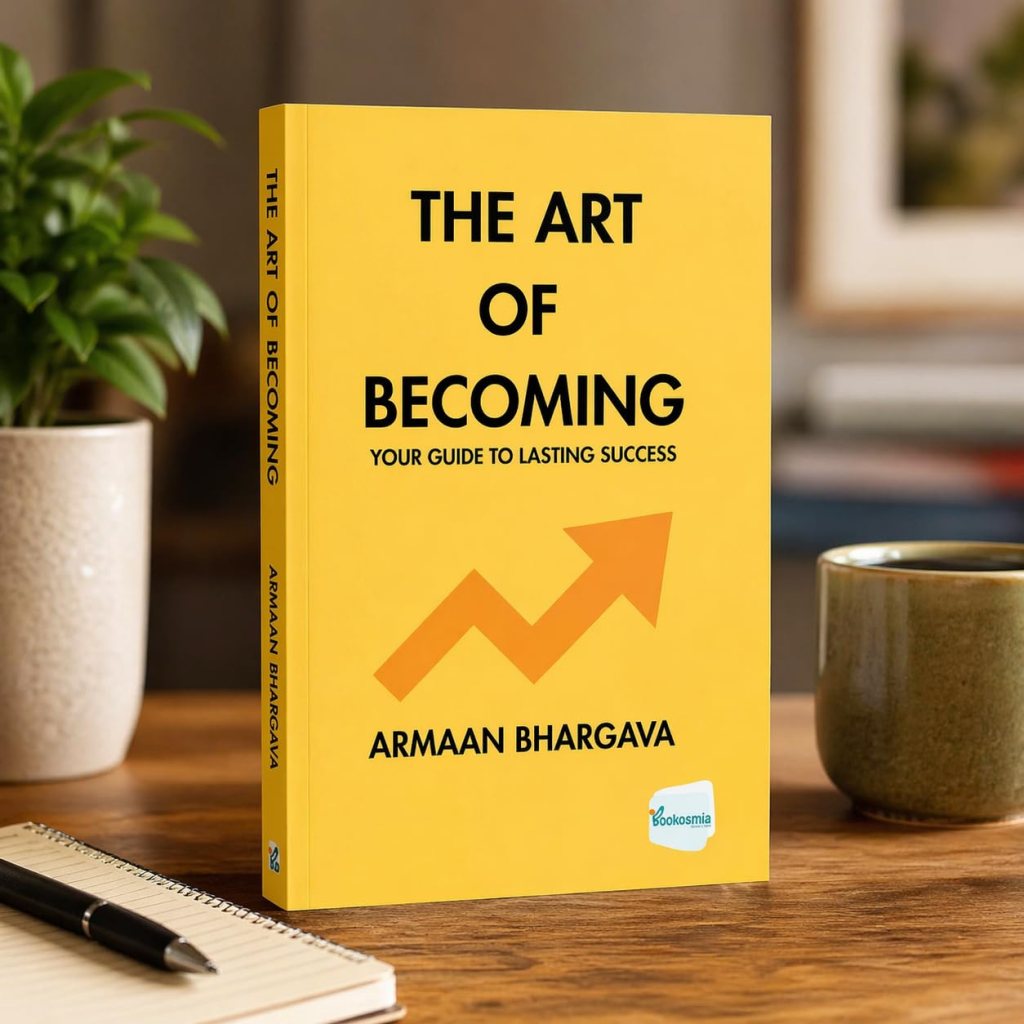
The Art of Becoming by Armaan Bhargava challenges the widely accepted myth of natural talent and reveals a powerful truth: lasting success is intentionally built. Published by Bookosmia, this transformative self-help book offers a practical and actionable roadmap for achieving personal growth, mastering your mindset, and creating long-term success. Inside this insightful guide, you’ll learn how to:
Develop a success-driven mindset rooted in clarity, vision, and purpose
Build consistent daily habits that strengthen discipline and focus
Enhance your emotional intelligence (EQ) to take control of your internal world
Cultivate resilience and transform setbacks into stepping stones
Leverage the power of mentorship and continuous learning to accelerate growth
Overcome self-doubt and unlock your true potential Unlike typical self-improvement books that focus on temporary motivation, The Art of Becoming delivers a sustainable success framework, helping you align your thoughts, actions, and habits with your long-term goals. Whether you’re an entrepreneur, student, professional, or someone committed to self-development, this book will guide you to navigate challenges with confidence, build lasting discipline, and shape a meaningful legacy. Your future self isn’t discovered, it’s created. Start becoming today.
This article is published by Bookosmia,, India’s #1 publisher for and by young people. Bookosmia publishes stories, books, podcasts, events, TED-Ed talks, workshops, bedtime stories and more related to kids and young adults.
Photo Credit – AI generated images from Chat GPT and Magic Media from Canva .
Want to publish your articles, reviews, stories, audio stories, bedtime stories and poems ?
Did you know that children can submit audio stories to be turned into Bedtime Stories and published on Bedtime Stories – A Podcast by Bookosmia?
Write to us at sara@bookosmia.com or submit your article at the link below