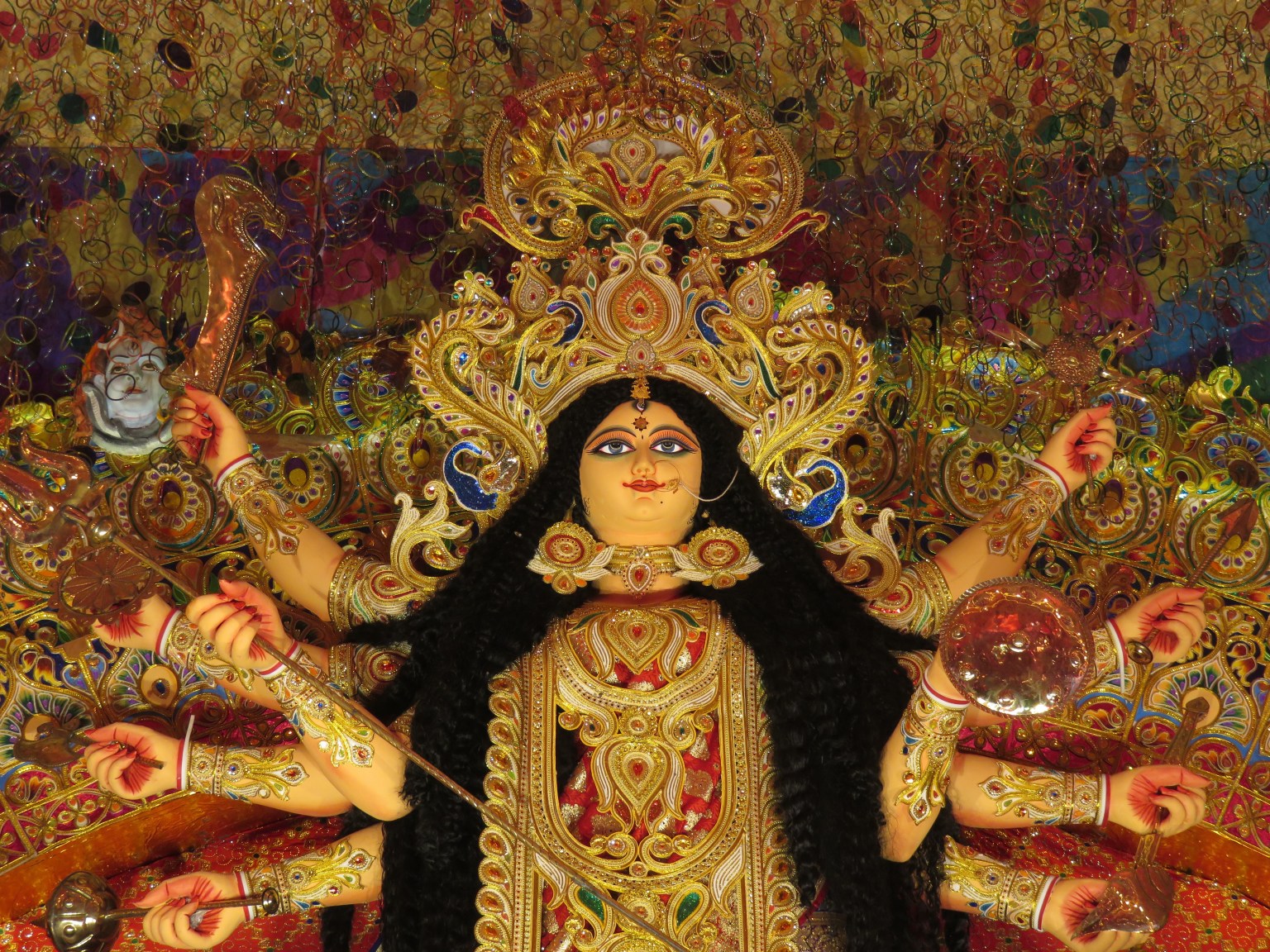
Durga Puja, also known as Durgotsava or Sharodotsava is a very popular festival celebrated by the Hindus. It is ten day long starting from Mahalaya. It symbolizes truth and celebrates the victory of good over evil. Durga Puja holds great significance for the Bengali community.
There are a lot of rituals that take place during Durga Puja and it initially starts on Shashti and ends on Dashami. It is believed that the Roy Chowdhury family of Behala was the first to start Durga Puja in the 17thcentury in Kolkata. During this time period, the rituals and beliefs are numerous.
First is Anjali where the priests perform some rites and people make offerings of flowers to the goddess. It is a floral offering made with cupped palms. It is also known as Pushpanjali and it takes place on Saptami, Ashtami and Navami. Whoever gives the offerings, has to fast until the offering is made.
Another ritual is the Dhunuchi Naach during Navami with clay pots. The pots are filled with burning charcoal and the people dance to the beating of the dhak. Earlier it was only performed by men but women also perform this. Then there is Kumari Puja where a pre-pubescent girl is selected to be worshipped as an incarnation of Durga. She is dressed in new clothes, floral ornaments and she sits beside the Goddess.
Then comes Sindur khela where married women offer Sinduror vermillion to the goddess along with sweets and later smear Sindur on each other’s cheek. This is done on Dashami and another ritual that takes place is Bisarjan where we bid farewell to Maa Durga. They are taken out in a procession to the ghats and immersed into the river. It indicates her return to Mount Kailash.

Well, these were some of the rituals out of many. During Durga Puja, it feels like you are somewhere else! Crowded roads, festive music, new clothes and a smile on everyone’s face. This is what the specialty is.
Q1. What is Durga Puja also known as, and why is it celebrated?
Durga Puja is also called Durgotsava or Sharodotsava. It celebrates the victory of good over evil and honors Goddess Durga’s triumph over Mahishasura. For Bengalis, it is not just a festival but an emotion filled with devotion, culture, and joy.
Q2. How long does Durga Puja last and when does it begin?
Durga Puja is a ten-day festival that begins with Mahalaya. The main rituals start on Shashti (the sixth day) and end on Dashami (the tenth day), when the goddess is immersed in the river.
Q3. What is Pushpanjali and when is it performed?
Pushpanjali is a floral offering made to Goddess Durga with cupped palms. It is performed by devotees on Saptami, Ashtami, and Navami, and those offering flowers fast until the ritual is complete.
Q4. What are some unique rituals of Durga Puja?
Some special rituals include:
Dhunuchi Naach – dancing with clay pots filled with burning charcoal.
Kumari Puja – worshipping a young girl as a living form of Goddess Durga.
Sindur Khela – married women apply vermillion to the goddess and smear it on each other on Dashami.
Q5. What is Bisarjan and what does it signify?
Bisarjan is the farewell ritual on Dashami when Maa Durga’s idol is carried in a grand procession and immersed in a river. It symbolizes her return to Mount Kailash, her home with Lord Shiva.
***
This article is published by Bookosmia, India’s #1 publisher for and by young people. Bookosmia publishes stories, books, podcasts, events, TED-Ed talks, workshops, bedtime stories and more related to kids and young adults.
Photo Credit – Copyright Free, Royalty Free images from pexels and canva
Want to publish your articles, reviews, stories, audio stories, bedtime stories and poems ?
Did you know that children can submit audio stories to be turned into Bedtime Stories and published on Bedtime Stories – A Podcast by Bookosmia?
Write to us at sara@bookosmia.com or submit your article at the link below
Learn More