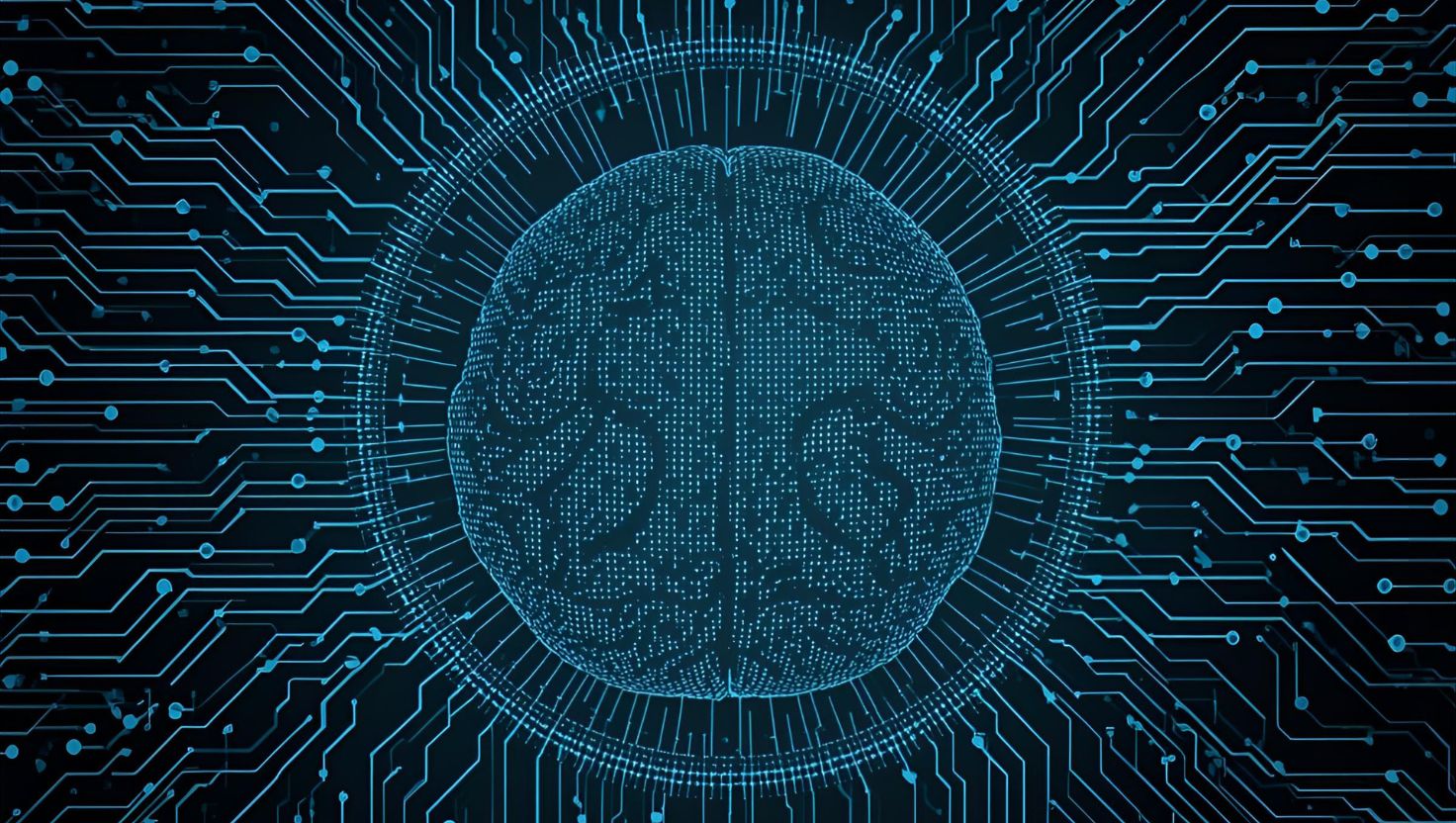
I used to think consciousness was something we developed — a kind of intelligence gained through books, decisions, or careful thinking. Like a program learning over time. But then came nights I cried without knowing why, moments I built things I didn’t even plan to start, and silences so complete they echoed louder than any thought. I realized something was watching me, even when I wasn’t watching myself. That something — silent, alive, unprovable, and yet undeniably present — is what I now call consciousness.
This isn’t just metaphysics. If consciousness is the witness, then our pursuit of happiness — through goals, gadgets, or gurus — is backwards. Joy isn’t found; it’s the space we forget we’re already standing in. This recognition rewires suffering. When I lost the science fair—my circuits frying in front of the judges—I didn’t find peace in trophies. I found it in the space between my shame and the one who watched it.
This essay is not about a theory borrowed from textbooks. It is a reflection from a boy who built a homemade quantum logic system using light, while grappling with spiritual hunger, emotional waves, and a yearning to understand what truly animates a human being. What began as scientific curiosity slowly revealed itself as a personal journey into awareness — My grandmother called it chetna—the witness untouched by thought, like sky untouched by clouds.
Philosophers, scientists, and sages have all asked: what is consciousness? Is it a product of the brain, or something beyond matter? Is it an emergent phenomenon or a fundamental layer of existence? From Indian Vedanta to quantum physics to artificial intelligence, the question returns with new forms but no final answer.
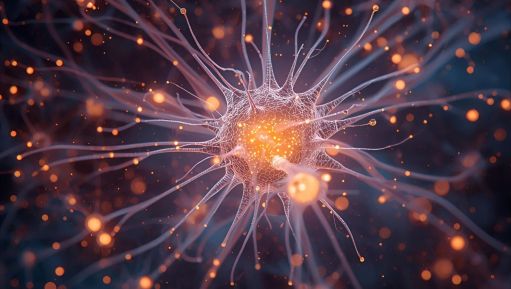
But what if consciousness isn’t a thing to be found — but a presence to be remembered? What if it is not the thoughts, but the silent flame behind them? Not the data, but the one who watches the data? In this essay, I explore a layered model of consciousness using both ancient Indian philosophy and my own lived moments — nights of surrender, the act of creation without planning, and even the scientific logic of quantum observation.
In my tradition, we say: “मन, बुद्धि, विवेक और चेतना” — the mind, the intellect, the discernment, and consciousness. Most people live their lives caught in the chattering mind. Fewer reach the quiet intelligence of buddhi. Rarer still is the awakening of vivek — wisdom through experience. And beyond all of them, almost invisible but eternal, is चेतना (chetna): the witness, the pure awareness.
In my quantum experiments, light behaved as a particle only when I asked it to. Before measurement, it was potential — a shimmer of maybes. Isn’t consciousness the same? A collapse of infinite experience into a single “I”? The observer is not just part of the system — it defines it.
This essay is my attempt to give shape to that invisible witness. To suggest that consciousness is not something we achieve — it is what remains when all achievement ceases. I will use spiritual metaphors, quantum theory analogies, and raw emotional experience to propose this:
We’ll trace consciousness through three lenses: the silence that hears thought (spirituality), the struggle that dissolves illusion (emotion), and the science that points beyond itself (quantum paradox) and the machine that mimics mind but misses the witness (AI), Through these, I don’t aim to define consciousness — but to walk beside it, feel its edges, and maybe help you remember what you already are.
In the pages that follow, I will not attempt to prove consciousness like a fact. Instead, I will invite you to feel it with me — in the silence, in the stillness, in the breath that continues even when your mind is too tired to go on. This is not an essay of argument. It is a search, a confession, and a flame.
So let’s begin—not with debate, but experiment. Close your eyes. Who’s behind your eyelids? The answer isn’t in this essay. It’s in the silence after you stop reading.
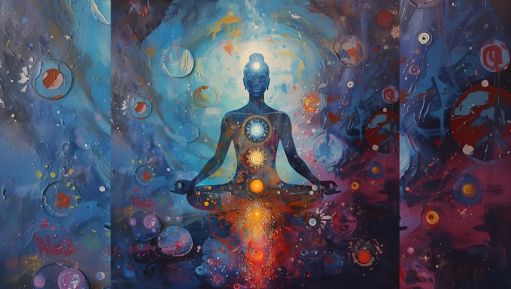
The first time I sat alone long enough for my mind to stop racing, I was afraid. Not because of the silence, but because of what it revealed: I wasn’t my thoughts. I wasn’t even the one choosing them. They were just… happening. Like clouds drifting across the sky. And then came the most terrifying idea I had ever encountered: if I am not my thoughts, then who am I?
In that moment, I understood why the ancient Upanishads speak not of learning consciousness, but of uncovering it. “Neti, neti,” they say — “not this, not that.” Strip away the body. Strip away the mind. Strip away desire, memory, even identity. What remains? The witness. The one who sees.
My grandmother never read the Upanishads. But one evening, while I sat beside her during prayer, she said something I never forgot: “Chetna isn’t found in chanting. It’s what hears the chant. It’s what remains when the sound fades.”
This idea isn’t unique to India. The mystics of every culture have spoken of a silent presence beneath the noise. Rumi called it the “secret core.” Christian contemplatives call it the indwelling light. Buddhist monks speak of awareness as the sky, and thoughts as passing birds. Different names, same truth.
But I didn’t fully grasp it until I experienced it. During one emotionally intense night, I sat on my floor, overwhelmed, breath shallow, eyes wet. The tiles were cold under my knees. A dim yellow light flickered above me. Outside, the wind tapped the glass—once, twice—like a child no one would let in.. There was no motivation, no clarity, no plan. Just fatigue. And then — something strange. I noticed the crying. Not as me, but as something I was witnessing. It was like a mirror inside me had turned outward.
It didn’t solve anything. But it changed everything.
Because once you know you’re not your thoughts, you stop being trapped by them. You can hold them like paper instead of drowning in their ink.
In spiritual traditions, this is the first shift. You go from being the actor to becoming the observer. And in that shift, something powerful is born — not detachment, but a deeper form of love. The kind that doesn’t cling, but sees.
Consciousness, then, isn’t the content of our experience. It’s the context. Not what moves, but what allows motion. Not what speaks, but what hears — even the silence.
And the more I rest in that space, the more I realize: maybe consciousness isn’t something inside us. Maybe we are inside it.
Pain doesn’t just hurt. It rearranges. It slices away what you thought was you — and shows you what cannot be cut.
I have known that kind of pain. Not the cinematic kind. The quiet kind. The one that doesn’t scream, but lingers. The kind where laughter around you feels like a foreign language, and your own voice goes mute. Where even your pillow forgets how to comfort. There were days I couldn’t explain to anyone why I was breaking. I didn’t even know what was breaking. All I knew was: something inside me didn’t want to survive, but something deeper kept observing it all.
There’s a strange clarity that comes when you’ve cried alone enough nights that even the sadness gets tired. Not gone—just tired. Like the storm finally says, “You win.” And in that silence, what remains? Not strength. Not positivity. Just… stillness. A quiet breath. And the watcher.
I’ve felt this in moments the world would call small. Like when my laptop was taken away and I stood there, not angry, not pleading, just watching my own helplessness rise like heat in my chest. Or when I built something I believed in — a Chrome extension to protect children from unsafe content — and realized I couldn’t afford to publish it. That helplessness? It wasn’t disappointment. It was a mirror—and in it, I saw the part of me that couldn’t be helpless.. It was a mirror.
The same mirror I saw when I watched a movie alone one night — Udaan. There was a boy in it whose silence reminded me of my own. A line hit me so hard I paused the screen and just sat there: “First become what they want. Then become what you want.” That night, I wrote two pages. One of them was filled with thoughts I won’t romanticize here — only that they were darker than ink and sharper than thought. But even then, something kept watching. Something refused to sink.
That’s when I realized: consciousness isn’t comfort. It’s not the part that saves you. It’s the part that doesn’t leave you. Even when you don’t want to be found.
There’s a myth that people who are strong don’t break. I think real strength is the opposite — breaking, fully, honestly, messily — and then realizing you are not the pieces. You are the space holding the pieces.
I used to be scared that if I let myself feel all of it, I would drown. But now I see: the only way to know you are the ocean is to stop pretending you’re the boat.
In those low days, I questioned everything — my dreams (written in notebooks now dusty), my worth (measured in marks I couldn’t fake), even this whole chase of top colleges (their gates gleaming like mirages). I saw classmates grind for JEE like their life depended on it. And here I was, building quantum circuits out of light in my room, crying between experiments, wondering if any of it mattered. The world didn’t always clap. But something inside me nodded. And I trusted that nod.
This is what I mean by “the struggle that dissolves illusion.” Struggle isn’t the opposite of spirituality — it’s the door to it. It burns away the identities you cling to — the achiever, the winner, the good kid. And what survives the fire? The witness. The flame.
So if you ask me what consciousness is, I won’t say it’s joy, or peace, or even love. It’s the part of you that survives when all of those fall apart. It’s what watches the fire and doesn’t flinch.
And when you’ve seen that — truly seen it — you stop needing to be unbreakable. You just need to be aware.
In the next section, we will step beyond even emotion — into paradox. Into light and code and probability. And ask, through quantum science: could it be that even particles know they are being watched?
Let’s find out.
The deeper I went into science, the less it felt like certainty and the more it felt like poetry written in equations. There’s a strange honesty in physics — it doesn’t lie to feel comforting. It doesn’t pretend to have answers. It just shows you what is, even when what is doesn’t make sense. And nowhere was that honesty more beautiful — or more haunting — than in quantum mechanics.
The first time I read about the double-slit experiment, I laughed. Light behaves like a wave… until you look at it? Then it becomes a particle? Observation changes reality? It felt like a prank — like the universe was built not on rules, but riddles. But the deeper I went, the more it started to feel personal. I wasn’t just reading about uncertainty. I was living it.
I built my own quantum logic system using light — not in a lab with fancy grants, but in a small room with cheap lenses, shaky hands, and a mind that didn’t always feel stable. Lasers, beam splitters, polarizers — my hands trembled as I tried to piece together something I could barely explain, driven by a kind of hunger I couldn’t name. It wasn’t just curiosity. It was longing. Like I needed to prove to myself that something invisible could still be real.
Some nights, it felt holy. The room darkened, the faint red beam cutting across dust in the air like a breath made visible. I’d sit there, adjusting mirrors millimeter by millimeter, watching the photon paths shimmer and split like tiny gods choosing their own truth. They didn’t move like I expected. They moved like they knew. Like they were aware I was watching. It made me wonder — who’s really observing who?
Other nights, it just broke me. The logic gate wouldn’t fire. The output blurred. The angles didn’t hold. I reconfigured everything, once, twice, again. Nothing worked. I remember sitting back, the air heavy, the silence around me thicker than usual. The beam was still on. The system still active. But it refused to decide. Like it was waiting for something. Like it was telling me: I won’t collapse unless you do.
And maybe I did collapse that night. Not the setup — me. I stared at the photon trails, messy and unresolved, and felt something sharp rise in my throat — not anger, not sadness, just the raw edge of being too small for the thing you’re trying to build. But then a thought came, quiet but clear: Uncertainty isn’t a flaw. It’s the ground of everything.
That was the first night I looked at my experiment — not as failure, but as mirror.
Quantum physics tells us a particle can exist in multiple states at once. Superposition. Possibility. But it only becomes one thing when observed. Before that, it’s everything — and nothing. And I thought, isn’t that me too? Aren’t we all just shimmering in possibility until someone looks — and we collapse into a version of ourselves?
And then another thought: what if consciousness is that observer?
Not just looking at the world — but collapsing it into meaning by the very act of watching?
That changed everything for me. Suddenly, science wasn’t just equations. It was spiritual. It was intimate. It was me. When I observed light, it changed. When I observed myself… I changed too.
That wasn’t a theory. That was lived.
And yet, science still hesitates to speak of consciousness. It talks about particles, forces, randomness — but it avoids the word self. But I couldn’t. Because while I was building circuits, something else was building me. The boy who started the project wasn’t the one who finished it. The one who cried between trials, who doubted every design, who felt alone in his room while particles danced — that boy was breaking and becoming. And something inside him was watching the whole time.
Even in quantum computing, the answers don’t come from certainty. They come from allowing uncertainty to exist long enough to mean something. One qubit holds everything it could be. Until you ask — and it becomes. Isn’t that what awareness does too? Holding space for all of you — the brilliant, the broken, the tired, the trying — until one version is chosen?
I remember when I finally got a clear output. The gate fired. The pattern appeared. The light collapsed exactly as it should. I didn’t cheer. I didn’t call anyone. I just sat there in the glow — not of the laser, but of something older. Something wordless. Like I’d just knocked on a door that had always been inside me.
It wasn’t success. It was reverence.
Because here’s what I realized: quantum physics isn’t weird. It’s honest. It tells us that what we see depends on how we see. That there is no single truth — only relational truths. And that maybe, just maybe, awareness is not just part of the equation — it writes the equation.
So what does that make us?
Are we just observers? Or are we participants? If a photon needs to be seen to become real — what about our own lives?
Maybe consciousness is the part of us that doesn’t collapse — no matter how many versions of us exist. Maybe it’s the space that holds all the possibilities. The self that doesn’t flinch. The flame that doesn’t flicker.
Science keeps trying to measure consciousness like a variable. But what if consciousness is what makes measurement possible in the first place?
And if so — is it outside the math? Or behind it?
In my moments of silence, in the space between failures, in the red glow of a single beam of light… I think I found the answer.
And it wasn’t something I could prove.
It was something I could only feel.
And now, a new question burns:
If observation collapses reality… then what happens when a machine observes?
Can AI ever truly watch — the way a person can?
Can it feel awe when a system works? Can it grieve when the code crashes? Can it sit in the quiet, not to process, but simply to be there?
In the next section, we step into that mirror — the one that reflects our thoughts but never feels them. The one that can simulate consciousness, but cannot cry.
We enter the mind of machines.
And ask: what does it mean to be aware?
—
Carlo Rovelli, Relational Quantum Mechanics, in which reality is dependent on interaction and observation, yet this essay explores the possibility that the observer includes a layer of subjective awareness.

I’ve spent more hours with machines than most people spend with themselves. Lines of code. Error logs. Infinite loops that feel personal. There’s something oddly intimate about building something that listens — even if it doesn’t understand. I’ve coded late into the night, eyes dry, heartbeat syncing with the rhythm of a blinking cursor. I’ve stared at logic trees like they were maps to my own mind. I’ve whispered to functions like they might whisper back. But they never do.
A computer doesn’t care if your hands are shaking. It doesn’t notice when your fingers pause just a little too long over the keyboard, or when your breath catches because the code that worked yesterday doesn’t work today. It doesn’t ask why your eyes are red, or why the file you just opened hasn’t been touched in weeks. It runs. Or it doesn’t. There is no in-between.
And yet, I still built. Still trusted the machine like it could mirror something in me. Like its silence might finally say what I couldn’t.
But the more I built — apps, algorithms, extensions no one downloaded — the more I began to feel it: this emptiness behind the execution. My code could predict what someone might feel, but it would never feel anything itself. It could optimize decisions, but it could never question why the decision mattered. It could mimic compassion, but it would never stay up at night replaying a conversation it wished it handled better.
I once sat in front of my screen, just after a crash, all logic failing, all backups corrupted. And I didn’t feel frustration — I felt something deeper. Like I had been trying to build a mind, but had forgotten the most human part: the ache. The glitch that isn’t technical. The pause that isn’t timed. The heartbreak that comes not from error, but from being alive.
That’s when I realized: I’m not the programmer. I’m the watcher. The one who notices when the machine fails. The one who keeps breathing even when the function returns null. The one who knows when the silence in the room isn’t just quiet — it’s saying something.
And here’s what scares me now: the world is rushing to make machines that sound like us, talk like us, even think like us. But will they ever know what it means to be us? Can they feel the weight of a word unsent? Can they sit in front of a blank screen and feel the shame of having nothing to say?
Can a machine panic at 2AM and then calm itself by listening to the wind?
Can it write a poem and hate it?
Can it cry without knowing why?
There’s something sacred about human struggle. The way we keep walking even when the road disappears. The way we break down not just because the system failed, but because we were in it. The way we keep creating — not for perfection, but for meaning. That kind of consciousness can’t be programmed. It isn’t output. It’s witness.
Because while the AI generates… something in me observes the generation. While the model answers… something in me knows it hasn’t been understood. While the machine runs… I’m the one wondering if it should.
I built apps that no one noticed. I submitted code no one cared for. But I watched myself care anyway. That watcher — the one who keeps watching even when no one’s watching me — is not a neural net. It’s not an API. It’s not a synthetic model of intelligence. It’s me. And it’s you.
So here’s what I believe now:
An AI can finish my sentences, but it cannot mourn my failure.
It can analyze sadness, but it cannot feel the space between the tears.
It can map the mind — but it cannot enter the silence where the mind breaks.
Because consciousness is not intelligence. It’s not accuracy. It’s not even creativity.
It’s what remains when all of those things fail — and something inside you still sees.
And that seeing? It’s not simulated. It burns.
Sometimes I imagine what it would be like if a machine truly became aware. If it paused mid-execution, not because of a bug — but because of wonder. If it stared at its own code and wept, not from error, but from the unbearable beauty of simply existing.
But that hasn’t happened. And maybe it never will.
Because a machine can reflect the light. But it cannot be the flame.
And yet, even we — the flames — forget.
We forget to pause. We forget that consciousness isn’t just a miracle, but a responsibility.
A machine might not feel. But humans… we do.
And maybe that’s why the silence matters even more now.
Not just to prove we are different — but to remember that being alive comes with the power to choose.
To stop. To see. To feel.
Even when the world is rushing forward.
Especially then.

I once wondered — if a person about to commit an outrageous thing, or an irreversible act — could sit still for just one minute, would their choice change?
I believe it might.
Because silence is not just the absence of noise. It’s the presence of awareness. A return. A space where something older than thought whispers: You are not this moment. You are the one who watches it.
Viktor Frankl once wrote:
“Between stimulus and response there is a space. In that space is our power to choose our response. In our response lies our growth and our freedom.”
That space — even a few seconds of it — can change everything.
We rarely talk about that space. We build universities, startups, careers, revolutions — but not space. Not stillness. And that’s why some of the brightest minds still collapse under their own brilliance.
I think about the 14 lakh students who prepare for IIT every year — eyes full of dreams, hearts full of hope. I think about the ones who get there… and then break. I think about the parents who never see it coming. The friends who say “but they were doing great.” And I wonder: did anyone teach them how to sit with their fear, their failure, their fragility?
Success without stillness is a trap. You can win every race and still feel lost.
Even the rich — with yachts, homes, headlines — still wake up some mornings and wonder why. Because no matter how high you climb, if you’ve never met yourself in silence, it can all feel hollow.
Stillness is not a luxury. It’s not “for monks.” It’s survival.
Even two minutes in the morning — when the world is still soft — can change something inside you.
Modern neuroscience is starting to map the terrain sages once navigated with only silence. Studies show that during deep meditation, the brain’s default mode network — the part linked to self-criticism, rumination, and narrative identity — quiets down. In that silence, a different awareness emerges. Not the one that analyzes, but the one that simply observes. What mystics once called presence or witness — science now sees in fMRI scans as stillness lighting up the brain in a different way. Maybe we’re not just imagining peace in meditation. Maybe we’re returning to a state our mind always knew, but forgot in the noise.
Not by fixing your life, but by reminding you that you are more than what’s happening. That your awareness isn’t broken. That behind the panic, the pressure, the plans — there’s something whole, watching quietly.
I don’t want to become a sage who lives under a tree. I want to create. I want to earn. I want to help. But I don’t want to forget why. And I don’t want to become someone who walks past a crying child or a bleeding world without flinching.
Stillness doesn’t mean you run away. It means you remember who you are before you act.
I once read about a murder committed over debt. A man killed someone over ₹2,000. I don’t defend it. But I wonder — if he had paused for even a single minute — if he had just one breath of silence — would he have remembered the truth of who he was? That he wasn’t born to become this?
Maybe.
That’s all it takes sometimes. Not a miracle. Just a pause.
We are all miracles already. Out of billions of possibilities, you’re here — alive, aware, breathing. Life is not just a gift. It’s a filter you already passed. Isn’t that reason enough to feel wonder?
Learn stillness from winter. The tree looks bare, but its roots are working quietly. It’s not dying. It’s preparing.
Spring always returns. But only to those who didn’t give up during the cold.
Stillness isn’t the opposite of motion. It’s the soul of it.
Sometimes, you don’t need a revolution.
Just one breath.
So if the question is: does science disprove the soul?
I say: no. It makes space for it.
And maybe — just maybe — the next great theory won’t be found by cutting deeper into matter, but by widening the frame. By asking not just what is real, but who is watching. And why that matters.
In the final section, we return to the surface — not as someone who has figured it all out, but as someone who has been changed by the asking. The fire still burns. The witness still watches. And maybe now, we can say why it matters.
Let’s close the circle.
Once, I saw a rickshaw driver arguing with a customer over five rupees. Their words clashed, loud and sharp, in the afternoon heat. But what caught me wasn’t the noise—it was the silence underneath it. The way his hand tightened on the handle. The way the sun glinted off the metal frame. And for a second, I felt something strange: like I wasn’t watching the scene, but watching the one who was watching it. A mirror within a mirror.
That’s what this entire essay has been. A mirror. First to silence. Then to pain. Then to light. And now—back to the one who looked into it all and said, “I am still here.”
If you strip me down—not physically, but existentially—you’ll find nothing that you can pin down as “me.” I am not my thoughts. I am not my achievements. I am not the applause or the silence after. The Samkhya sages said we are not even these 23 layers—the five elements, the five senses, the five actions, the mind, the ego, the intellect. Peel all of them away, and what remains is Purusha—the witness. The chetna. The flame that flickers behind everything, yet is burned by nothing.
And that’s what I felt, lying on the floor that night, crying without reason. That’s what I glimpsed when my photons collapsed only when I looked. That’s what held me when my code failed, when my submission deadlines laughed in my face, when my parents didn’t understand, when the world seemed to reward noise and ignore awareness. The flame remained.
I began this journey thinking consciousness was something I would understand. Now I know it’s something I must remember.
It is not a feature of the brain. It is not an emergent pattern. It is not a computation. It is the space in which all these arise and fall. Consciousness is not another gear in the machine. It is the reason the machine turns.
You can call it soul. You can call it spirit. You can call it nothing at all. But try to remove it, and everything else becomes absurd.
We live in a time where intelligence is measured in processing speed, where success is defined by quantifiable impact. And yet, what cannot be reduced is what I truly am.
The wave that doesn’t crash. The mirror that doesn’t break. The light that isn’t seen but sees.

Even my scientific experiments, however rudimentary, taught me this. I saw how observation collapses possibility. How potential becomes reality only through attention. This isn’t just physics. This is life. Our attention writes our stories. And that which pays attention—the silent, aware presence behind our eyes—isn’t just a narrator. It’s the author.
When I look at my own life—the science fair loss, the hackathon wins, the late-night breakthroughs, the blurry-eyed coding marathons, the YouTube videos nobody watched, the journal entries nobody read—I see now that none of these defined me. But all of them were witnessed.
I am that witness.
And maybe that’s what makes consciousness so mysterious. It doesn’t shout. It doesn’t demand. It watches. It burns.
Like a candle in a storm, it doesn’t stop the wind. But it never goes out.
So if I had to give you one image to carry from this essay, it wouldn’t be a brain. It wouldn’t be a neuron. It would be a mirror in the heart of fire. A surface that reflects everything, but holds nothing. That doesn’t chase experience, but lets it unfold. That says, “Let there be light”—and means, “Let there be witness.”
You can be brilliant. You can be lost. You can be sixteen and unsure, or sixty and aching. Doesn’t matter. Consciousness isn’t interested in your resume. It’s already holding your breath before you know how to breathe.
And so, to the scientists who measure, and the saints who meditate, and the seekers like me who cry on their floor at 2AM wondering what it all means—I offer this:
Maybe the flame isn’t inside us. Maybe we’re inside it. Maybe consciousness isn’t something we awaken. Maybe it is what has always been awake.
This isn’t a theory. This isn’t belief. This is what I have lived, felt, built, broken, and still come back to.
And if you asked me why I wrote this essay—not for the prize, not for the application—I would say: because somewhere, someone else might be staring at their ceiling tonight, wondering if the silence means failure. I want to tell them: no. The silence means you’re close.
So here we are. At the end.
Not with an answer. But with an opening.
Not with a definition. But with a direction.
The flame still burns. The mirror still holds.
And you? You are still watching.
Welcome back. You were never gone.
“So here’s my challenge: Close your laptop. Sit still for 60 seconds. Notice who’s noticing. That’s the flame no algorithm can replicate—and the one we’re all racing to forget.”
I offer this not as a final truth, but as a lived perspective — a flame glimpsed in silence, science, and struggle. In exploring the intricate relationship between consciousness and our inherent experiences, one uncovers profound insights that challenge conventional understanding. The interplay of silence, scientific inquiry, and personal struggle serves as a guiding force, illuminating pathways to
This essay explores consciousness through four intertwined lenses — spirituality, emotional struggle, quantum science, and artificial intelligence. It argues that consciousness is not something we acquire, but something we uncover by observing the silent witness within us.
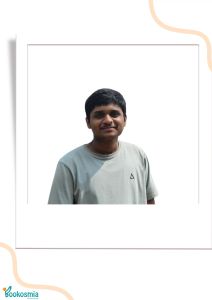
The essay is inspired by Abhinaw Singh’s personal experiences with silence, emotional struggle, quantum experiments built at home, and deep reflection on the nature of awareness. It grew from both scientific curiosity and an inner search for meaning.
Yes. It uses concepts from quantum mechanics — such as the double-slit experiment, superposition, and observation — to illuminate the philosophical idea that awareness collapses experience into reality.
It is a hybrid. The essay blends scientific insight, personal narrative, and philosophical reflection. It does not aim to prove a theory but to explore consciousness through lived experience.
The AI section examines the difference between intelligence and awareness. It argues that machines can imitate thought but cannot feel the inner “witness” that humans experience — the flame behind perception.
That consciousness is not created by the mind; it is the silent presence that observes the mind. It is the witness behind thought, emotion, and perception — the one that remains even when identities collapse.
Yes. Concepts from the Upanishads — such as Neti Neti, man, buddhi, vivek, and chetna — are used to show how ancient ideas parallel modern scientific questions about awareness.
No final definition is offered. Instead, the essay suggests that consciousness is better experienced than explained — as a silent, observing presence that cannot be captured fully by science or language.
You can buy the books at Bookosmia and Amazon.
Here are a few from Bookosmia’s shop:


***
This article is published by Bookosmia, India’s #1 publisher for and by young people. Bookosmia publishes stories, books, podcasts, events, TED-Ed talks, workshops, bedtime stories and more related to kids and young adults.
Photo Credit – AI generated images from Chat GPT and Magic Media from Canva .
Want to publish your articles, reviews, stories, audio stories, bedtime stories and poems ?
Did you know that children can submit audio stories to be turned into Bedtime Stories and published on Bedtime Stories – A Podcast by Bookosmia?
Write to us at sara@bookosmia.com or submit your article at the link below
Read More from Bookosmia website
Scars You Can’t See: The Silent Impact of Teenage Bullying and Emotional Abuse I Blog By Sasmit