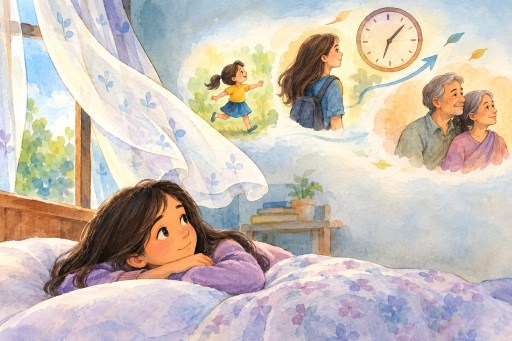
Imagine walking into a room for the first time and being hit by a sudden, uncanny feeling: I’ve already been here. You know it’s impossible, yet the feeling is strong. That’s déjà vu, French for “already seen,” and it’s one of the most curious tricks your memory can play.
The good news: it’s not a psychic power or a glitch. It’s a window into how your The brain handles memory. Let’s take a look.
What exactly is déjà vu?
Déjà vu is a memory illusion, a moment of false familiarity. Your brain says, “I’ve seen this before,” but you can’t say where or when. Psychologists file it under paramnesia, which means a false memory experience. It has a few close cousins:
Jamais vu is the opposite: something familiar suddenly feels strangely new. Déjà vécu is the feeling that you’ve lived through an entire situation, or even a whole day before.
Most people feel familiarity and strangeness at the same time. You feel you’ve been there,but you know you haven’t. Episodes usually last just a few seconds. Some people feel a flash of confusion or anxiety, while others just shrug and move on.
How common is it?
Very. About two-thirds of people say they’ve had at least one déjà vu in their lives. It peaks in the late teens and early twenties and becomes less frequent with age. Some situations seem to make it more likely: being tired or stressed, traveling to new places, or looking over a scene before you step into it. Interestingly, people who often remember their dreams also report more déjà vu, a clue we’ll come back to.
For any one person it’s usually rare, maybe a few times a year or less, and it’s normal and harmless.
Clues from epilepsy
Some of the strongest evidence comes from people with temporal lobe epilepsy, many of who experience déjà vu around their seizures. As far back as the 1930s, doctors described a “dreamy state” of vivid, memory-like feelings during seizures. In a 2007 study, researchers stimulated parts of the temporal lobe in epilepsy patients
during surgery planning. Stimulating the amygdala, hippocampus, or Para-hippocampal gyrus often produced a sense of reliving a memory, and every one of those events involved the inner (mesial) temporal lobe.
But notice something important: damage to the hippocampus usually causes memory loss, not déjà vu. A person who can’t form new memories doesn’t suddenly find new things familiar. Déjà vu seems to need a memory system that is still working, just briefly confused.
Making déjà vu in the lab
Because real déjà vu is unpredictable, scientists have found clever ways to mimic it: Hypnosis: People learned a puzzle, then received a suggestion to either forget it or feel it was familiar. Those given the “familiar” suggestion more often reported strong déjà vu when they saw the puzzle again. Virtual reality: New scenes that secretly resemble old ones can spark that flash of recognition.
Word tasks: Lists that strongly suggest a missing word can lead people to “remember” it, a mini déjà vu.
The key finding is that healthy volunteers can feel déjà vu with no brain damage at all. It’s a normal part of how memory works. What brain scans tell us Catching a spontaneous déjà vu in a scanner is nearly impossible, but lab versions have shown activity in the hippocampus and the conflict-detecting anterior cingulate cortex.
Some EEG studies suggest a quick “familiarity signal” in the brain, though the details are still sketchy. Recordings in epilepsy patients have shown bursts of hippocampal activity when déjà vu begins.The big takeaway is that déjà vu isn’t a mysterious “sixth sense.” It’s the usual memory circuits firing in an unusual way.
Could dreams play a role? Here’s a fun, still-speculative idea. While you sleep, your brain replays and organizes memories. If a fragment of an experience gets stored or “pre-activated” (maybe while you’re drowsy or dreaming), meeting the real thing later could trigger a feeling of haven’t I seen this before? That would fit with the finding that vivid dream-rememberers report more déjà vu. Scientists are still investigating.
Can computers explain it?
Researchers have built models to simulate the effect:
Memory-mismatch networks: A computer memory that has stored lots of similar patterns may send a false “match!” signal when a new input only partly overlaps. Dual-process timing: If the “familiarity” system fires early and the “recollection” system never follows, you get déjà vu.
Prediction models: The brain constantly predicts what comes next. A subtle prediction error might feel like déjà vu.
Questions scientists still can’t answer
Why do some people experience it much more than others?
How exactly does dream content influence it?
Can we reliably trigger it in the lab?
Is it always harmless, or can it sometimes point to subtle health issues?
Why this matters
Déjà vu reminds us that memory isn’t a perfect video recorder. It’s constructive, built and rebuilt by the brain, and sometimes it makes a harmless mistake. Studying odd experiences like this help scientists understand normal memory, and research on déjà vu in epilepsy has even helped locate where seizures begin.
So, the next time you get that eerie “I’ve been here before” feeling, you can smile. It’s not magic or a sign of anything wrong. It’s just your brain’s memory system, doing its clever, imperfect best.
Sources: Vignal et al. (2007), Brain; O’Connor, Moulin & Conway (2012), Consciousness
and Cognition; Brown & Marsh (2004), review of the déjà vu experience; Moulin (2023),
APA Speaking of Psychology podcast; Cleveland Clinic (2024), hippocampus health
library; Nolan (2024), NW Noggin blog.
1. What is déjà vu?
Déjà vu is the strange feeling that you have experienced a situation before, even when you know it is happening for the first time.
2. What does the term déjà vu mean?
Déjà vu is a French phrase that means “already seen.”
3. Why does déjà vu happen?
Scientists believe déjà vu may occur when the brain’s memory and familiarity systems briefly send conflicting signals. However, the exact cause is still being studied.
4. Is déjà vu a common experience?
Yes. Research suggests that about two-thirds of people experience déjà vu at least once in their lives.
5. What is the difference between déjà vu and jamais vu?
Déjà vu makes a new experience feel familiar, while jamais vu makes something familiar feel strangely new.
6. What is déjà vécu?
Déjà vécu is the feeling that you have already lived through an entire experience or situation.
7. Can tiredness or stress trigger déjà vu?
Tiredness and stress may be associated with déjà vu experiences, although scientists are still investigating the reasons behind this connection.
8. Are dreams connected to déjà vu?
Some studies suggest that people who remember their dreams vividly report déjà vu more often. However, the exact relationship between dreams and déjà vu remains uncertain.
9. Is déjà vu a sign of a medical problem?
Occasional déjà vu is generally harmless. However, frequent or intense episodes accompanied by confusion, loss of awareness, or unusual sensations should be discussed with a healthcare professional, as déjà vu can sometimes occur with temporal lobe seizures.
10. What have scientists learned about déjà vu?
Research suggests that déjà vu involves the brain’s memory and familiarity systems. Studying it helps scientists understand how memories are formed, recognized, and sometimes misinterpreted.
11. Can déjà vu be explained by science?
Scientists have several theories involving memory mismatches, brain activity, and the timing of familiarity signals. Although these theories offer possible explanations, the phenomenon is not yet fully understood.
12. What is the main takeaway from the science of déjà vu?
Déjà vu reminds us that memory is not a perfect recording of our experiences. Our brains actively process and reconstruct memories, sometimes creating a surprising feeling of familiarity.
13.Where can you buy the books?
You can Buy the books at Bookosmia.com and Amazon.

Discover a heartwarming children’s picture book about love, kindness, and friendship in Princy the Porcupine’s Hugs by Nikhila Wunnam, a beautifully illustrated kids book about emotions and empathy that helps young readers understand how to express care in meaningful ways. Princy is a lovable little porcupine who adores his friends and wants to show his affection with warm hugs. But there’s one problem, his prickly quills make hugging difficult! This charming and engaging story for toddlers and preschoolers follows Princy as he learns creative ways to express love, teaching children that kindness can be shown through thoughtful actions, gentle words, and caring gestures. Perfect as a bedtime story for kids ages 3–7, this delightful early learning picture book introduces essential concepts of emotional intelligence for children, including empathy, compassion, and social skills. Through simple storytelling and relatable situations, young readers will learn how to recognize feelings, build friendships, and express emotions in positive ways. This beautifully crafted children’s book, Published by Bookosmia, about feelings and friendship is ideal for parents, teachers, and caregivers looking for kids books about kindness, social-emotional learning books for preschoolers, and gentle parenting resources that encourage emotional growth. With its soothing tone and engaging narrative, Princy the Porcupine’s Hugs makes a perfect addition to any collection of bedtime stories, picture books for toddlers, and books that teach empathy and kindness. Whether you’re searching for a gift for young children, a classroom read-aloud book, or a meaningful story to share at bedtime, this touching tale reminds children that love doesn’t always need a hug, sometimes, the smallest acts of kindness make the biggest difference.
***
This article is published by Bookosmia, India’s #1 publisher for and by young people. Bookosmia publishes stories, books, podcasts, events, TED-Ed talks, workshops, bedtime stories and more related to kids and young adults.
Photo Credit – Royalty Free Images by Chat Gpt, Canva Ai, Magic Media, Jetpack Image editor, Gemini AI
Want to publish your articles, reviews, stories, audio stories, bedtime stories and poems ?
Did you know that children can submit audio stories to be turned into Bedtime Stories and published on Bedtime Stories – A Podcast by Bookosmia?
Write to us at sara@bookosmia.com or submit your article at the link below