As we celebrate Independence Day, the nation prepares to honour its freedom fighters and recall the iconic movements, stirring speeches, and patriotic songs that defined the struggle. Yet, one silent contributor often remains overlooked – the Indian Railways. Far beyond steel tracks and steaming engines, it served as a vital lifeline, carrying leaders, ideas and unity across the country, and quietly powering the momentum of India’s fight for independence.
The Indian Railways, introduced by the British in the mid-19th century, was initially built to transport raw materials from India to British ports. But over time, this vast network became much more than just a mode of transport—it became a lifeline connecting India’s far corners.
During the British era, trains made travel faster and easier. Villages, towns, and cities were linked like never before. What the British created for their benefit eventually turned into a powerful tool for India’s freedom struggle. From transporting people to carrying newspapers and letters filled with revolutionary ideas, the Indian Railways silently became part of the movement.

One of the greatest contributions of the Indian Railways to the freedom struggle was its role in shaping the idea of India as one nation. Before its arrival, most people’s loyalties were tied to their regions, as limited transport meant they rarely ventured far from home.
With the railways, a farmer from Punjab could meet a merchant from Kerala, and a trader from Saurashtra could debate politics with a Bengali intellectual. This unprecedented connectivity allowed Indians to look beyond regional boundaries and see themselves as part of a larger, shared identity.
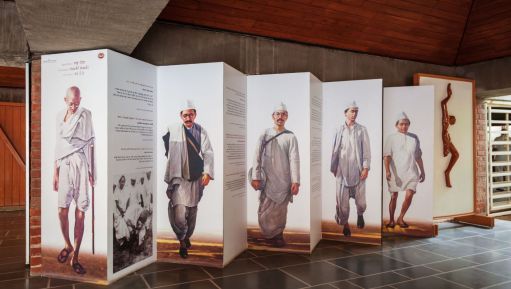
The railways also became a powerful medium for spreading ideas. The call for Swaraj travelled faster than ever, reaching the remotest corners of the country. Political leaders such as Mahatma Gandhi and Jawaharlal Nehru often addressed crowds at railway platforms, turning them into stages for awakening the masses. Revolutionaries like Bhagat Singh and Chandra Shekhar Azad used trains—often in disguise—to move between regions and spread their message.
Ironically, the very symbol of British imperial infrastructure also became a target for protest. During political uprisings, railway stations were among the first places where demonstrations, strikes, and disruptions took place—making the Indian Railways both a unifying force and a powerful arena for resistance.
The Indian Railways, though built by the British for their own needs, became a silent yet powerful partner in India’s fight for freedom. It carried not just people, but also the hopes, dreams, and determination of millions. Whether through speeches at railway stations, secret meetings in train compartments, or nationwide strikes, the railways played a role that history will never forget.
If you are keen to know about Indian railways and their stories, you’ll love Namaste Yatri, a delightful book published by Bookosmia that captures the magic, history, and charm of train journeys across India.

This article is written by Reshma Joel, an engineer with an MBA, transitioned from a fulfilling HR career to follow her passion for writing. Now a freelance content writer and creative writing mentor, she inspires children to express themselves confidently. She teaches on kid-friendly platforms like Bookosmia and is the author of Nancy and the Dosa Cake, a heartwarming birthday story about love, surprises, and family
***
This article is published by Bookosmia, India’s #1 publisher for and by young people. Bookosmia publishes stories, books, podcasts, events, TED-Ed talks, workshops, bedtime stories and more related to kids and young adults.
Photo Credit – Copyright Free, Royalty Free images from pexels and canva
Want to publish your articles, reviews, stories, audio stories, bedtime stories and poems ?
Did you know that children can submit audio stories to be turned into Bedtime Stories and published on Bedtime Stories – A Podcast by Bookosmia?
Write to us at sara@bookosmia.com or submit your article at the link below
Learn More
Independence Day : Salute to freedom fighters | Poem by Praaptie,13,Bhubaneswar