Nightingales have always been overlooked,
By everybody who has ever looked.
To a few, they are dull and uninteresting,
To the others, cold and distancing.
Nobody ever asks the nightingale,
Why do you always refuse to mingle?
Why do you never speak or talk,
As if you have been under a lock?
Nobody hears the call of dawn,
While others stifle a yawn,
The nightingale practices, all alone,
Taking the weight of music’s throne.
Through their solitude they find,
A piece of themselves lost in their mind.
Slowly becoming their essence,
To the cries others think are nuisance.
Isn’t it a mystery how they sing;
Welcoming winter, summer and spring.
If you woke up at dawn do tell;
How wonderfully their harmonies swell.
All their efforts have never gone to vain,
As they keep singing, pain or rain.
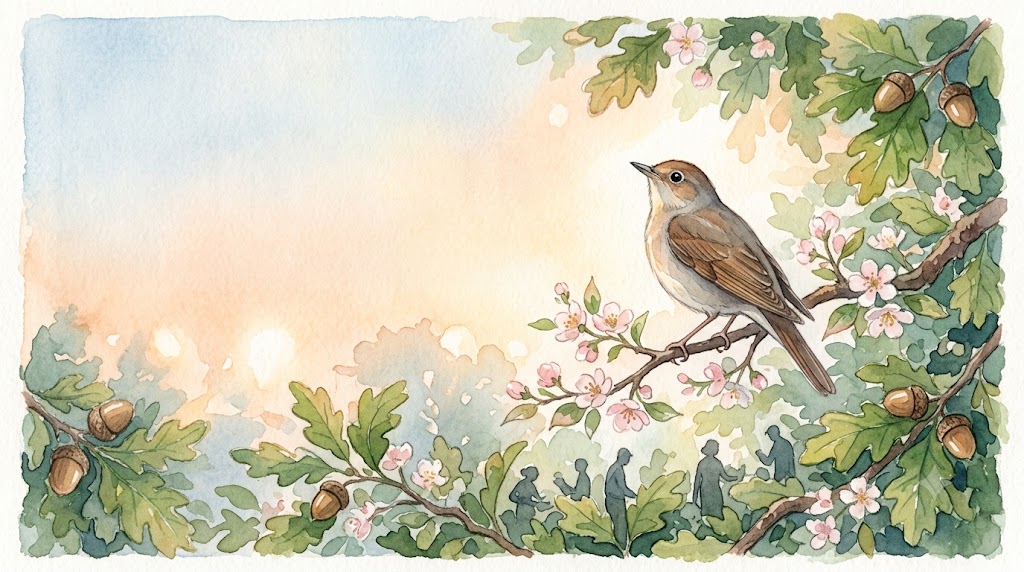
But nobody ever looks up the trees,
To see who has made the symphonies.
When did you last spend a glance,
To those who make everyday advance.
Even in sun or rain, joy or pain;
Keep the day from completely going in vain.
This is why few people are Nightingales.
Not because of the way their voice strangles,
The emotion they wish to convey in arie,
But because people think they are ordinary.
1. What is the central metaphor of the “nightingale” in the poem?
In traditional literature, the nightingale is famous for its beautiful, haunting song, often associated with poets and artists. Here, the metaphor expands to represent everyday unsung heroes. These are quiet, steadfast people who perform essential emotional, creative, or practical labor behind the scenes—keeping families, workplaces, or communities functioning—without ever demanding praise, spotlight, or recognition.
2. Why are these individuals considered “ordinary” by society?
Society often equates loud presence, outward ambition, and constant self-promotion with significance. Because these “nightingales” prefer solitude, focus on their craft or responsibilities, and do not mingle or broadcast their efforts, others mistakenly perceive them as dull, cold, or ordinary. Their quiet nature masks the profound depth of their contributions.
3. What does the “call of dawn” and the nightingale practicing “all alone” signify?
The call of dawn represents beginnings, responsibilities, and the daily grind that starts before the rest of the world wakes up. While others “stifle a yawn” and rush through life, the nightingale embraces solitude to master their craft or bear their burdens. This isolation isn’t lonely; it is a sacred space where they find their true essence and create beauty (“taking the weight of music’s throne”).
4. How does the poem address the theme of invisibility and appreciation?
The poem highlights a common human blind spot: people rarely “look up the trees” to find the source of the beauty or stability around them. Society tends to overlook the foundational pillars of daily life until they are gone. The poet challenges the reader to reflect on this oversight, asking: “When did you last spend a glance, to those who make everyday advance?”
5. What is the significance of the closing lines (“because people think they are ordinary”)?
The final twist redefines the title. People aren’t “Nightingales” because of a flawed voice or an inability to communicate their emotions (their arie). Instead, they earn the title because society looks right past them, tragically dismissing extraordinary dedication and resilience as merely “ordinary.”
6. Where can I guy the books?
You can buy the books at Bookosmia.com and Amaozn.in
Mohini Made Friends I Children’s Book About Friendship and Dance
Follow Mohini, a little girl who communicates through dance and hand gestures. She is shunned as no one seems to understand her, but she finally finds the beautiful magic of friendship. The book is an attempt to bring children, and elders alike, to the captivating story of mohiniyattam through creative non-fiction. This book, Published by Bookosmai, celebrates the rich cultural heritage of Mohiniyattam and its journey from obscurity to recognition, with beige, black, and yellow illustrations representing the dance’s costume. All through a little girl and her simple world. Get your copy now and join Mohini on her enchanting journey! Authored by: Shruthi KP Illustrated by: Rohit Bhasi A4 size.

This article is published by Bookosmia, India’s #1 publisher for and by young people. Bookosmia publishes stories, books, podcasts, events, TED-Ed talks, workshops, bedtime stories and more related to kids and young adults.
Photo Credit – AI generated images from Chat GPT, Jetpack Image generator and Magic Media from Canva .
Want to publish your articles, reviews, stories, audio stories, bedtime stories and poems ?
Did you know that children can submit audio stories to be turned into Bedtime Stories and published on Bedtime Stories – A Podcast by Bookosmia?
Write to us at sara@bookosmia.com or submit your article at the link below
Get Published