What is life? This question has haunted philosophers, scientists, and dreamers for centuries. For most of history, the answers were framed in classical terms: life as chemistry, life as organization, life as adaptation. But in the 20th century, a quiet revolution began: the realization that many of life’s deepest mysteries may not be fully explainable without invoking the counterintuitive rules of quantum mechanics.
Quantum mechanics -the physics of the very small governs particles that can exist in superpositions, interfere like waves, and leap across barriers through tunneling. Traditionally, these behaviors were thought to wash out in the messy, warm, noisy environments of living organisms. Yet evidence keeps accumulating that quantum effects are not only present in biology, but essential.
Photosynthesis may exploit quantum coherence to harvest energy with near-perfect efficiency. Enzymes may tunnel through barriers that classical chemistry would consider impenetrable. Birds may navigate continents by sensing entangled particles inside their retinas. Life, it seems, may be more quantum than we ever dared to imagine.

But the quantum signature of life does not end with cells and proteins. Human societies increasingly depend on technology, and technology is entering its own quantum age. Quantum computers threaten to break our current cryptographic systems. The very infrastructure of trust that digital life depends on. At the same time, they promise discoveries in drug design, materials science, and artificial intelligence. If biological life is quantum at its roots, then social and digital life is quantum in its future.
This essay will argue that life is quantum on three interconnected scales:
1.Molecular life: where quantum mechanics enables the chemistry of existence.
2. Technological life: where quantum information reshapes human survival.
3. Future life: where biology and technology converge under quantum principles.
To understand life and to protect it we must learn to think not only in bits, but in qubits.
To understand how quantum is life, we need to understand life, and to understand life, we need to understand quantum. Quantum, or to say Quantum Mechanics, as discussed earlier, is simply the physics of very small, which governs the particles that can exist in superpositions, interfere like waves, and leap across barriers through tunneling.
Every green leaf is more than a passive solar panel. It is a quantum device performing calculations that no classical machine could replicate with such efficiency.
When a photon strikes a leaf, it excites an electron into a higher energy state, creating what physicists call an exciton. The exciton’s task is to find its way across a network of pigments to the reaction centre, where energy is stored as chemical fuel. In a purely classical world, this process should be riddled with inefficiencies: the exciton should bounce around, lose energy, and often fail to reach its target.
Yet, plants achieve near-perfect energy transfer. The reason may lie in quantum coherence. Experiments using femtosecond lasers have shown that excitons travel as if they are in a quantum superposition exploring multiple routes simultaneously. Just like a quantum computer running parallel calculations, the leaf tests every path and lets the most efficient one emerge.
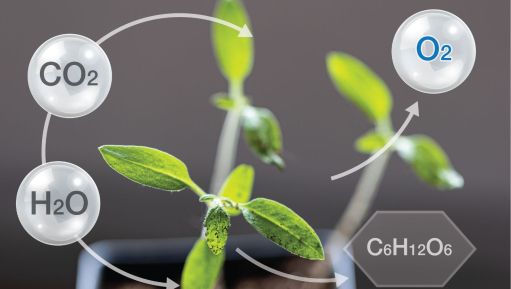
This means that every blade of grass, every tree in a forest, is a silent network of quantum machines, processing sunlight into life. Photosynthesis is not just chemistry; it is a daily demonstration that life has always been quantum.
Life runs on enzymes and its enzymes biochemistry. Without them, the chemical reactions in our bodies would be far too slow to sustain existence. Enzymes act as catalysts, accelerating reactions by factors of millions or even trillions. But even with clever positioning of molecules, classical physics cannot fully explain such speeds.
Here, quantum tunnelling provides the missing key. In the quantum world, particles are not confined by barriers the way classical objects are. A proton or electron can simply “tunnel” through an energy barrier that, according to classical rules, should be impossible to cross.
Take alcohol dehydrogenase, an enzyme critical in breaking down alcohol in the human body. Studies suggest that tunnelling allows hydrogen atoms to bypass high activation barriers, making the reaction astonishingly fast. Without tunnelling, even simple digestion would crawl at geologic timescales.
In other words, life depends on particles behaving like ghosts ignoring walls that shouldn’t be passable. Quantum tunnelling is not just a curiosity; it is the quiet heartbeat of biochemistry.

Each year, tiny songbirds migrate thousands of kilometres, guided not by maps or satellites, but by a built-in compass. For decades, biologists puzzled over how birds sense the Earth’s weak magnetic field. The answer, surprisingly, may be quantum entanglement.
Inside birds’ eyes are proteins called cryptochromes. When struck by light, they form radical pairs: molecules with two unpaired electrons. These electrons are born entangled, meaning their states remain correlated no matter the distance between them. The Earth’s magnetic field subtly shifts the balance of these states, creating chemical signals that the bird can interpret as direction.
This is staggering. A robin in flight may literally see Earth’s magnetic field through quantum entanglement in its eyes. Evolution has engineered what physicists only dream of: a biological quantum sensor.

The evidence accumulates: from plants to enzymes to birds, quantum effects permeate life at the molecular and ecological scales. Some scientists even suggest our sense of smell exploits quantum vibrations, and some go further, speculating that consciousness itself might emerge from quantum coherence in the brain.
These ideas remain controversial, but they underline a central truth: life is not classical. Life has always been quantum. The double helix of DNA, the proteins that fold into impossible shapes, the very process of mutation and evolution all sit atop quantum foundations.
If biology is the ancient heartbeat of quantum mechanics, then technology is its modern echo. Human societies are no longer bound only by DNA and enzymes; we are increasingly bound by information. In the twenty-first century, the survival of our civilizations depends as much on the integrity of data as it does on the health of ecosystems. And here, too, quantum mechanics is no longer a silent background rule — it is rapidly becoming the architecture of our digital future.

Our current digital world rests on cryptography. Every online bank transfer, medical record, private conversation, and national security protocol depends on the difficulty of solving certain mathematical problems factoring large numbers, computing discrete logarithms. These problems are essentially impossible for classical computers at scale.
But quantum computers change the rules. Peter Shor’s algorithm, discovered in the 1990s, showed that a sufficiently powerful quantum computer could factor numbers exponentially faster than classical machines. What seemed like abstract mathematics is now a looming existential threat: when large-scale quantum computers arrive, the cryptographic walls that protect digital life could crumble overnight.
Imagine a future where personal health data, corporate secrets, or even state-level defense codes are exposed not by hackers, but by the mathematics of the quantum world itself. The very trust we place in the digital realm our second habitat could dissolve.
Yet quantum mechanics is not only a threat; it is also the key to resilience. Quantum Key Distribution (QKD) allows information to be transmitted with absolute security, guaranteed by the laws of physics. If an eavesdropper tries to intercept a quantum key, the act of measurement disturbs the system, alerting both sender and receiver. For the first time, communication can be made unconditionally secure.
By 2035, I predict that the infrastructure of cybersecurity will no longer rely on classical assumptions but will be reborn under quantum principles. Banks, hospitals, and governments will not just use quantum-safe algorithms, but networks woven together by entangled particles and photons. In this vision, quantum mechanics safeguards not only the atoms in our cells, but the bits in our societies.
This is where my own research focuses: understanding how quantum computing will contribute to cybersecurity by 2035. Just as enzymes once unlocked the speed of metabolism, quantum technologies will unlock the speed and safety of digital trust. Life, both biological and social, cannot flourish without security. Quantum mechanics, paradoxically both the threat and the shield, will decide the fate of digital civilization.
The digital pulse of society beats not only in locks and keys, but also in innovation. Quantum algorithms promise revolutions in fields from medicine to logistics.
Consider:
Each breakthrough is not just technological. It reshapes what “life” means in a human context — longer health spans, safer societies, and intelligence amplified beyond biology.
When we say, “life is quantum,” we usually mean molecules and biology. But human beings have extended life into the digital realm. Our memories are in photographs on servers, our relationships encoded in messages, our governance embedded in databases. This digital life is no less real, no less fragile, than the molecular kind. And now, both lives rest on the same foundation: quantum mechanics.
The double helix of DNA and the entangled qubits of a quantum processor may seem like opposites — one ancient, one futuristic. But both are threads in the same fabric. The heartbeat of tomorrow’s societies will not just be biological; it will be quantum-information pulses flowing through global networks. The question is not whether quantum mechanics will shape life, but whether we will learn to shape it responsibly.

Imagine a future hospital where disease is no longer guessed at through symptoms, but mapped directly at the quantum level. Proteins folding inside cells can be simulated with quantum precision, revealing exactly how a virus latches onto a receptor or how a mutation spreads in tissue.
Quantum biology, once a field of speculation, could become the foundation of personalized medicine. A treatment plan would not be trial-and-error, but a quantum-accurate prescription, tuned to the unique molecular dance of an individual’s body. Cancers might be intercepted before they form; genetic diseases corrected with precision beyond today’s imagination.
Just as photosynthesis revealed quantum secrets in plants, human health may one day depend on unlocking quantum signatures in our own biology.
Artificial Intelligence already transforms society, but paired with quantum computation, AI may cross a new frontier. A quantum-enhanced AI could hold multiple hypotheses in superposition, test countless solutions in parallel, and learn in dimensions invisible to classical algorithms.
Such an intelligence would not merely mimic human thought, but explore ways of reasoning foreign to biological brains. Paired with emotional intelligence systems like Kai AI, a quantum-powered AI could offer not only raw intelligence, but also empathy at scale a fusion of logic and compassion.
This raises profound questions: If life is defined by cognition and emotion, what happens when machines, too, begin to experience them through quantum architectures?
With great power comes great responsibility. Quantum mechanics has always challenged human intuition, but as it becomes a tool for civilization, it will challenge our ethics as well.
Just as the splitting of the atom forced humanity to grapple with nuclear responsibility, the unlocking of quantum life will demand a new ethical framework. A Quantum Bill of Rights, perhaps, ensuring that this strange new power serves life rather than threatens it.
Beyond science and technology, quantum mechanics may reshape our very philosophy of existence. The universe itself, some physicists suggest, is not built from solid matter but from information bits, or rather qubits. If so, then life is not an anomaly in a mechanical world; life is the natural flowering of quantum information into complexity, consciousness, and culture.
In this view, every heartbeat, every thought, every civilization is a quantum event not detached from physics but its most intricate expression. To live, then, is to participate in the unfolding superposition of the cosmos.
Life has never been purely classical. From the tunneling of enzymes to the coherence of photosynthesis, from the entanglement in birds’ eyes to the entangled networks of future societies, life has always been quantum.
On the molecular scale, quantum mechanics makes existence possible. On the societal scale, it threatens and secures the trust that binds civilizations. And in the future, it may redefine medicine, intelligence, and even philosophy.
To understand life and to protect it we must learn to think not in bits, but in qubits. The question “How quantum is life?” is not only about biology or technology. It is about destiny. And as we stand on the threshold of a quantum civilization, the answer is simple yet profound:
Life is quantum, all the way down and all the way forward.

*
Q1. What is quantum biology?
It studies how quantum effects like superposition, tunnelling, and entanglement help life processes.
Read more
Q2. Do quantum effects really happen in biology?
Yes — in photosynthesis, enzymes, bird navigation, and maybe smell.
Source
Q3. How do plants use quantum mechanics?
Excitons in leaves use quantum coherence to transfer energy almost perfectly.
Source
Q4. What is tunnelling in enzymes?
Particles like protons “tunnel” through barriers, speeding up reactions.
Source
Q5. How do birds use quantum mechanics?
Entangled electrons in their eyes act as a compass for migration.
Source
Q6. What is a qubit?
Unlike a bit (0 or 1), a qubit can be both 0 and 1 at once.
Source
Q7. Why is quantum computing a threat?
It can break today’s encryption, risking digital security.
Source
Q8. What is Quantum Key Distribution (QKD)?
A way to share keys securely — eavesdropping is always detectable.
Source
Q9. What can quantum computing be used for?
Drug discovery, climate models, AI, and safer communication.
Source
Q10. Is consciousness quantum?
Unproven. Some theories suggest it, but most scientists disagree.
***
This article is published by Bookosmia, India’s #1 publisher for and by young people. Bookosmia publishes stories, books, podcasts, events, TED-Ed talks, workshops, bedtime stories and more related to kids and young adults.
Photo Credit – Copyright Free, Royalty Free images from pexels and canva
Want to publish your articles, reviews, stories, audio stories, bedtime stories and poems ?
Did you know that children can submit audio stories to be turned into Bedtime Stories and published on Bedtime Stories – A Podcast by Bookosmia?
Write to us at sara@bookosmia.com or submit your article at the link below
Learn More