This article celebrates the creation of characters and movies that are near and dear to our hearts Mickey Mouse, Tom and Jerry, Ponyo, and The Lion King. These beloved icons wereoriginally brought to life through 2D hand-drawn animation, a technique once widely used by studios such as Walt Disney, Nickelodeon, Cartoon Network, Studio Ghibli, and Warner Bros.
For decades, 2D animation was the dominant style in animated films and television. However, in the late 1980s to the 1990s, the industry began shifting toward 3D animation.
Initially, Computer Generated Images (CGI) were used to enhance backgrounds and effects in 2D films, but this changed dramatically with the release of Pixar’s Toy Story in 1995—the first fully computer-animated feature film. Its success marked a turning point in animation history.

Since then, 3D animation has become the mainstream choice for major studios. They often outperformed 2D films at the box office. Audiences seem to favour the more realistic andvisually immersive style of 3D animation, which tends to appeal to adults much more, as well as children.
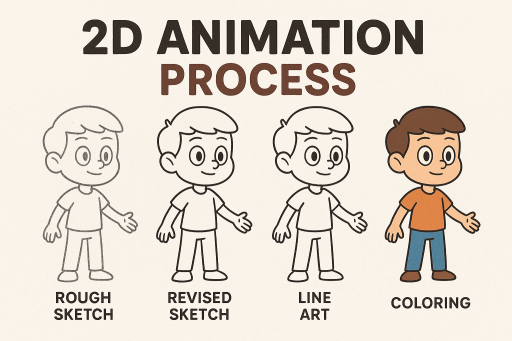
That said, 2D traditional hand-drawn methods are less common, they still somewhat exist in digital formats, but as rigs. Which is making the character like a puppet. After making the rig, they are moved around like moving a doll instead of drawing the movements frame by frame. With the character being redrawn repeatedly. Japanese studios like Studio Ghibli and Toei animation still produce stunning 2D works, preserving the charm and artistry of the medium. The only difference is that they colour and outline their work digitally and not physically. They still draw their animation frame by frame on paper. To know about how these productions were produced, here is a basic guide through the ANIMATION PROCESS!
Most of us have heard about scripts, they are written documents that outline what each character will say and what will happen in a production in general. However, scripting alone is not enough for a film or cartoon as they also rely heavily on visuals. That’s why directors create Layouts.
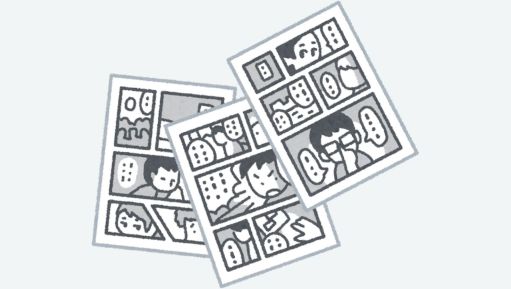
Layouts are visual plans that help directors envision what their cartoon or film will look like. Directors often make rough sketches, like a comic strip, to map out scenes. These sketches help plan camera angles, character expressions, positions, and poses. Dialogue and actions are usually written at the bottom of each panel. An example of what a typical layout looks like from the Tom and Jerry cartoon, “The Bodyguard.”
For the voices, actors stand in a booth in front of a microphone and read their dialogue from the script or layouts. Fun fact, in Western animation, voice actors usually record the performances before the animation process begins. In contrast, in Japan, voices are typically recorded after the animation is completed.
As for the music, the director collaborates with the musical director to plan the composition. Even during music planning, the visual element remains important: thedirector may act out scenes in front of the musical director to ensure the music “Mickey Mouses” * the action. Music is then performed by an orchestra. This is how we get the memorable soundtracks in Disney movies, Looney Tunes, and Tom and Jerry, with music composed by legends such as Carl W. Stalling and Scott Bradley.*
“Mickey Mousing” refers to music that closely synchronizes with the action on screen. Forexample, when a cartoon character tiptoes, each step is matched by a musical note. Named as such because Mickey Mouse was the first cartoon character which had synchronized sound.
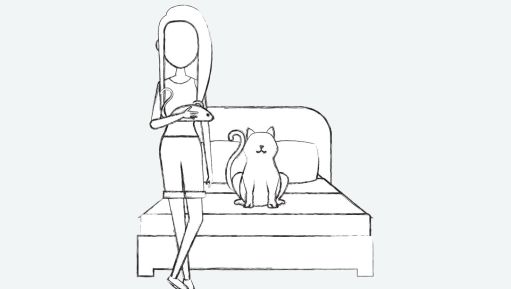
Do you remember that trick in some books with pictures on the corners of a book and if you flip the pages quickly, the picture moves? That’s essentially how animation works: it’s a series of images shown in rapid succession to create the Illusion of life.
After all the previous steps—scripting, layouts, voice recording, and music, animation is where everything comes together to create what you see on screen.
People in the animation industry treat animation “acting with a pencil,” so to speak. In the image above from the short “How Walt Disney Cartoons are Made”, you can see this clever animator referencing his own facial expressions as a frame of reference to bring a character to life properly.
Once the drawings are finished, they are photographed, frame by frame, to create the animation. These frames are then tested on a device called a Moviola, which allows animators to view the drawings one at a time to check if the animation flows smoothly. These tests are called “pencil tests”.
Cels
Cels are transparent plastic sheets made from the same material as film strips, and today they are considered collectors’ items. Think of it like when your art teacher asks you to outline your pencildrawing with a marker but in animation, cel painters trace the drawings onto the transparent sheets using ink, then paint the backs of the sheets with special, expensive paints (which is whytesting with the Moviola is important). The finished sheets are placed over watercolor backgrounds, and photos are taken of the images. More sheetsare used to paint more elements of the scene. Such as painting the head on one cel, then everything from the neck down on another sheet. These photos are then assembled onto a film strip, completing the animation process.
Conclusion
That’s how our favorite old-school cartoons and movies were made. There are many great 2D animated films out there, and it’s important not to let this art form fade away in favour of 3D animation. This is a timeless, beautiful and expressive form of storytelling and it deserves to be celebrated. As an animation lover, I feel a special connection to this art form, which is at risk of becoming lost media. Let’s help revive the most tangible form of art drawing.
What are animated films?
2D animation is a traditional hand-drawn technique where every frame is drawn by animators. It gives life to flat drawings and created timeless classics like Mickey Mouse, Tom and Jerry, and The Lion King.
Which was the First fully computer animated film?
Pixar’s Toy Story in 1995—the first fully computer-animated feature film. Its success marked a turning point in animation history.
2D animation is drawn by hand, while 3D animation uses computers to create lifelike, realistic scenes. Pixar’s Toy Story (1995) was the first fully computer-animated film that changed animation forever.
Discover Bookosmia’s published book full of imagination
👉 Alien in the Cupboard
What is Mickey Mousing?
“Mickey Mousing” refers to music that closely synchronizes with the action on screen. Forexample, when a cartoon character tiptoes, each step is matched by a musical note.
After the success of Toy Story, studios preferred 3D animation for its visual depth and realism. It became more appealing to both kids and adults and often performed better at the box office.
Yes! Studios like Studio Ghibli and Toei Animation still create 2D animated masterpieces, blending traditional drawing with digital coloring. Their work preserves the timeless charm of classic animation.
The 2D animation process includes:
Script & Layouts: Writing dialogues and visualizing scenes.
Voice Recording: Actors record lines before animation.
Animation: Artists bring characters to life frame by frame.
Soundtrack: Music and effects are added for emotion and timing.
Want to explore teamwork and creativity?
👉 Dhwani: Voices of Practitioners Driving Inclusion in Classrooms
Animation inspires creativity, storytelling, and collaboration. It allows people to dream and express emotions through art, sound, and motion.

Want to be creative young storyteller:
👉Sprouts – Where Young ideas get visibility
***
This article is published by Bookosmia, India’s #1 publisher for and by young people. Bookosmia is Children’s Book publisher and publishes stories, books, podcasts, events, TED-Ed talks, workshops, bedtime stories and more related to kids and young adults.
Photo Credit – AI Generated Images by Magic Media of Canva and Chat GPT.
Want to publish your articles, reviews, stories, audio stories, bedtime stories and poems ?
Did you know that children can submit audio stories to be turned into Bedtime Stories and published on Bedtime Stories – A Podcast by Bookosmia?
Write to us at sara@bookosmia.com or submit your article at the link below
Learn More
Cartoons- Why We Must Watch Them| Blog by Anavadhya ,11, Trivandrum