



My grandfather, Mr. Shankarappa, whom we fondly called Sanku Thatha, was the one to introduce us to birds and nature. He also got us 2 pairs of pet budgerigars. Ever since, I have been fond of birds and curious too.
Kashmir boasts lots and lots of trees. Famously known as the “heaven on earth,” it is an ideal place for birdwatching. With its lush green landscape, amazing water bodies, flowing water, and snow-capped mountains, Kashmir offers a captivating setting. Winter in Kashmir, with its snow-covered landscapes, is an experience everyone desires. The region transforms with each season, displaying a different color palette, making it breathtakingly beautiful. These details might have generated enough curiosity to visit Kashmir, right?
While there are tourist guides everywhere, a trip within Kashmir may last from 4 to 5 days or a week. These days will pass quickly, and it also costs a bit on the pocket. Hence, I would suggest making the most of your visit. Kashmir is renowned not only as an incredible tourist destination but also for unique aspects you won’t find anywhere else in India and beyond. Like any other state, it possesses its rich heritage, culture, tradition, language, and architecture.
What’s more beautiful for me are the birds there. Let’s discuss them. There is a saying that “the early bird catches the worm!” You will find this happening in a real sense all the time around you. I got to see many birds right in the front yard, backyard, and in the immediate neighborhood of our home.
I was fortunate to see this beautiful bird, commonly known as the “yellow-billed blue magpie” – a long name, right? Well, it suits the bird as it has a long tail. It has a black head, bluish-gray body, a gray patch on the nape, and a cool stripy tail. Some people might mistake it for a Treepie or a Trogon. I started trying to identify this bird since my second visit to Kashmir. It kept taking the sticks and twigs that I had used as my cricket stumps. This is a clever bird indeed.
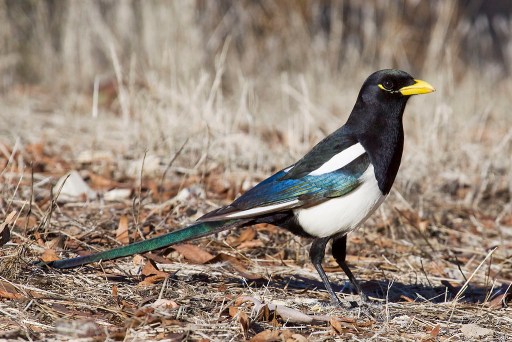
Image Source- Wikipedia | Attribution-Bill Bouton
Around 1 or 1:30 p.m., a type of sparrow appeared. It had different plumage compared to the ones we see everyday. On careful observation, I found that it was not a sparrow but a Tit, commonly called the Cinereous Tit, one of the many species of Tits. They were mostly found flying short distances between branches of apple trees.

Image Source- copyright free, royalty free photos on Pexels
In October, during the harvest season in Kashmir for apples and paddy, one can see thousands of house sparrows. They are seen in large numbers in paddy fields, feeding on all the paddy easily available due to threshing.
My mother was delighted and equally excited to see so many sparrows. She recalled seeing them during her primary school years in a town named “Gubbi” in the 80s. The word Gubbi means sparrows in Kannada. The sparrow population was the highest in this place, and hence probably, the town was named so, as my mom explained. She also recalled sparrows nesting in the crevices between the wall and the roof of the classrooms. There used to be parent sparrows flying to and fro, in and out of the classrooms, sometimes with hay and twigs, and sometimes with insects and worms. Twigs, hay, bird droppings on the benches were an everyday ordeal. Their books were not spared as well. The sparrows went about their routine, irrespective of whether Math, Social Science, or English was being taught. My mother recalls that they never flew low enough to disturb the class, except very occasionally during sparrow fights. My mom, Dr. Rakshitha, also mentioned that house sparrows serve as bioindicators of our ecosystem – ecological indicators, in other terms. The presence of house sparrows in abundance in a particular place means that it is a happy place – indicating clean air, clean water, less noise, and air pollution.
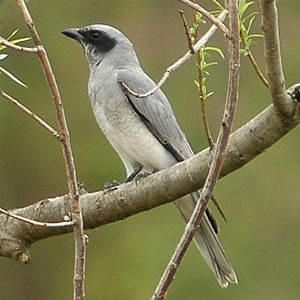
On the highest branch of a tree, a bird’s sound was evident – cuckoo – cuckoo – cuckoo – cuckoo. Well, it looked like a cuckoo, but I still wasn’t sure. Upon observing keenly, I realized it was a cuckooshrike.
Pigeons
Pigeons are abundant there. Not a single house in Kashmir is without numerous pairs of pigeons. Well, our home was no exception. In equal numbers as pigeons are the common and hill Mynas. They look chubby compared to those found in Bangalore. The pigeons and Mynas are accustomed to humans. They do not fly despite our close proximity. After every meal throughout the day, the leftover bits of bread or rice were thrown over the lawn area. The first to arrive were Mynas, and almost immediately, the pigeons and a murder of crows (a group of crows) followed.
Crows – that’s what I initially thought it was. Blue-eyed, small, and with a shorter bill. I considered it could be an entirely new species. I named it “the Mini crow.” A few days later, I found out that, in fact, it was no new species. My “Mini-crow” turned out to be a Jackdaw.
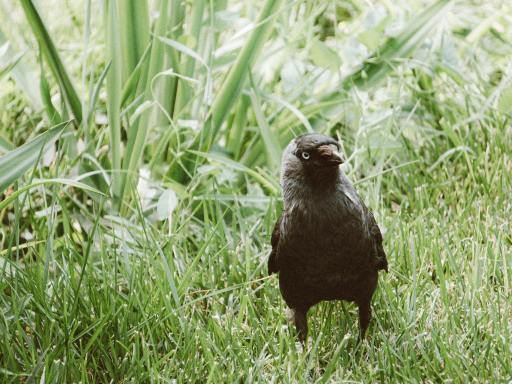
Image Source- copyright free, royalty free photos on Pexels
On rare occasions, I saw an orange bird with a long thin beak, stripy black wings, and a crest on its head that can open up like one of those Japanese hand fans. It is the common hoopoe (pronounced hu-po). This bird appeared in the early mornings and early evenings. It doesn’t really bother to come near humans for food like pigeons and mynahs do. All it wants is a decent meal, finding an abundance of insects in the yards. I noticed that it used to be on the ground searching for insects more often than on trees.You can also find a bird with an orange beak, black nape, and wings along with a shiny yellow body. Surprisingly, as I got closer to the bird, it didn’t even move an inch, leaving me to wonder what a brave bird it was! It was a Golden Oriole, easily recognizable by its bright yellow body.
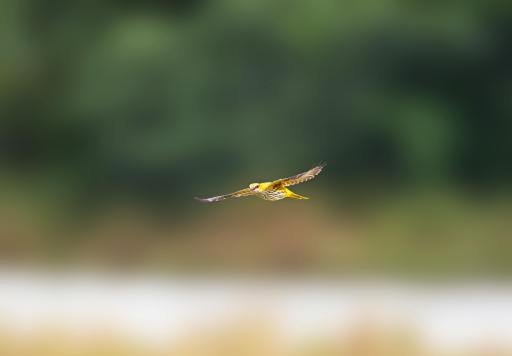
Image Source- copyright free, royalty free photos on Pexels
I must say, the pigeons, mynas, hoopoe, and jackdaw seem less threatened with humans around.
Let’s not forget the other common birdy – the rose ring parakeet. Did you know this fun fact? If the ring on the parakeet’s neck is black, then it is a male; if it is pinkish, it is a female. These were the birds in and around our yard.

Image Source- copyright free, royalty free photos on Pexels
When my father, Dr. Arshad, got time off from his work, he took us on a drive around the famous Dal Lake. Papa mentioned that in the coming months, there would be a lot of migratory birds flocking to the lake and the surrounding areas. On that day, we saw quite a few Grebes. I had seen them in Bangalore too, and that was my first time. I had then mistaken them for ducklings. I was then educated by Mr. Harish Kumar Sir, a senior birder from Bangalore, that the size of an adult Grebe was such.
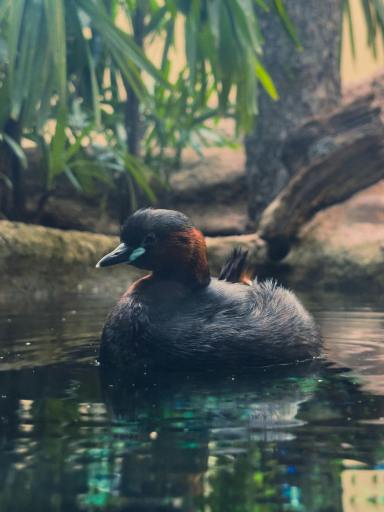
Image Source- copyright free, royalty free photos on Pexels
Soaring above the skies were the well-known and also known as black lords of the sky – the common pariah kite. Try not to miss them around water bodies.
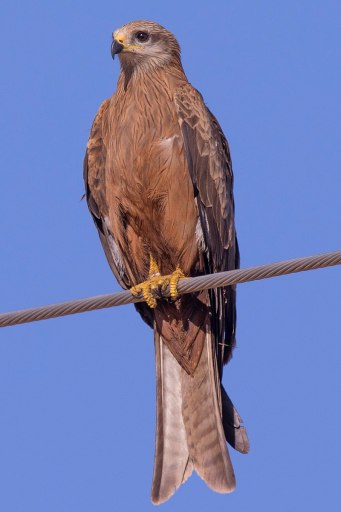
Image source- Wikimedia by Andreas Trepte
***
***
This article is published by Bookosmia, India’s #1 publisher for and by young people. Bookosmia publishes stories, books, podcasts, events, TED-Ed talks, workshops, bedtime stories and more related to kids and young adults.
Photo Credit – Copyright Free, Royalty Free images from pexels and Eshaan
Want to publish your articles, reviews, stories, audio stories, bedtime stories and poems ?
Did you know that children can submit audio stories to be turned into Bedtime Stories and published on Bedtime Stories – A Podcast by Bookosmia?
Write to us at sara@bookosmia.com or submit your article at the link below
Know More
My first birdwatching expedition| Blog by Eshaan,10, Bangalore
Buy Books



3 Responses
Amazing blog Eshaan. Loved every detail. Keep writing buddy. More power to you. Looking forward to more 🙂
Awesome, so very informative.. learnt so much about birds, few Iam hearing for the first time.. Kudos Eshaan.. keep writing ✍️
keep a lookout for Tourist guide to birds of Kshmir-II