


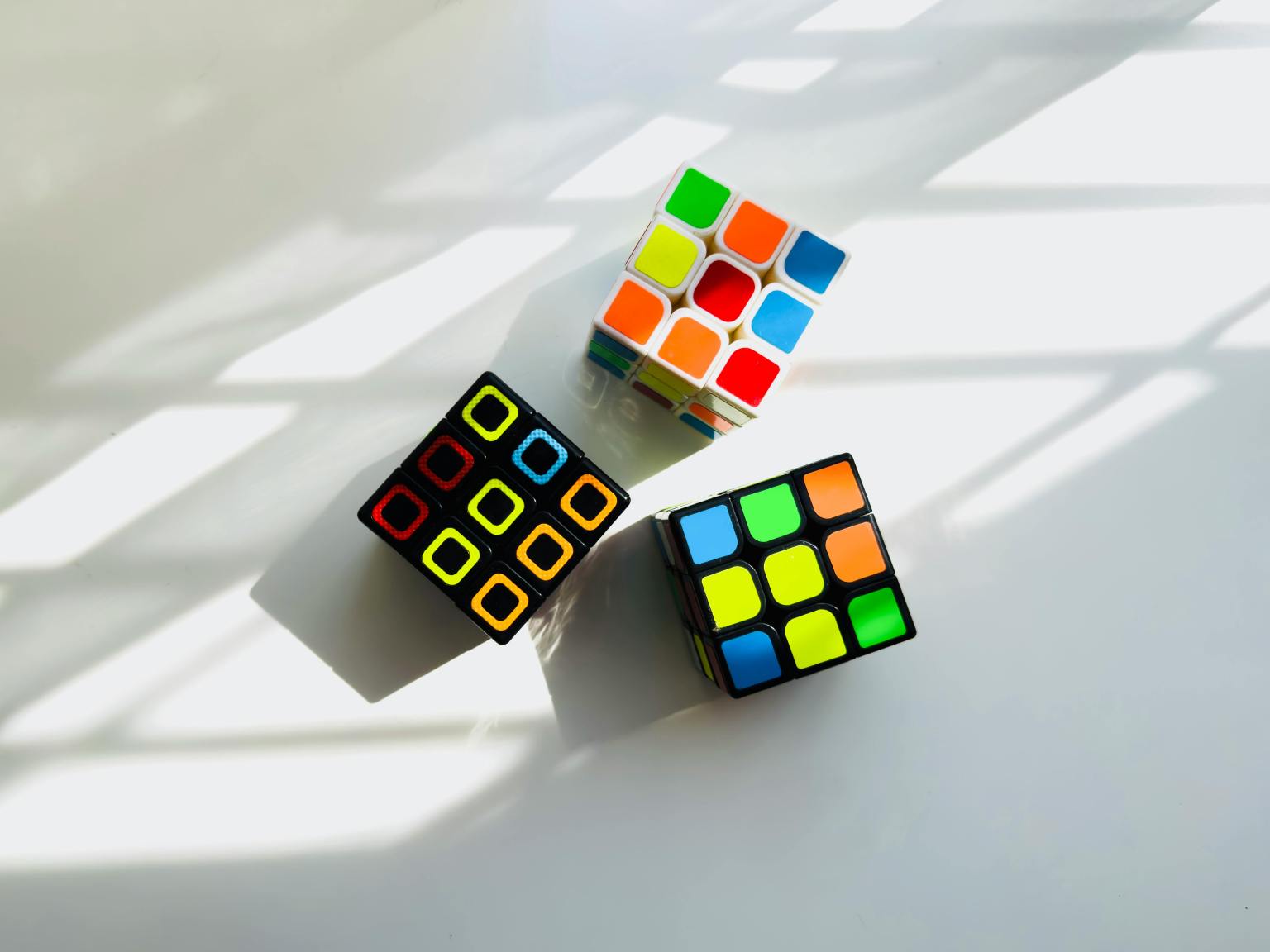
The history of Rubik’s cube
The Rubik’s cube was invented by ERNO RUBIK from Hungary in 1972. He made the Rubik’s cube to teach his students about structures. But did not know that the game he developed to teach his students would become the second most famous toy in the world, of course first being LEGO miniatures. When Erno Rubik noticed that his children loved the invention, he named the cube as “MAGIC CUBE” but after some time he thought the name did not suit the cube so he went to a toy company to sell the cube, the company later named it as “RUBIK’S CUBE” (Ideal Toys).
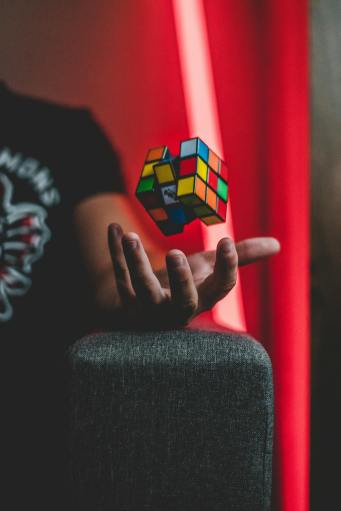
The first batch was exported to Hungary in May 1980. Nowadays Rubik’s cube come in different types of combinations like (2 x 2), Megaminx, (4 x 4), (5 x 5) etc. all originating from the (3 x 3 x 3) cube.
Companies have also developed Gan, X-man, Moyu, Sengson etc. These cubes now have inbuilt corner magnets, edge magnets and core magnets and all other gadgets which allows the cube to turn eventually while making slight click. On June 5th 1982 the first Rubik’s Cube World Championship was held in Budapest, people were chosen by national level competition, nineteen people were selected and flown to Budapest. The winner of the Championship was Minh Thai from the USA, with a record time of 22.95 seconds to solve the cube. The most recent competition was held in June 2023 and Max Park from USA made the world record of solving the cube in 3.13 seconds.
My interest in cubing started this year only, when I saw some recent records. I have a QiYi cube which is pretty fast but it does not have magnets, so sometimes I get stuck in some moves. I started practicing the cube by watching You-tube videos and the first one I tried to solve was (3 x 3) Rubik’s Cube. My fastest solve is in 34 seconds and slowest is about 3.2 minutes. I am also trying to learn to solve 4 x 4 cube. I practice daily to improve my solving time with each practice. Hope to do much better one day.

***
Photo Credit – Copyright Free, Royalty Free images from Pexels






One Response
Very nicely explained and expressed.
Thanks