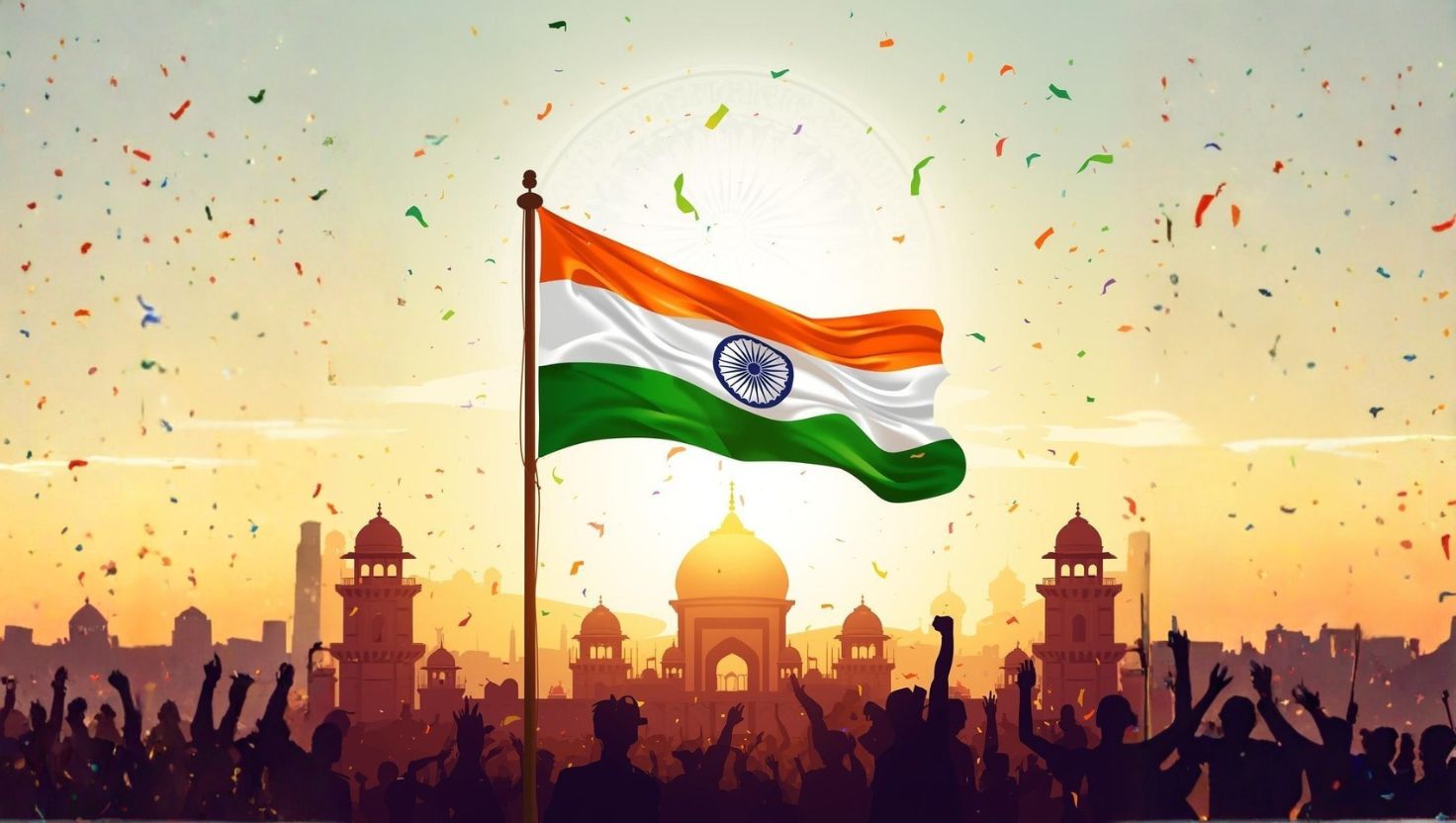
“Vande Mataram,” meaning I bow to thee, Mother, is far more than a patriotic slogan. It is a powerful mantra of freedom that awakened the collective soul of India during its struggle against colonial rule. Rooted in emotion, devotion, and resistance, Vande Mataram became a unifying call that inspired millions to rise above fear and oppression and dream of a free nation.

The phrase first appeared in the novel Anandamath (1882) written by Bankim Chandra Chattopadhyay. Set against the
backdrop of resistance to foreign rule, the song praised the motherland as a living, breathing entity—nurturing, sacred,
and worthy of devotion. At a time when India was fragmented by region, language, and caste, Vande Mataram gave people a
shared emotional identity. The motherland was no longer just land; she became Bharat Mata, a symbol of strength, sacrifice, and hope.
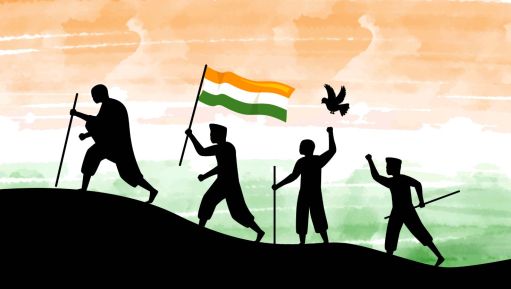
During the Indian freedom movement, Vande Mataram echoed through streets, protest marches, classrooms, and prison cells. It was shouted by revolutionaries, sung at public gatherings, and whispered by those who faced brutal repression. The British government recognized its power and often tried to suppress its public use, fearing its ability to ignite rebellion. This very fear highlighted the song’s influence—it was not merely words, but a force that stirred courage and unity among the masses.
Leaders of the freedom struggle embraced Vande Mataram as a spiritual and political weapon. Figures like Bal Gangadhar
Tilak, Bipin Chandra Pal, and Lala Lajpat Rai used it to mobilize people against injustice. For them, the chant was a
reminder that freedom was not just a political goal, but a moral duty. It connected the idea of independence with self-
respect and dignity, urging Indians to reclaim control over their destiny.
What made Vande Mataram especially powerful was its spiritual tone. Unlike slogans driven by anger or violence, it appealed to love, devotion, and responsibility toward the nation. It encouraged people to see freedom as an act of service to the motherland. This emotional depth helped sustain the freedom movement during its darkest moments, when hope seemed distant and sacrifices were immense.
However, the legacy of Vande Mataram is not without complexity. Debates arose over its religious imagery and inclusivity in a diverse nation. Recognizing this, independent India adopted only the first two verses of the song as the national song, emphasizing unity and respect for all citizens. This decision reflects India’s commitment to balancing tradition with inclusiveness, ensuring that national symbols bring people together rather than divide them.
Today, Vande Mataram continues to hold deep significance. It is sung in schools, played on national occasions, and remembered as a reminder of the sacrifices made for freedom. While India has achieved political independence, the mantra
still urges citizens to work toward social justice, equality, and responsibility. Freedom, as Vande Mataram teaches us, is not
a one-time achievement but an ongoing commitment.
In essence, Vande Mataram is the heartbeat of India’s freedom struggle. It transformed patriotism into a shared emotional experience and gave voice to a nation’s longing for self-rule. As a mantra of freedom, it reminds us that love for the
motherland, when guided by unity and respect, has the power to change history.

What does “Vande Mataram” mean?
“Vande Mataram” means “I bow to thee, Mother”, referring to the motherland of India.
Who wrote Vande Mataram?
Vande Mataram was written by Bankim Chandra Chattopadhyay.
In which book did Vande Mataram first appear?
The song first appeared in the novel Anandamath, published in 1882.
Why is Vande Mataram important in India’s freedom struggle?
Vande Mataram united Indians emotionally and inspired courage, sacrifice, and resistance against British rule.
Why did the British try to suppress Vande Mataram?
The British feared the song because it motivated people to rebel and strengthened national unity.
How many verses of Vande Mataram are officially adopted?
Only the first two verses are officially adopted as the National Song.
Why is Vande Mataram associated with Republic Day?
It reminds us of the values of freedom, unity, and responsibility that the Indian Constitution upholds.
What does Vande Mataram teach today’s citizens?
It teaches us to love our country with respect, responsibility, and commitment to justice and equality.
Where can I buy books?
You can Buy Books at Bookosmia Website and Amazon.
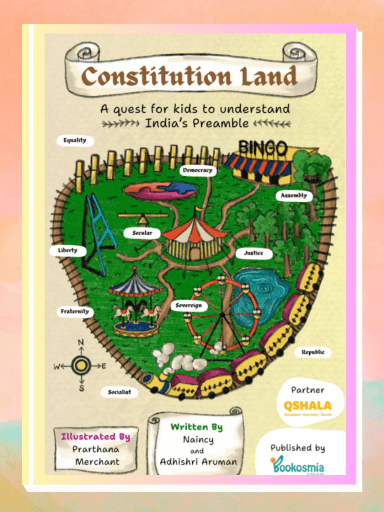
‘Constitution’ is a word we hear often in Civics class. But what does it really mean?This book takes children on a journey to understand the fundamentals of the Indian constitution and encourages them to practise its principles. It introduces young readers to their rights as Indian citizens and the rules and laws that govern our country.
The constitution isn’t just for adults. Every young voice matters therefore this book is for every young reader in India, to practise its principles in their own lives.
With 3000 copies in Social Science Kits for schools, the book has been loved by veterans in the field like Priya Krishnamurthy, CEO and Co-founder, CMCA | Deepika Mogilishetty, Chief of Policy & Partnerships – EkStep Foundation | Priti David, Executive Editor of the People’s Archive of Rural India (PARI)
***
This article is published by Bookosmia, India’s #1 publisher for and by young people. Bookosmia publishes stories, books, podcasts, events, TED-Ed talks, workshops, bedtime stories and more related to kids and young adults.
Photo Credit – AI generated images from Chat GPT and Magic Media from Canva .
Want to publish your articles, reviews, stories, audio stories, bedtime stories and poems ?
Did you know that children can submit audio stories to be turned into Bedtime Stories and published on Bedtime Stories – A Podcast by Bookosmia?
Write to us at sara@bookosmia.com or submit your article at the link below
Read at Bookosmia