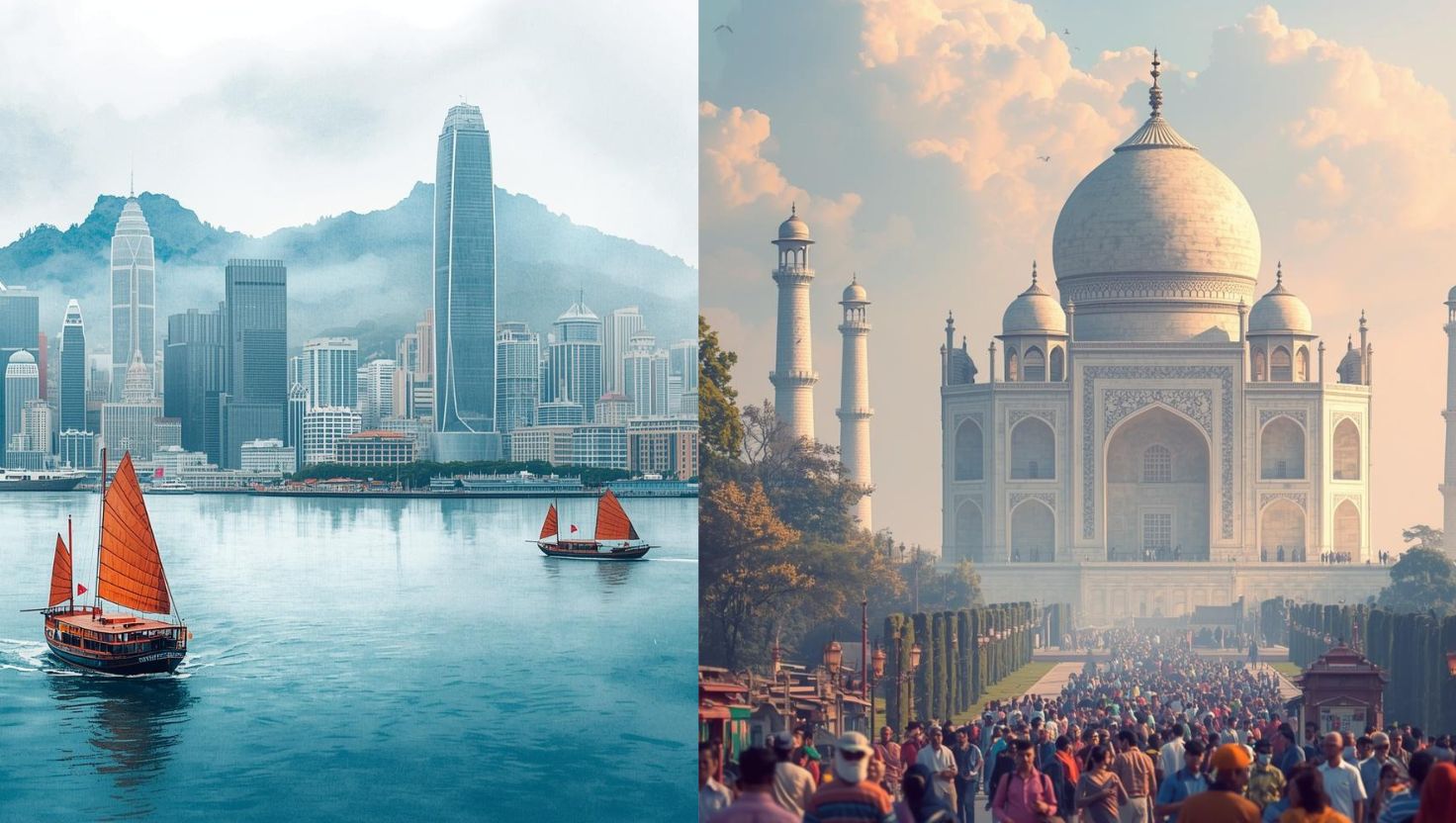
How can two places be so similar yet different?. The taste of culture and identity never fails to amaze me. Life is so still but bright, illuminating my mind. As a 11 year old girl in my first year of secondary school, I often think about things that I do here in Hong Kong that are so similar to things I do in my hometown India. But not all is similar, some things are different here that I truly miss from my constant holidays in India. The different festivals in Hong Kong and India, affecting holidays and celebrations. The difference between city and country. The difference between diversity and unison. The connection between friends and family. Subtle and still, my mind is ticking away between Hong Kong and India.
I find myself comparing the vibrant street markets of Hong Kong, bustling with life and color, to the lively bazaars of India, each offering a unique blend of sounds, smells, and sights. Both places have their own rhythm, a heartbeat that pulses through the streets, yet they tell different stories.
The food, oh, the food! In Hong Kong, I savor Dim Sum with its delicate flavors, while in India, I crave the rich spices of a homemade curry. Both cuisines are a testament to the rich history and creativity of their people, and I cherish the opportunity to experience them both.
The language, too, reflects the diversity and history of each place. In Hong Kong, the melodic tones of Cantonese fill the air, while in India, the multitude of languages and dialects create a beautiful tapestry of communication. Each word, each phrase, connects me to the people and the culture in a way that is both familiar and exotic.
As I navigate through my daily life, I am constantly reminded of the unique blend of tradition and modernity in both places. The skyscrapers of Hong Kong rise alongside ancient temples, just as in India, where modern cities coexist with historical monuments. It is a dance between the past and the present, a balancing act that is both delicate and exhilarating.
In Hong Kong my train calls at Tsim Sha Tui, Yao Ma tei, Tung Chung and Jordan, but I also think about the sleeping trains between Chennai and Coimbatore. The lush green life of India compared to busy surroundings in Hong Kong. But my favourite part of India is how much love there is between each other. A person not related to you or maybe one of your neighbours is your sister or brother. When parents are away, someone in the village or other societies fend for your needs, making you feel the kindness and compassion in them.
In Hong Kong everyone fends for themselves, focusing on their needs but they show sympathy. In India you can expect empathy from everyone in your hometown. The difference between empathy and sympathy is that: Sympathy is knowing how someone feels and feeling sorry for them, but empathy is understanding how a certain person feels, it’s just like stepping into someone’s shoes, feeling for them by sharing their sorrow.
Being empathetic is a skill only when maintaining self and relationships showing someone that you care. I am very fond of the stories from Ramayana and the Mahabharata so let me tell you a tale that shows empathy versus sympathy.
In the Mahabartha, when Duryodhana failed to give the five pandavas their kingdom back after their 14 years of exile, the Kurukshetra war started bringing unimaginable destruction to innocents. The Pandavas had to fight against the 100 Kaurava cousins and supernatural beings such as Bishma who played a pivotal role as their grandfather in their lives, and their Guru Dronacharaya. One of the people in the Kaurava army was Ashwattama, Dronacharaya’s son. Ashwattama mercilessly killed all 5 of Draupadi’s children leaving none to call as her own. While Ashwattama’s mother Kripi felt sorry for Draupadi for losing her sons, Draupadi although wanting to tell her husbands to kill the pandavas she actually understood Kripi and thought that she would face the same amount of hurt as her so she spared Ashwattama’s life. This story shows the difference between sympathy and empathy in life experiences.
Although Hong Kong may not show as much empathy as India, I would like to take a moment and acknowledge the huge amount of diverse cultures it showcases.
In India the bright lights of Diwali contrasts with the illuminating lanterns in the streets of Hong Kong. While Indian schools celebrate the joyful events in Indian history and mythology my school King George the Fifth never fails to celebrate Diwali every year. In Hong Kong we can’t place firecrackers to illuminate the sky, but we can host a Diwali assembly with many Indian students showcasing performances to represent the proud country of India. Every year I feel overjoyed when the school celebrates a whole day of diwali because finally our country can be recognised as who we are.
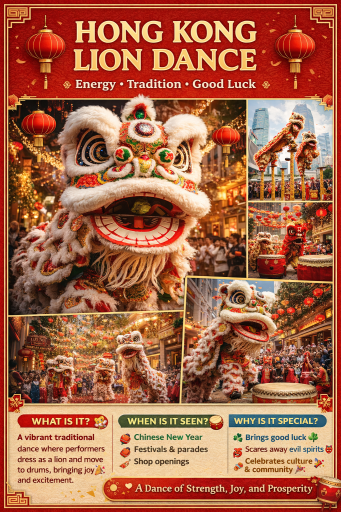
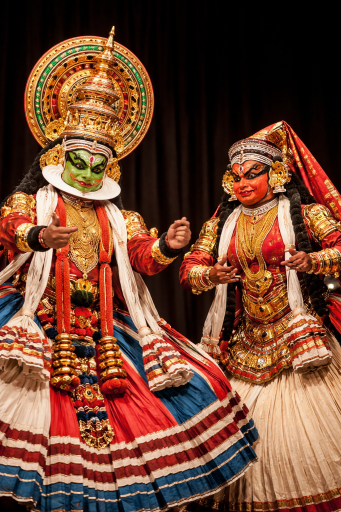
Apart from that, in Chinese New year we have something called a Lion dance where these talented performers dress as Chinese lions. China also showcases the Peking opera with martial arts and intricate and detailed makeup. But the same amount of work is put into our famous Kathakali showcasing exaggerated face expressions and hand gestures. Kathakali makeup also amazes me, our performers put a lot of work into performing.
As a citizen of Hong Kong I recognize how similar yet different both of these outstanding places are, each one unique in their own way. I am ever so proud to live and see what makes each of these places special.In moments of quiet reflection, I feel blessed to have such a rich cultural tapestry to draw from. Each day is an opportunity to learn, to grow, and to appreciate the beauty of the world around me. Whether I am in Hong Kong or India, I carry with me the lessons and the love from both places, as they continue to shape who I am and who I aspire to be.
What is the main theme of the blog?
The blog explores the similarities and differences between Hong Kong and India, focusing on culture, food, language, traditions, and human connections.
How does the author compare life in Hong Kong and India?
The author compares everyday experiences like markets, food, festivals, and transport, showing how both places are vibrant yet unique in their own ways.
What cultural differences does the author highlight?
She highlights differences in festivals, language, lifestyle (city vs. countryside), and social connections such as empathy and community bonding.
How is food described in both places?
Hong Kong is known for delicate dishes like dim sum, while India is celebrated for its rich, spicy homemade curries.
What role does language play in the essay?
Language reflects cultural identity—Cantonese in Hong Kong and the diverse range of languages in India create unique ways of communication and connection.
What does the author say about empathy and sympathy?
The author explains that sympathy means feeling sorry for someone, while empathy means truly understanding their feelings. She emphasizes that empathy is more meaningful.
Which story from Indian mythology is used, and why?
A story from the Mahabharata is used to illustrate empathy, where Draupadi shows understanding and compassion despite her grief.
How are festivals celebrated differently in Hong Kong and India?
India celebrates festivals like Diwali with lights and firecrackers, while in Hong Kong, celebrations include school events and cultural performances instead.
What similarities are shown in dance traditions?
Both cultures have expressive dance forms—Lion Dance and Peking Opera in Hong Kong, and Kathakali in India—each requiring skill, costume, and storytelling.
How does the author feel about living between two cultures?
She feels proud and grateful to experience both cultures, seeing them as a rich blend that shapes her identity.
What differences in social relationships are mentioned?
India is portrayed as more community-oriented with strong emotional bonds, while Hong Kong is described as more individual-focused but still compassionate.
What message does the essay convey to readers?
The essay encourages appreciation of cultural diversity and highlights how different experiences can shape one’s identity in meaningful ways.
Where can I buy books?
You can buy the books at Bookosmia website and Amazon.in
***
This article is published by Bookosmia, India’s #1 publisher for and by young people. Bookosmia publishes stories, books, podcasts, events, TED-Ed talks, workshops, bedtime stories and more related to kids and young adults.
Photo Credit – AI generated images from Chat GPT and Magic Media from Canva .
Want to publish your articles, reviews, stories, audio stories, bedtime stories and poems ?
Did you know that children can submit audio stories to be turned into Bedtime Stories and published on Bedtime Stories – A Podcast by Bookosmia?
Write to us at sara@bookosmia.com or submit your article at the link below