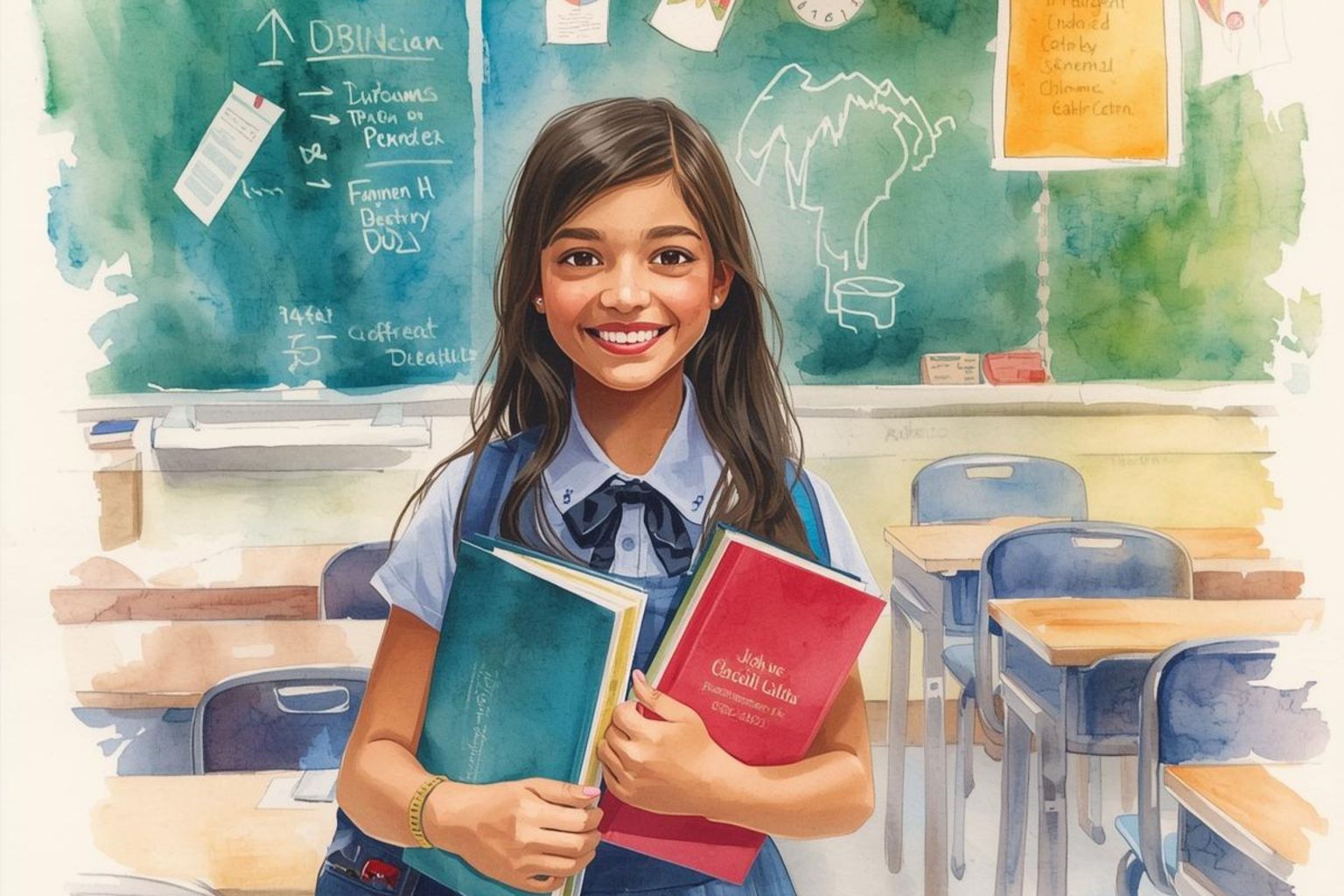
Imagine a peacock losing its feathers out of the blue. Surprising and unexpected, isn’t it? That’s exactly what happened to a ninth grader, Rai. She used to be the type of student who could silence the room with her logical and elegant ideas, her tongue soft yet dangerous– like silk wrapped around a knife; cutting through arguments and debates with ease. There was just one thing which prevented her growth, her ego. She was just as egoistic as she was brilliant. She would never sit with the other students, labelling them, “ordinary” and “as plain as bread” She would sit alone during lunch, not in loneliness but in the fortress of her pride.
She treated classmates not as peers but as spectators to her brilliance. When group projects were assigned, she would seize control, dismissing suggestions with a wave of her hand and a sharp remark. “Your idea is fundamentally inadequate,” she’d say, or, “Your thoughts lack the sophistication this project requires.” Her words weren’t just corrections– they were verdicts, delivered with the certainty of someone who thought of herself to be untouchable. During class debates, Rai’s sharp mind became a weapon. She didn’t argue to explore ideas and viewpoints; she argued to tear them down. A classmate’s point would barely leave their lips before she would cut in, twisting their words to her advantage.
Her pride seeped into smaller moments too. When a teacher praised another student’s work, Rai would scoff under her breath. When classmates collaborated, she would roll her eyes and convince herself their combined efforts were trivial compared to her own. Even joy seemed to be too “run of the mill” for her. If someone laughed too loudly, she rolled her eyes. If someone attempted to share a piece of information when she was around, her lips would twitch into a smirk and she would mutter, “same old song and dance.” It didn’t matter if the information was interesting or unheard of by her, Rai had already assumed that everything her classmates could possibly say were as simple and known as rehearsed plays to her.
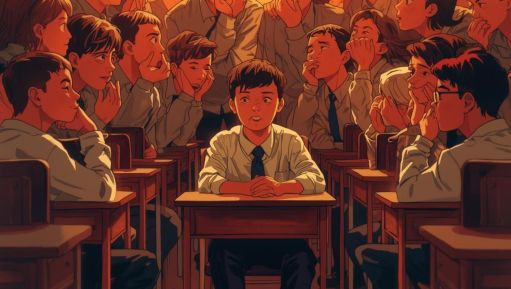
The classroom became less of a place for learning and more of a theatre of her superiority. Every raised hand was met with her narrowed eyes, every shared thought reduced to a mere sentence in her mind. While her classmates grew quieter, Rai grew louder– her pride basking in the silence she mistook for awe. Her classmates stopped raising hands not out of awe, but because they no longer believed she would listen. The questions that once challenged her became whispers exchanged in corners, discussions carried on without her. Rai, blind to the shift, misinterpreted their absence for victory.
But feathers don’t last forever– the edges begin to fray first. A simple forgotten word, a misplaced equation, a failed dispute; yet Rai didn’t bother to notice. As her feathers fell, the wind of doubt rushed in. Her intellect, once a castle where the towers stood tall with gleaming clarity, was being broken down by doubt’s men who slipped through the cracks between the mortar, sowing seeds of hesitation where perfection once reigned.
At first, Rai dismissed the gaps between her reasoning and arguments as mere fatigue. A forgotten detail here, an incomplete assignment there– small fissures in the palace of her intelligence. Yet soon enough, Rai finally started noticing subtle changes in the way of her thinking– questions unanswered, conclusions half formed, reasons distancing themselves from perfection. Slowly yet steadily, the horrifying realisation thundered through her. It was not a single strike but a deadly storm, echoing through the chambers of her mind. Her intelligence was not failing at random; it was moulting in sequence, leaving her bare. One day, in the midst of trying to summon an argument, she found only ashes where a citadel had once blazed. The castle was not holding the line– it was rotting from the inside out, eaten away like wood by termites. And in that hollow pause, Rai understood; her fortress of intellect was coming apart at the seams, brick by brick, like a house of cards collapsing.
Her heart sank deeper than the Titanic, not with panic but with sorrow. She felt herself being pulled into the same tide as everyone else, her uniqueness dissolving like salt in water. She sat in hapless silence, watching the thing very dear to her slip away into the shadows. Days passed by; the students started observing how Rai grew quieter in the class. No more hands raised, no more eager participation in academic activities. It became a prominent whisper, “What happened to the Great Rai?” The words clung to her like ivy, wrapping around the ruins of her once challenging demeanour.
They weren’t shouted, yet carried the weight of the inevitable. Each repetition felt like a thousand needles pricking at her skin, reminding her that the sagacity which had once set her apart from the crowd was now being mowed by oblivion.
But the despair faded like echoes fading in a canyon. Her heart, once heavy, began to rise as she understood– greatness isn’t measured by how high one flies, but by the ability to walk among others when their wings falter. And so, Rai stepped forward, no longer the untouchable figure perched in lofty heights but a companion among others; her failure transformed into a lesson. With arrogance stripped away, Rai no longer sought to rebuild the walls around herself. Instead, she began listening patiently and shared understanding with the other students. Each step was modest, but carried the weight of Rai’s acceptance to explore. She walked among others, no longer with humility but with kind compassion. She now spoke with others to connect rather than to impress. Each word she spoke was a reminder that intellect, once wielded as a crown, had become a gift– shared, steady, and enduring. In the process, she slowly gained her intellect back which made her realise– intellect shall not be worn like a crown to dominate but be utilised as a lantern to illuminate the path and guide. And in that glow, she found a greatness far deeper than pride; the greatness of walking beside others, helping them see the path where their own lanterns flickered. Her fall was not an ending but a rebirth of wisdom. From the ruins of arrogance and pride rose a lantern bearer, whose aim was to now help others find their glow.
By Damayanti Bhattacharya

What is the central theme of The Girl Who Lost Her Intellect Overnight?
The story explores the dangers of pride and ego, and how true intellect flourishes through humility, empathy, and shared growth rather than dominance.
What does Rai’s loss of intellect symbolize?
Her intellectual decline symbolizes how arrogance can cloud judgment, hinder learning, and isolate individuals from meaningful growth.
Why is the peacock used as a metaphor in the story?
The peacock represents beauty and pride. Losing its feathers mirrors Rai’s loss of intellectual arrogance and the fragility of ego-based superiority.
What age group is this story suitable for?
The story is ideal for middle school and high school students, educators, and readers interested in moral and psychological narratives.
What lesson does the story convey to students?
It teaches that intelligence should be used to uplift others, not diminish them, and that listening is as important as speaking.
How can teachers use this story in classrooms?
Teachers can use it to spark discussions on emotional intelligence, collaboration, respectful debate, and the balance between confidence and humility.
What makes this story relevant today?
In competitive academic environments, the story highlights the importance of empathy, collaboration, and emotional maturity alongside intellectual achievement.
What is the core message of the ending?
True greatness lies not in standing above others, but in walking beside them and lighting the way when their lanterns flicker.
Where can you buy the books?
You can Buy the books at Bookosmia website and Amazon.
Dhwani I Voices of Practitioners Driving Inclusion in Classrooms
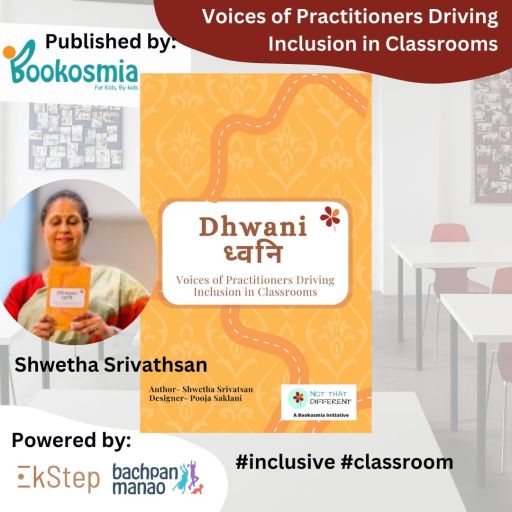
Dhwani : Resource for teachers | Practitioner’s handbook with engaging illustrations of classroom scenarios and strategies.
We know that real impact is on the ground , in the classrooms where children and teachers come together as one. This is where learning happens, yes, but also where memories are made, confidence is shaped and first bonds created.
But amidst pressure of finishing portions, correcting papers and managing different classes, are we empowering teachers enough to support their learners regardless of ability, background, and learning style? That is the genesis of Dhwani.
This resource was created to empower teachers with the tools, insights, and confidence to foster truly inclusive classrooms. Curated by experts and special educators with vast experience of inclusive classrooms, our goal is to recognise the challenges faced by educators and offer practical strategies to counter them.
As we publish Dhwani, we are grateful to the author of this book and our parent advocate Shwetha Srivathsan for bringing together voices of many who have walked this path before, reflected on their hits and misses and shared them as everyday strategies for our teachers to hold dear, as their own companion on this journey.
We are also thankful to the EkStep Foundation for their ready support in giving life to this resource , our talented designer Pooja Saklani and each and every expert for their valuable time and insights that have made this a wholesome resource for teachers.
You can download Dhwani for free by clicking download below
***
This article is published by Bookosmia, India’s #1 publisher for and by young people. Bookosmia publishes stories, books, podcasts, events, TED-Ed talks, workshops, bedtime stories and more related to kids and young adults.
Photo Credit – AI generated images from Chat GPT and Magic Media from Canva .
Want to publish your articles, reviews, stories, audio stories, bedtime stories and poems ?
Did you know that children can submit audio stories to be turned into Bedtime Stories and published on Bedtime Stories – A Podcast by Bookosmia?
Write to us at sara@bookosmia.com or submit your article at the link below
Read at Bookosmia
The Forgotten Treasure: Soil Revival I Story By Damayanti, 12, Panihati